
Are Amherst Developers Flouting the Intent of the Town’s ADU Bylaw?
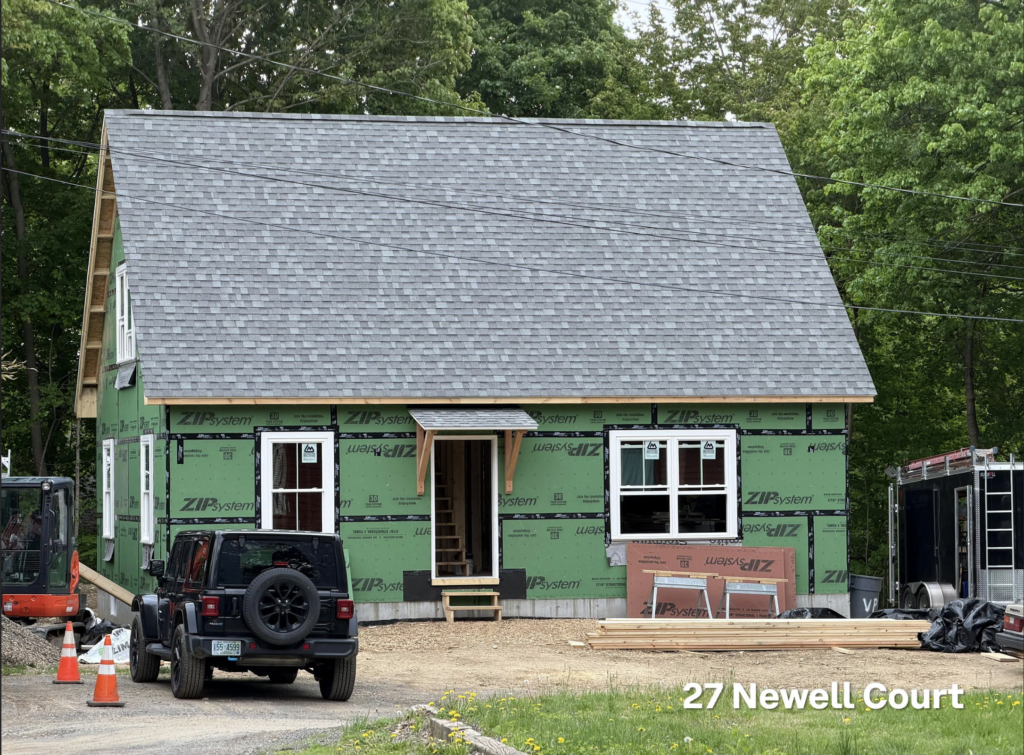
ADU currently under construction at 27 Newell Court. Photo: amherstma.gov
A building boom of accessory dwelling units (ADUs) is underway in Amherst, with at least 21 permits for new units issued in the last five months and another five to seven applications pending. Plans for several of those units appear to violate the town’s new ADU bylaw.
ADUs are self-contained units with sleeping areas, eating areas, and bathrooms on a lot that also contains a principal dwelling.
After lengthy deliberation, the town adopted in November 2025 (see also here) a two-tiered bylaw governing accessory dwelling units to conform with a new state law. The state law allows ADUs of up to 900 square feet — defined as “protected” ADUs — to be built by right with few limitations on design, dimensions, or number of inhabitants. Permits for such units are issued by the town’s building commissioner without notifying abutters or holding a hearing before town committees or boards. Amherst’s bylaw also allows ADUs up to 1,200 square feet, known as “local” ADUs, if either the ADU or the principal dwelling is owner-occupied. The larger ADUs must also conform to design and dimensional requirements (see Amherst Zoning Bylaw 5.011).
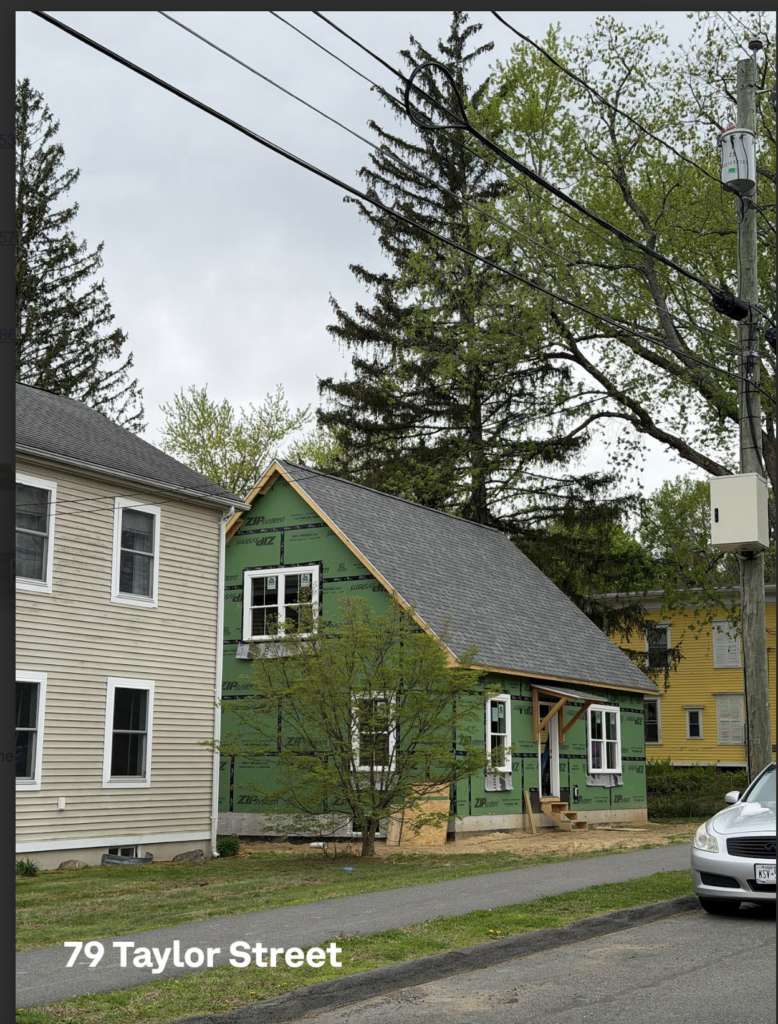
Based on plans filed with the town, at least nine of the recently permitted “protected use” ADUs are substantially larger than the 900 square feet allowed. Their ground floors measure just under 900 square feet, but their second floors include about 300 square feet of finished habitable space. Plans for ADUs on Chestnut, Taylor, and Gray streets and Newell Court show two bedrooms with walk-in closets and a bathroom on the second floor, a stairway from the first floor, and ceiling heights above 8 feet. If that finished upstairs space is included in the calculation of gross floor area (GFA), those plans would not qualify for permitting as protected ADUs under the bylaw.
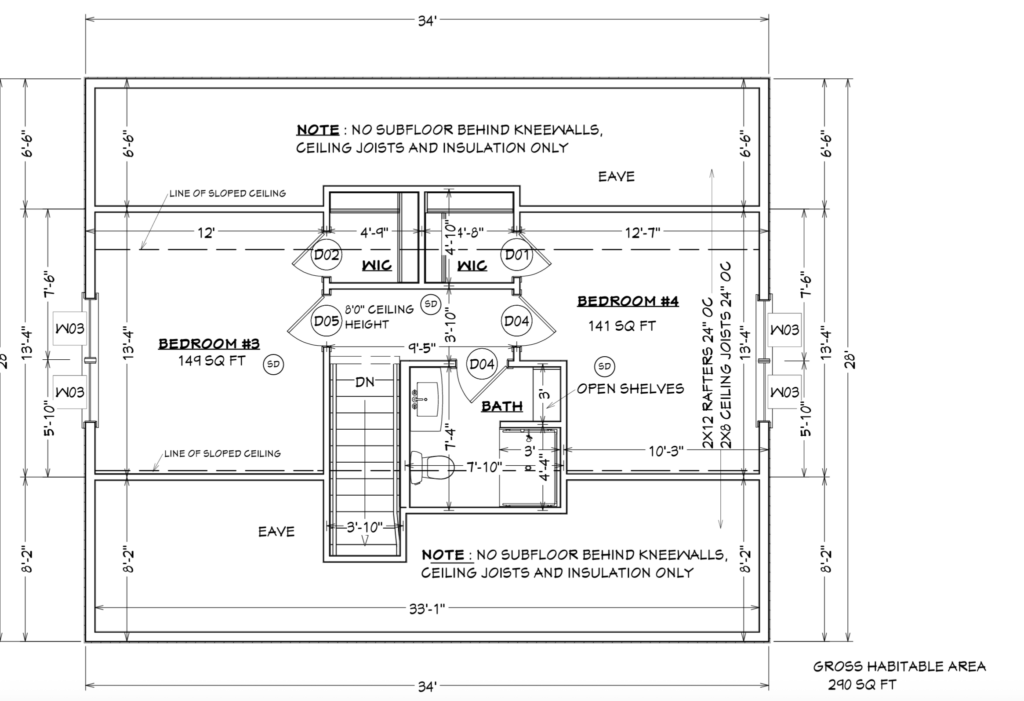
Photo: amherstma.gov
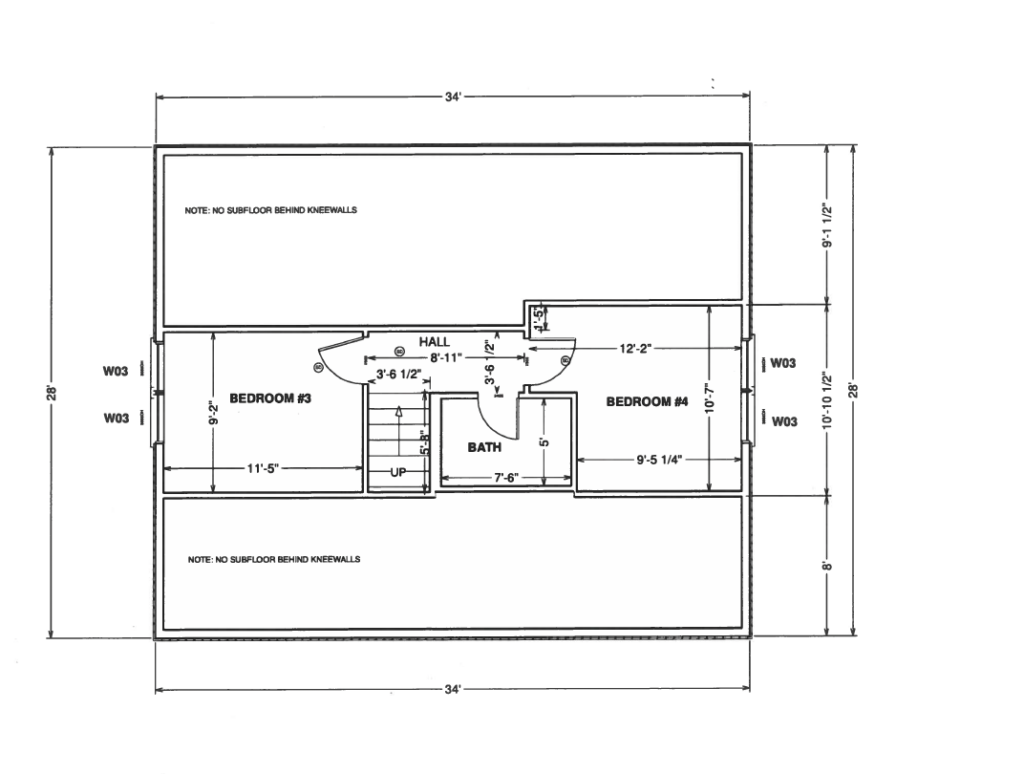
Neighbors of some of these ADUs have raised the apparent violation with Building Commissioner Rob Morra. Morra told the Indy that his interpretation is that the second floor constitutes attic space and should not be included in the GFA calculation. He noted that state regulations do not define “attic,” but Amherst’s Zoning Bylaw (Section 6.18) does, and it excludes attic space from the GFA calculation. The bylaw states:
“A half-story in a top floor shall be a lawful habitable space with required means of access and egress and in which a minimum seven (7) foot floor-to-ceiling height exists in at least half of the habitable floor area but no less than one-third of the habitable floor area of the full story below.”
The bylaw actually contains no formal definition of “attic,” but it does define “story.” Morra has determined that an upper floor that does not meet the definition of a story is, by default, an attic — and that any space smaller than one-third of the habitable area below does not qualify as a story and is therefore an attic, and hence excluded from the GFA. He said the original approved designs for the ADUs noted above were adjusted to reduce the bedroom sizes so that the second floor now measures 291 square feet, falling under his definition of an attic.
According to ADU Zoning Bylaw Section 5.011: “The following definitions apply. a. Gross Floor Area: The sum of the areas of all stories of the building of compliant ceiling height pursuant to the Building Code, including basements, lofts, and intermediate floored tiers, measured from the interior faces of exterior walls or from the centerline of walls separating buildings or dwelling units but excluding crawl spaces, garage parking areas, attics, enclosed porches, and similar spaces.” Compliant ceiling height is defined as ceilings over 7 feet, but Morra considers the second floors of these ADUs to be attics and therefore exempt from the compliant ceiling height provision.
The Intent of the Bylaw: More ADUs
The stated purpose of easing ADU requirements is to “allow the Town of Amherst to expand and diversify its housing supply by making efficient use of available land without requiring the creation of new lots. Accessory Dwelling Units are intended to meet the changing housing needs of the community by providing smaller units in existing residential neighborhoods.” (Zoning Bylaw 5.0110)
During deliberations on the new bylaw, the Planning Board and Community Resources Committee (CRC) raised concerns about the proliferation of these units for college student housing in largely residential neighborhoods. They believed that the restricted size requirements would limit the number of occupants. If those size restrictions can be expanded through what critics call an “attic loophole,” the number of residents could be substantially larger than intended, potentially straining neighborhoods that are already densely populated and have limited parking.
Morra told the Indy that the question of allowing additional living space came up during the CRC’s deliberations. Early drafts of the bylaw defined GFA as all habitable space, but the town’s attorney, KP Law, advised Morra and planner Nate Malloy that including that provision could draw objections from the state attorney general. The “habitable space” language was removed late in the process, before the bylaw was passed by the Town Council. Morra said the town sought an opinion from the attorney general but did not receive a response.
CRC Chair Pam Rooney disputes Morra’s assertion that councilors were informed of this loophole. In an email to the Indy, she wrote: “No one ever said, during our adoption process, are you aware that in applying the state definition, a builder is allowed to include up to one-third of the dwelling’s main floor area as finished, usable attic space and that won’t count toward their total square footage? Therefore, an ADU could contain 900 square feet on the main floor plus up to 300 square feet of attic space. Is that what you, council members, want?”
She maintained that, like a finished loft, a finished attic should be included in the GFA.
Morra said the town managed ADUs well under the previous bylaw and that the new state law has made things more complicated. He maintains that he is obligated to accept the submitted plans under the new bylaws. “For our town and the issues we deal with, this is unfortunate,” he said. “The state law gives us no ability to adjust to our needs. The Cape and Islands were given some flexibility to meet their needs, but we weren’t given that flexibility.” He said he advised the CRC: “We have to do this, but let’s put in safeguards. But our ability to do that was limited.”
When asked what recourse the town has, Morra said Amherst could appeal to the Executive Office of Housing and Livable Communities (EOHLC), which enforces the state bylaw, but that a response could take years. Residents could also appeal to the Legislature through state Rep. Mindy Domb. He said the simplest and most expedient fix would be to amend the definition of “attic” in the Zoning Bylaw to cover only uninhabitable space. That change would also apply to single-family homes but could serve as an interim measure until the problems with the state bylaw are resolved.
In the meantime, the proliferation of larger ADUs with no cap on number of occupants raises a number of questions for affected neighborhoods. How will these structures be taxed — as two-bedroom, 900-square-foot units or four-bedroom, 1,200-square-foot units? (The difference appears to be roughly $3,000 in annual tax revenue per unit.) Will the building commissioner ensure that basements are not also rented out? What is the parking plan for these new units? A protected-use ADU may not have more than three parking spaces under the bylaw, and street parking in downtown neighborhoods is already limited. How do the framers of the town bylaw feel about effectively permitting four-bedroom homes under the protected ADU provision, and what do they believe should be done?
Building Commissioner’s Decision Appealed to Zoning Board of Appeals
An abutter to one of the two-story ADUs currently under construction filed a complaint with the building commissioner. Morra upheld his permitting decision after requiring the second-floor area to be reduced. The matter has since been appealed to the Zoning Board of Appeals.
The Amherst ADU Bylaw.
Here is the complete text of the Amherst ADU Bylaw
5.011 Accessory Dwelling Units (Amended November 17, 2025; Effective December 1, 2025) 5.0110 Purpose Accessory Dwelling Units allow the Town of Amherst to expand and diversify its housing supply by making efficient use of resources without requiring the creation of new lots. Accessory Dwelling Units are intended to meet the changing housing needs of the community by providing smaller units in existing residential neighborhoods.
5.0111 Applicability The Town of Amherst permits two types of Accessory Dwelling Units (ADU): a Protected Use ADU in accordance with MGL c. 40A §3 and 760 CMR 71.00, and a Local ADU. Both types of ADUs shall be permitted in any single-family residential zoning district that allows a detached single-family dwelling by right or by Special Permit, including the RO, RLD, RN, RVC and RG zoning districts.
a. A Protected Use ADU shall meet the State definition per MGL c. 40A §1A, as well as State regulations under 760 CMR 71.00. The use of land or structures for a Protected Use ADU -64- shall be as-of-right, meeting all requirements associated with the issuance of a building permit and meeting certain requirements listed in this section of the Zoning Bylaw.
b. A Local ADU shall meet the definition and specific requirements in this section of the Zoning Bylaw. The permitting of a Local ADU shall follow these steps: a. When a lot has no ADU, the Local ADU shall require Administrative Approval according to Section 11 of the Zoning Bylaw; or b. When a lot has a Protected Use ADU, the Local ADU requires a special permit from the ZBA
c. Either ADU type may be completely contained within the Principal Dwelling, attached to a Principal Dwelling, detached as a separate building or within a detached structure (e.g. above an existing detached garage). Any ADU may be within an existing building or new construction. 5.0112 Definitions For the purposes of this section of the Zoning Bylaw, the following definitions shall apply. a. Gross Floor Area: The sum of the areas of all stories of the building of compliant ceiling height pursuant to the Building Code, including basements, lofts, and intermediate floored tiers, measured from the interior faces of exterior walls or from the centerline of walls separating buildings or dwelling units but excluding crawl spaces, garage parking areas, attics, enclosed porches, and similar spaces. Where there are multiple Principal Dwellings on the Lot, the Gross Floor Area of the largest Principal Dwelling shall be used for determining the maximum size of a Protected Use ADU.
b. Principal Dwelling: In accordance with 760 CMR, a Principal Dwelling shall mean a structure, regardless of whether it, or the lot it is situated on, conforms to zoning, that contains at least one dwelling unit and is, or will be, located on the same lot as the ADU.
c. Protected Use Accessory Dwelling Unit: Per MGL c. 40A §1A, a Protected Use ADU is a self-contained residential dwelling unit, inclusive of sleeping, cooking, and sanitary facilities on the same lot as a Principal Dwelling, subject to otherwise applicable dimensional and parking requirements, that: (i) maintains a separate entrance, either directly from the outside or through an entry hall or corridor shared with the Principal Dwelling, that sufficiently meets the requirements of the state building code for safe egress; (ii) is not larger in Gross Floor Area than half (1/2) the Gross Floor Area of the Principal Dwelling or nine-hundred (900) square feet, whichever is smaller; and (iii) is subject to additional requirements found in this section of the Zoning Bylaw.
d. Local Accessory Dwelling Unit: An ADU that is not a Protected Use ADU. A Local ADU shall be a self-contained residential dwelling unit, inclusive of sleeping, cooking, and sanitary
facilities on the same lot as a Principal Dwelling that: (i) maintains a separate entrance, either directly from the outside or through an entry hall or corridor shared with the Principal Dwelling, that sufficiently meets the requirements of the state building code for safe egress; (ii) is larger in square feet than a Protected Use ADU but shall not be larger than 1,200 square feet of Gross Floor Area; and (iii) is subject to additional requirements found in this section of the Zoning Bylaw.
5.0113 General Requirements for Protected Use Accessory Dwelling Units and Local Accessory Dwelling Units a. All ADUs shall be located on the same lot as the Principal Dwelling. b. There shall be no more than one Local ADU and one Protected Use ADU permitted on the same lot as the Principal Dwelling. c. All ADUs are exempt from the additional Lot Area/Family requirements of Table 3, Dimensional Regulations. -65- d. No additional or separate driveway curb cut to serve any ADU shall be permitted unless approved by the Department of Public Works. e. A parking plan shall be submitted to and approved by the Building Commissioner, and shall be in accordance with the Design and Landscape Standards of Section 7 of the Zoning Bylaw. f. If the Principal Dwelling and/or any ADU will be rented, any rental unit shall be registered and permitted in accordance with the Residential Rental Property Bylaw of the General Bylaws. g. All exterior lighting shall be designed and installed so as to be shielded, downcast, and darksky compliant to avoid light trespass onto adjacent properties. h. On-site storage and management of waste and recycling shall be located on the interior of the dwelling, within an attached garage or other accessory outbuilding, or screened appropriately from public view. i. There shall be no more than two on-site parking spaces provided for any ADU. j. To the extent feasible, a newly constructed detached ADU shall be located behind the front building line of the Principal Dwelling closest to the street. 5.0114 Specific Requirements for Protected Use Accessory Dwelling Units a. There is no minimum lot size required for a Protected Use ADU. b. The more permissive (i.e. least restrictive) dimensional regulations found in Article 6 of the Zoning Bylaw for a detached single-family dwelling, the Principal Dwelling or an accessory structure, shall apply to the Protected Use ADU. c. In accordance with 760 CMR, no parking space shall be required for a Protected Use ADU located within ½ mile of a commuter rail station or bus stop.
5.0115 Specific Requirements for Local Accessory Dwelling Units
a. Either the Principal Dwelling or the Local ADU shall be occupied by the owner(s) as their Principal Residence. This owner occupancy requirement shall be made a condition of an approval by the Building Commissioner and restricted as such by a deed restriction filed with the Registry of Deeds.
b. A Local ADU shall be designed so that the appearance and scale of the structure is compatible with the Principal Dwelling. c. All dimensional standards found in the Zoning Bylaw, including those for accessory structures and Table 3, Dimensional Regulations, shall apply to the Local ADU, with the exception of the additional Lot Area/Family requirement. d. The Gross Floor Area for a Local ADU does not include the area of unfinished basement space used for storage or utilities
It is my impression, after also speaking with Building Commissioner Rob Morra, that if the word “habitable” space had been used instead of “gross” space, what is now broken would not be broken. However, KP Law advised that doing so could invite a lawsuit. To that I say: KP Law should fight that lawsuit. (Is their role only to avoid lawsuits, even those that need to be fought?)
The Attorney General, who has carved out special treatment for the Cape and Islands regarding Airbnbs and the ability to charge a surcharge on such short-term rentals, needs to understand that Amherst has a similarly unique situation. The town is being hurt by laws that are a poor fit for a “second-largest flagship university in a small town” environment.
Lastly, I quote real estate attorney Michael Pill, who says that any law producing an absurd result is a bad law. This is an absurd result, and the bad law needs to be fixed quickly.
I suggest the Town fix it FAST.
Amherst prides itself on academic rigor. It is past due that the scientific method be used to study housing here. For the benefit of this discussion, this definition, from AI: The scientific method is a systematic process used to explore observations and answer questions through experimentation. It typically involves steps such as making observations, forming a hypothesis, conducting experiments, and drawing conclusions based on the results.
Questions related to the new ADU experiment and bylaws:
Will the idea that ADUs will help to alleviate Amherst’s housing shortage (and the resultant gouging of renters, especially students) be studied/verified through any sort of data collection, either by the town, or by UMass’s Center for Public Policy and Administration ?
The current majority on Town Council has declined to collect data on student rentals, based on the specious notion that this would discriminate against students. Amherst already fails to enforce the town bylaw that vehicles at rental units be able to park on paved, off-street areas, and is lax in enforcement of the bylaw stipulating that no more than 4 unrelated individuals occupy the same rental unit. Without having an adequate data and enforcement, how can the town assess whether the new ADU policy benefits the community?
Without increased enforcement of our parking and occupancy regulations, how can we expect anything other than a further decline in the quality of life in working force neighborhoods?
If this experiment in housing fails in its goals, is there any way to rectify the result?
As Ira Bryck said: The Cape and Islands are similar to Amherst, where seasonal renters are inflating the rent so that people who work in town cannot afford to live here. If the purpose of the ADU legislation was to address the housing shortage for families, let’s use a similar framework that they adopted in the towns in that part of the state to address the problem. Check out the chart below: the maximum size is both by sq. ft. and number of bedrooms. There is a prohibition on renting both principal dwelling and accessory dwelling at same time.
https://www.capecodcommission.org/resource-library/file/?url=/dept/commission/team/Website_Resources/housing/ADU%20Bylaw%20Chart%20for%20Web%20Jan%202023.pdf
I drove by the ADU today . It looks very much out of place . The only parking is on the street ,which is already packed with cars .
What does this accomplish ?
I think the specifics will eventually get straightened out, in one direction or another. In either case it will make little difference. We have to understand that developers will certainly be building these, I don’t think that anybody expect otherwise. They will look different, which is not a crime, and cars will be parked on the street. But the idea behind the ADU law was to provide desperately needed housing.
I’m the abutter who filed the ZBA appeal referenced in this article.
To me, the issue is actually very narrow and pretty simple:
The approved plans show an 891 sq ft first floor plus a finished second floor with bedrooms, a bathroom, closets, stairs, windows, doors, and smoke detectors.
The Town counted only the 891 sq ft first floor and treated the finished second floor as excluded “attic” space.
If Amherst’s bylaw allows a finished second floor with bedrooms and a bathroom to be excluded from Gross Floor Area as an attic, then the 900 sq ft Protected Use ADU cap may become effectively unenforceable for this type of design.
This is not about opposing ADUs. Amherst clearly allows them, and many people support that.
The question is whether the Town’s interpretation matches the actual bylaw language and whether the stated 900 sq ft limit means what residents reasonably think it means.
That interpretation matters not just for one property, but for future ADU projects throughout town.
Please forgive me if I am reading the data incorrectly but in the recent donahue/wayfinders study https://www.wayfinders.org/about/about-us/research-and-reports/housingdataexplorer/
it shows that Amherst’s share of vacant units is 13% with 57% of renters being cost burdened. My question is are there vacancies due to inaffordability? If so it seems we don’t have a housing crisis as much as an affordability crisis.
I couldn’t be more excited to see more pop up. What this accomplishes is men and women and nonbinary people in their 30’s being able to own things, have children and be full members of society. All my friends who grew up in Amherst wanted to stay in Amherst and not one of them could. Because of this new law some are coming back to build on their parents property. This is the one and only possible path foward for tens of millions of people.
This new law from the Govenor is the single greatest political victory for the average person I’ve seen in my life time and I will praise it from the rooftops forever. This is what tangible social justice is, and I’m prouder than ever to be a citizen of Massachusetts where there is at least some who are trying to improve material conditions. I could not possibly care any less what they look like, if they’re “too big” or dont “fit in”. None of these new developments look in place, developers refuse to use brick anymore so we lost that brick and concrete look that the town was know for about 20 years ago.
We are not a museum. People with hopes and dreams and bills to pay live and work here.
Allegra,
I think that your question is a bit of a distinction without a difference. We have an affordability crisis because we have a housing crisis. The reality is that we don’t have enough housing to meet demand and as such the housing that we do have is sold, or rented, at a much higher cost than it would be if we were able to meet the demand. The term “Vacant” is little misleading. It is defined as “A housing unit is vacant if no one is living in it at the time the Census conducts its annual survey, or if it is only temporarily occupied by people who normally live elsewhere.” This definition would suggest that student rentals could be considered “vacant” even if there is someone living in them, though I did not dive that deeply into the methodology.
Either way, as I’ve said before, a rare commodity demands a high price and housing is very rare here, and very expensive. It will continue to be expensive until we allow for more housing to be built so we can meet the demand.
I like John Varner’s approach (and his comment is a lot more nuanced than the one which I tried to post earlier, something about there being no surprise having outlaws in a town named for a Lord who was one of their ilk), but if we lived in a world where the scientific method were widely employed to manage civic matters, then The Indy might not even need to exist. [That’s a microcosmic example of “the anthropic principle” by the way.]
Habitable space as opposed to an attic should not lead to the current conditions…..Explain again why a finished second floor space is not habitable ……or how a finished space is an ‘attic’.
It seems to me that the Building Commissioner could easily have decided to characterize a completed second floor space, with 2 bedrooms, closets, windows and a bathroom is an “intermediate floored tier.” Not a story and not an attic. This “intermediate floored tier” would be taxable. This legal interpretation would be easy to defend, I think, especially since the town is now taxing similar spaces in houses and courts defer to an agency’s interpretation of their regulations.In fact, I am typing this comment right now in such a space.This room has a steeply slanted ceiling, windows and skylights and is currently being used as an office and bedroom. The property card says it is 300 sq feet, calls it finished attic, and counts it as a bedroom. The Town values this space at over $79K. So the Town considers my room taxable living space and not an old attic to stuff boxes in. Is it doing the same for the new ADUs? If owners of the new ADUs are not being taxed on attic space with 2 bedrooms, closets and a bathroom, I want my taxes cut and my assessment reduced by $79K. I am sure other property owners will want the same.
“The sum of the areas of all stories of the building of compliant ceiling height pursuant to the Building Code, including basements, lofts, and intermediate floored tiers, measured from the interior faces of exterior walls or from the centerline of walls separating buildings or dwelling units but excluding crawl spaces, garage parking areas, attics, enclosed porches, and similar spaces.”
We’re curious. What is anyone’s take on a new house being built in a single family neighborhood where the left side will have 5 bedrooms and 3 bathrooms in 1500 Sq.Ft. while the right side will have a 2 bedroom, 2 bathroom ADU? The drawing I saw looks like one house with two garages incorporated into its middle at front of the house. Is this the new single family dwelling style? What is the difference between it and a duplex? It sure seems like a lot of bedrooms on the left side for such limited space. Hmmm…
Or what about RV’S placed year round next to single family homes and used as an extra bedroom?
ADU? There are some in Amherst.
Okay, so what ever anyone calls it, according to rental sites on the internet, the “house” which comes complete with an incorporated “ADU”, is renting by the room. So, seven bedrooms, five bathrooms and “sufficient” parking with two garages, also incorporated into the structure, and a relatively short driveway. Curiouser and curiouser…