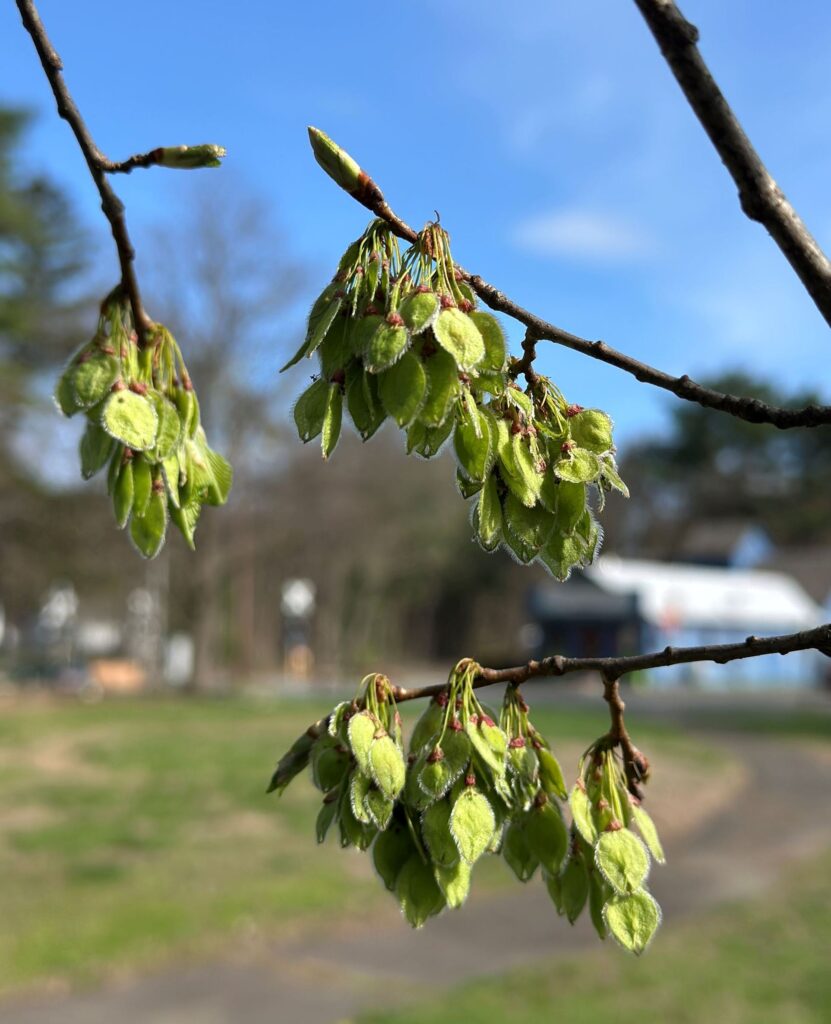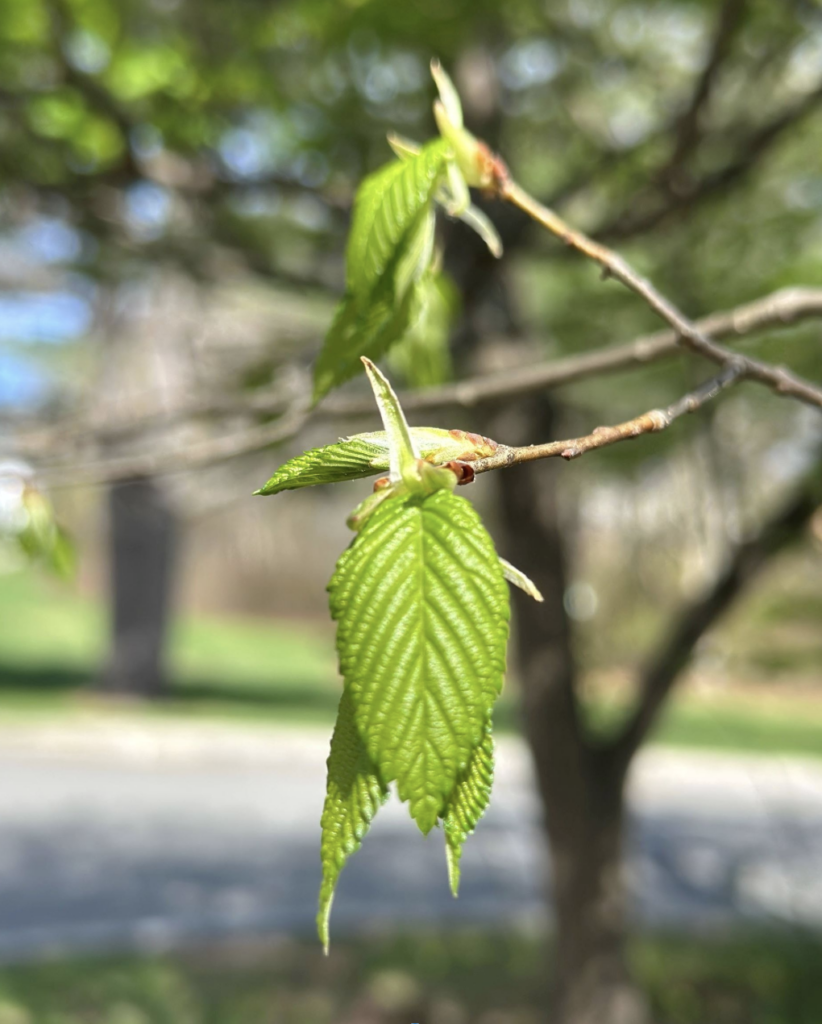
Amherst Arbor Spotlight: American Elm, The Massachusetts State Tree
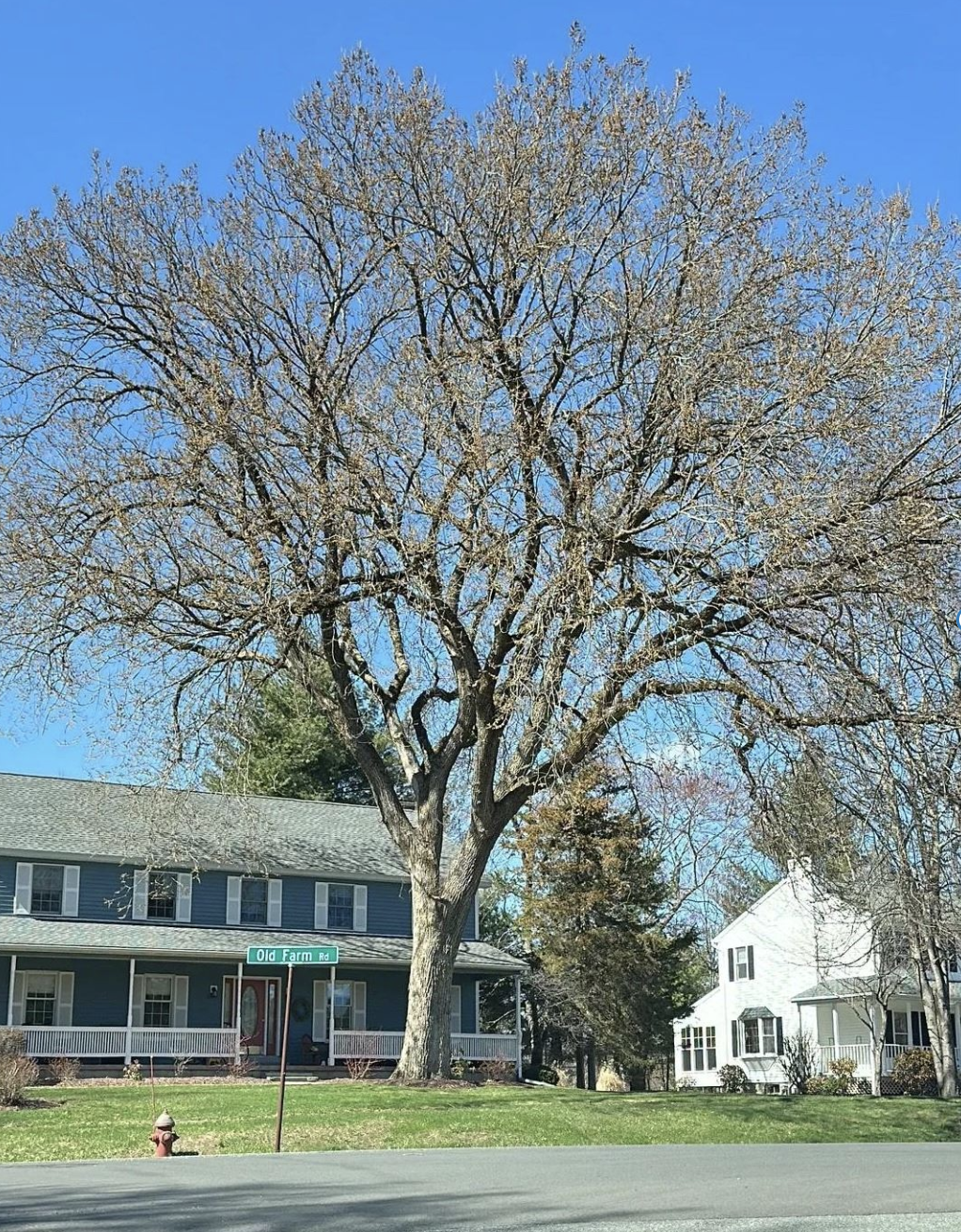
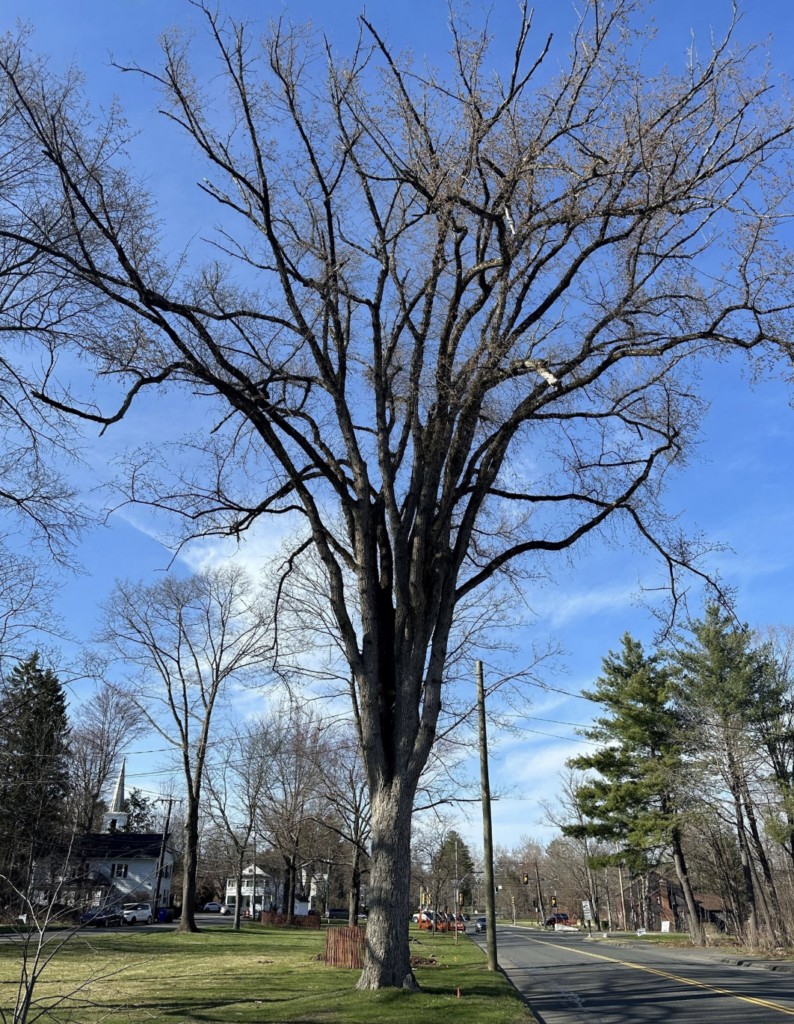
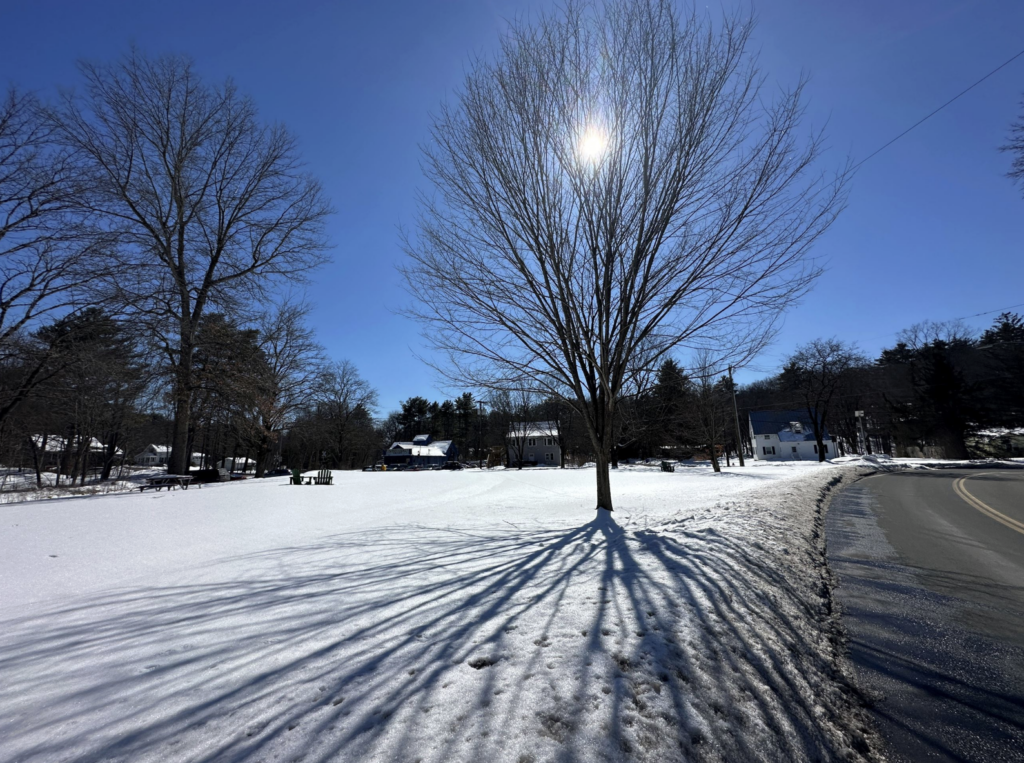
A magnificent specimen of American elm stands at 358 Old Farm Road. American elms are some of the earliest trees to flower in the spring. This photo was taken the first week of April. Photo: Amherst Public Shade Tree Committee
American Elm Ulmus americana
by The Amherst Public Shade Tree Committee
This is the fifth in a series of 12 articles produced by the Amherst Public Shade Tree Committee (APSTC) under the title “Amherst Arbor Spotlight.” The series focuses on the town’s 12 species of shade trees and features a different tree each month. New articles will be posted on the first day of the month on the APSTC website, and in the Amherst Indy, with links on Facebook and Instagram. Read the previous columns here.
American Elm: Ulmus americana
A beautiful native tree, the American elm has a graceful form with a tall vase or fountain shape that is easily recognizable in winter. The elm is a hardy, fast-growing tree that can thrive in both city and forest. It can live for hundreds of years, though the species has been devastated by Dutch Elm Disease. In its prime, the American elm was the most widely planted shade tree in the United States. It is also the state tree of Massachusetts.
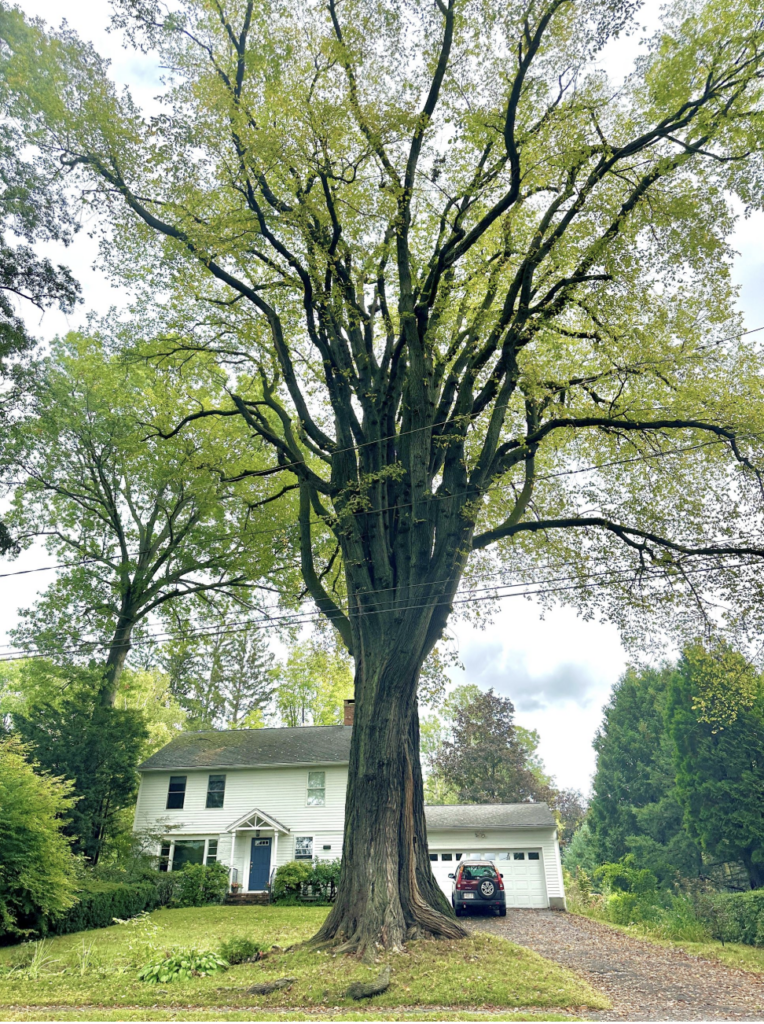
One of the oldest and largest American elm trees in Massachusetts grows in Amherst. Known as the Grayson Elm, it is located at 111 Sunset Avenue. It’s named after author and journalist Ray Stannard Baker who, using the pen name David Grayson, published the 1942 book Under My Elm. In it, he describes his struggle to save the tree from a neighbor’s determination to chop it down. Baker eventually purchased the neighbor’s land to save the splendid tree.
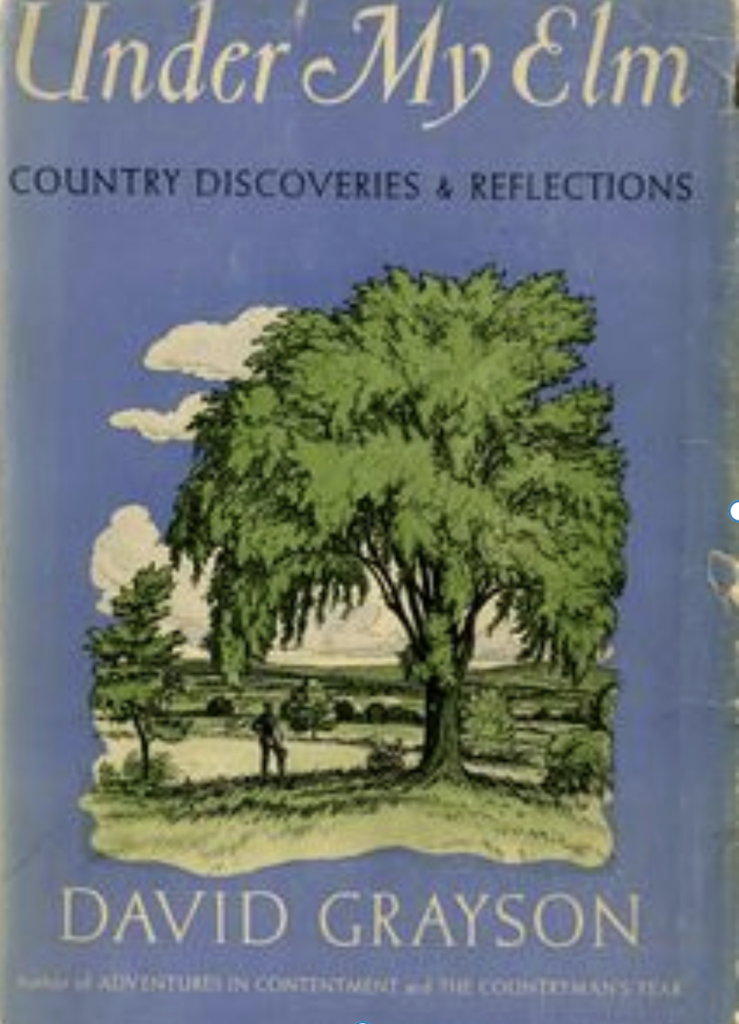
Baker wrote about the elm: “It is content. It does not weep with remorse over its past, nor tremble for its future. It flings its loveliness to the sky, it is content with spring; it is glorious in summer, it is patient through the long winter.”
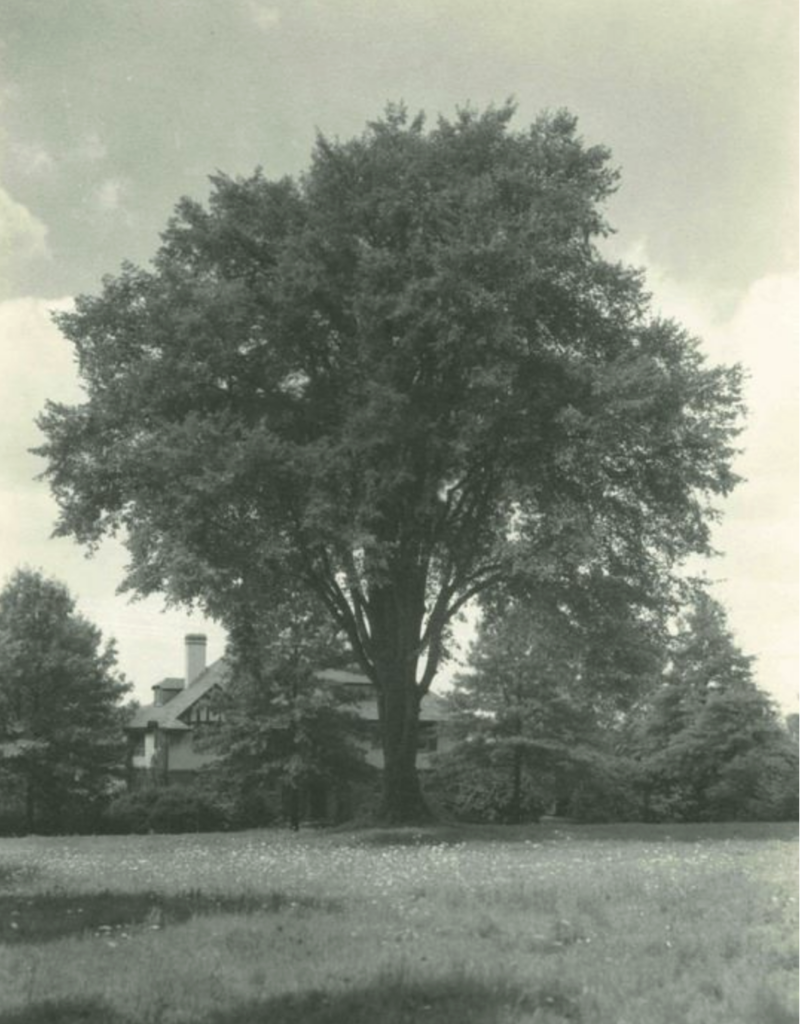
The Grayson Elm survived the epic 1938 hurricane that felled thousands of trees in Amherst, only to face the ravages of Dutch Elm Disease that decimated the species in the 20th century. Caused by a fungus and spread by beetles, the disease killed millions of the once ubiquitous New England trees, leaving Elm Streets devoid of their namesakes. Its ravages forever altered attitudes toward treescapes and monocultures; arborists learned not to plant more than a small number of any one species to prevent the loss of a high percentage of shade trees to pests or disease. In response to the widespread destruction caused by Dutch Elm Disease, the town of Amherst formally established the Public Shade Tree Committee in 1977.
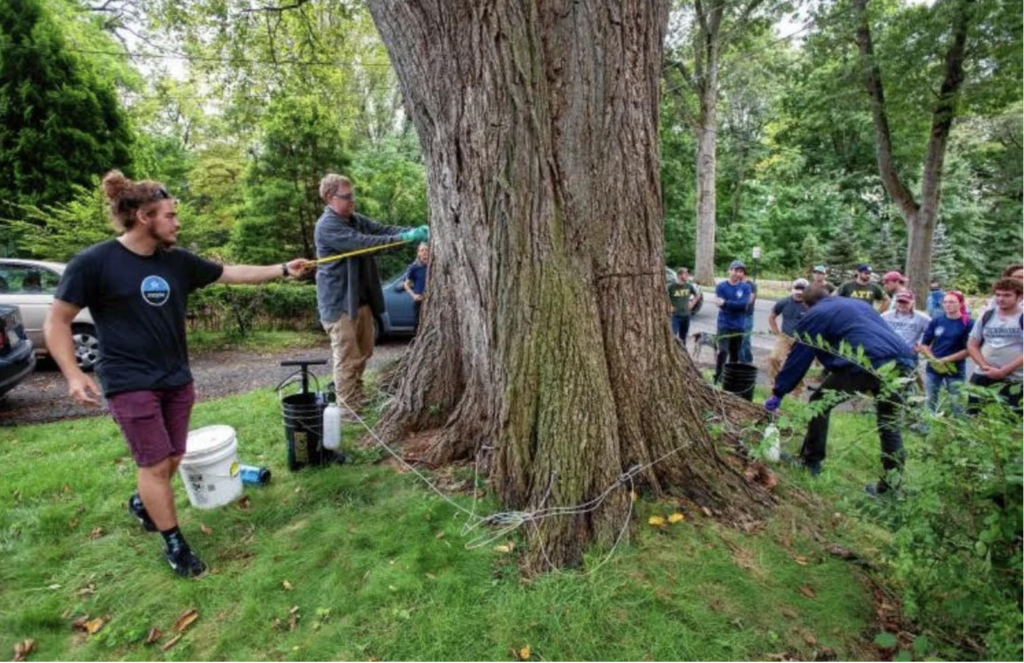
Copyright Daily Hampshire Gazette / H.S. Gere and Sons, Inc. September 20, 2021. Used with permission.
Some native elm trees, like the Grayson, can be injected with a fungicide every few years to increase their chances of survival. In a large-scale restoration effort, the USDA’s Forest Service has worked to grow and plant a new population of disease-resistant elms.
Through careful breeding and selection, scientists developed disease-resistant cultivars to return elm trees to the landscape. The Princeton elm (Ulmus americana ‘Princeton’) is valued for its high resistance to Dutch Elm Disease. Whereas American elms have variable shapes, the Princeton elm is characterized by its dense vase silhouette and quick growth. In fall 2025, APSTC planted a young Princeton elm at the corner of Main and Churchill Streets, adjacent to Sweetser Park.