
Finding Italianate Buildings in Amherst and the Valley
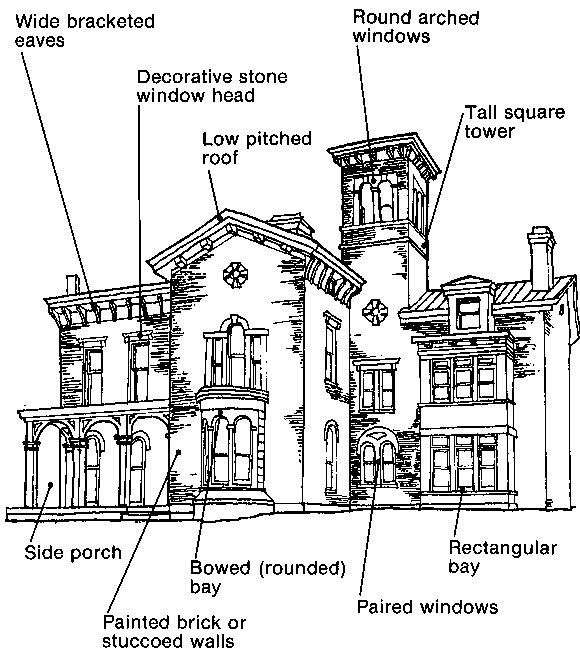
Features of the Italianate style. Photo: City of Cincinnati Planning and Engagement
When I moved to western Massachusetts about 15 years ago, I noticed some striking examples of a style of architecture known as “Italianate,” or the Italian Villa style. I have since learned that our Valley is rich in buildings in this style from the mid-1800s.
The term “Villa style” is generally reserved for homes, while “Italianate” encompasses homes and other building types — particularly commercial and civic structures. According to the Massachusetts Historical Commission, there are as many as 75 Italianate houses in Amherst alone. The most famous is The Evergreens (1856), designed by William Fenno Pratt for Austin Dickinson, followed closely by the Amherst Women’s Club (1864), built for Leonard Hills and also designed by Pratt (1814–1900).
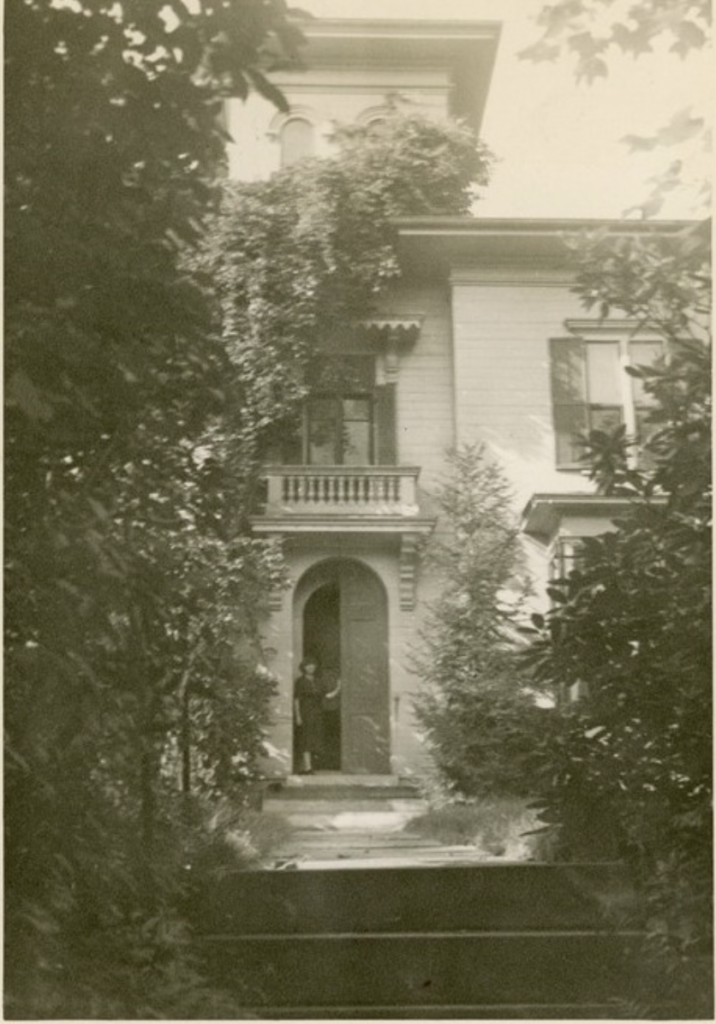
Italianate Homes in Amherst
Italianate homes are found throughout Amherst’s neighborhoods. These include a circa-1860 home built for a successful farmer next door to the town’s golf course; the Amherst College-owned Lincoln House (1860), again designed by William Fenno Pratt, on South Pleasant Street (see Amherst: A Guide to Its Architecture by Paul F. Norton, p. 140); and the Henry F. Hills House (1863) on Gray Street, also designed by Pratt.
Leonard Hills was the owner of a dry goods store and tavern in Amherst and the first president of the First National Bank of Amherst in 1864. He is known today as the founder of a successful palm-hat manufacturing business — one of the town’s principal employers until the 1870s. Descendants of his family owned the above-mentioned 1860 home until 1923, when Alice M. Hills gave it to the Amherst Women’s Club, which still owns and operates it today as the Hills Memorial Clubhouse.
The Henry F. Hills House
All of these houses tell stories of their own, and the Henry F. Hills House is no exception. It was built as a wedding gift for Adelaide Spenser and Henry Hills, a son of Leonard Hills, founder of L.M. Hills (established 1829), the palm-hat factory. Nearly all of these homes were built during the Civil War era, when Amherst’s main thoroughfares — Main Street, Pleasant Street, and Montague Road (then called Leverett Street) — were growing denser. A generation of prosperous farmers (among them the original owner of the Cherry Hill Golf Course building) and the town’s new industrial proprietors were commissioning distinctive houses. A cohort of professionals affiliated with Amherst College was also building new residences in town.
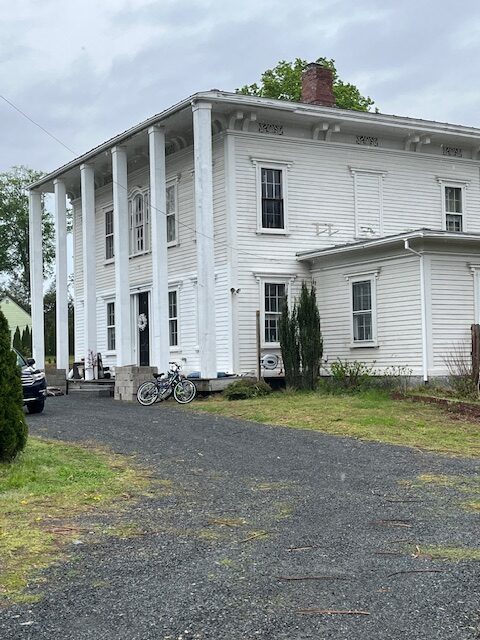
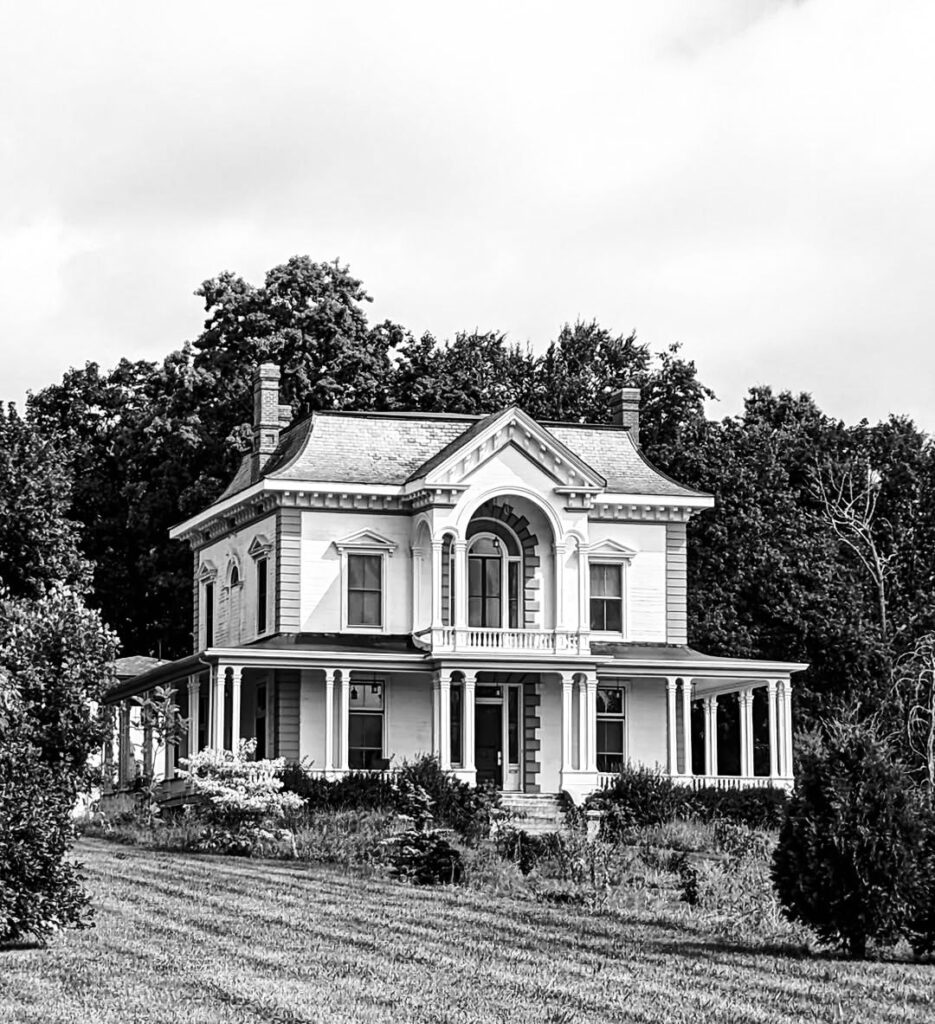
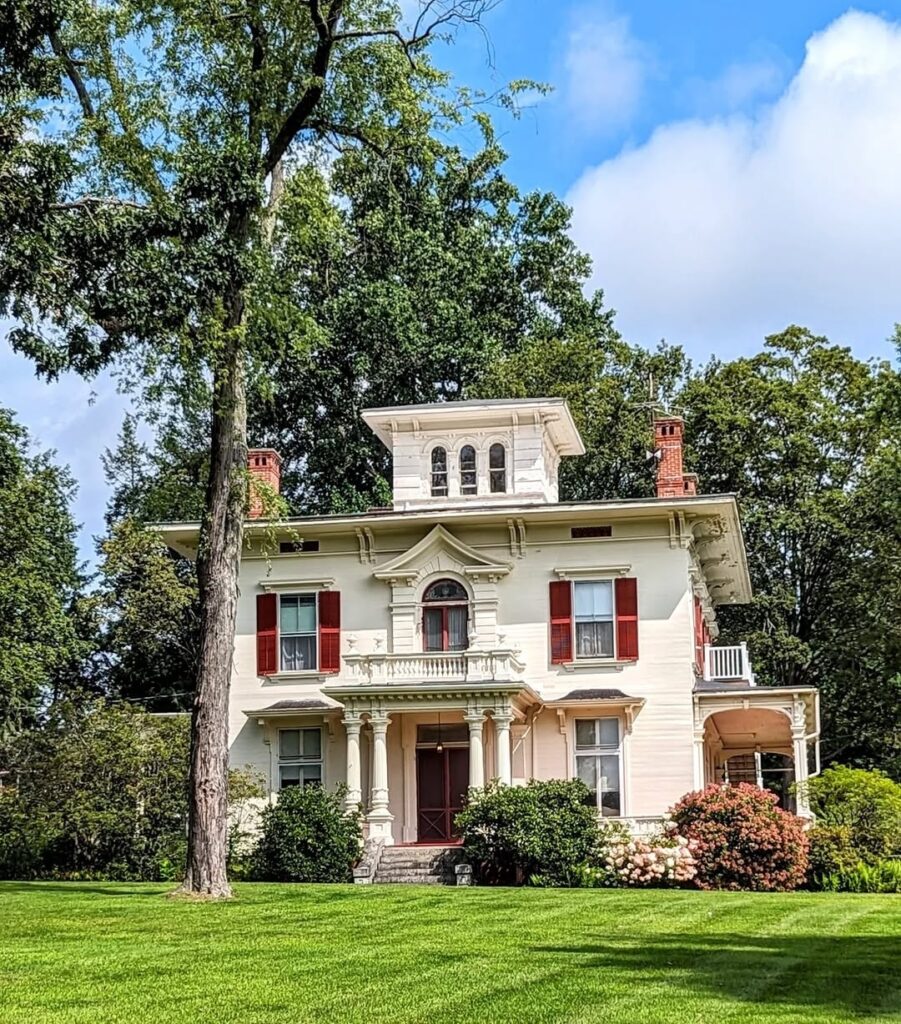
The Henry F. Hills House remained in the Hills family for decades after Henry Hills died in 1924, staying in family hands until 1968, after which the property underwent several changes. From 1976 until 2007, it was home to the Amherst Boys & Girls Club before that organization moved to Cottage Street. Despite the changes in ownership and use, the house has apparently retained many of its original architectural features and was recently restored by a developer as a private residence once more.
Identifying Italianate Architecture
I encourage readers to look for examples of Italianate architecture. As the name implies, these buildings derive their character from ancient Greek and Roman classical design — both traditions historically visible in Italy. The homes themselves have a solid, boxy shape, and their low-pitched roofs often feature wide, deep eaves. Some homes have a Greek temple front with a more steeply pitched roof, and occasionally a belvedere appears on the roof — reminiscent of the captain’s walk or widow’s walk more common in coastal towns such as New Bedford or Nantucket than in inland communities.
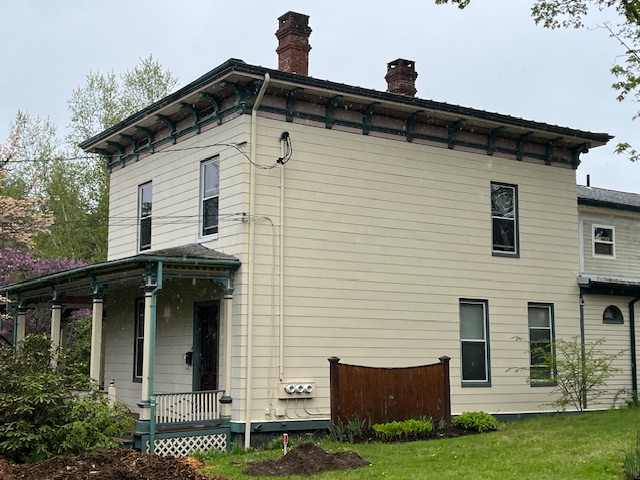
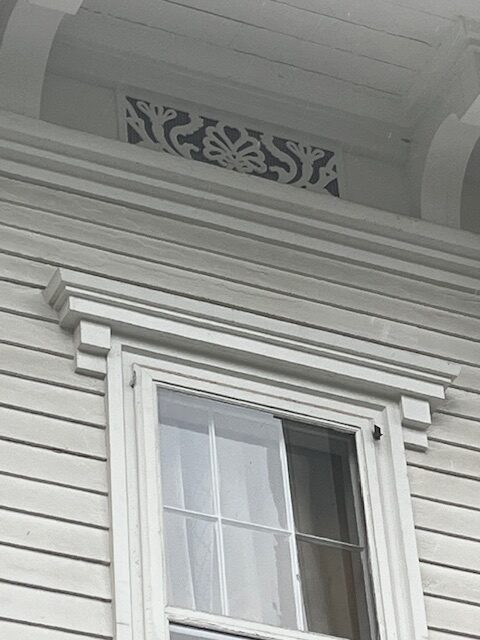
Beneath the roofline, some Italianate homes feature elaborate brackets and/or a deep frieze band (of ancient Greek origin) with openings that are either windows or decorative metal grates. This effect of a very shallow third story often relates to ventilation, with the belvedere — literally “beautiful view” in Italian — providing light and air as well.
Italianate on Amherst’s Streets
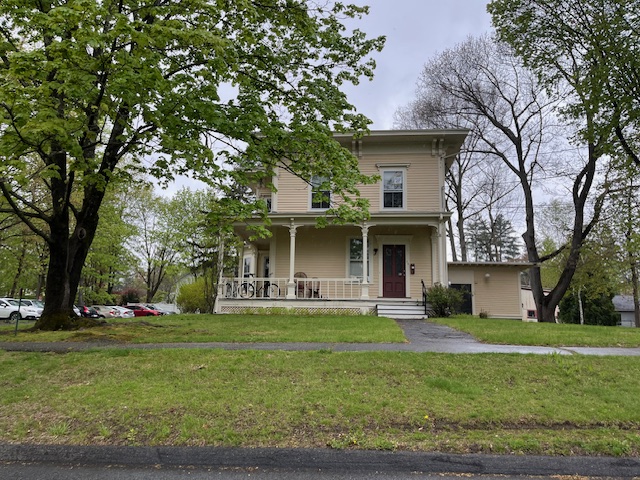
A concentration of Italianate homes can be found in the part of Amherst that abuts Main Street; examples appear on North Whitney Street, High Street, Gray Street, and Lessey Street. Because the earliest Italianate homes in town were built in this neighborhood, it is likely that later houses mimicked the style, reflecting the tastes of the town’s leading citizens at the time. The influence of the Dickinson family is evident: they even chose the Italianate style for the nearby brick Central Vermont Railroad depot (1853), one of the oldest surviving railroad stations in the state. William Fenno Pratt continued to leave his mark on the neighborhood as well, designing what became the Grange — and later the Nacul Center — on Main Street in 1878, originally built as a Methodist church.
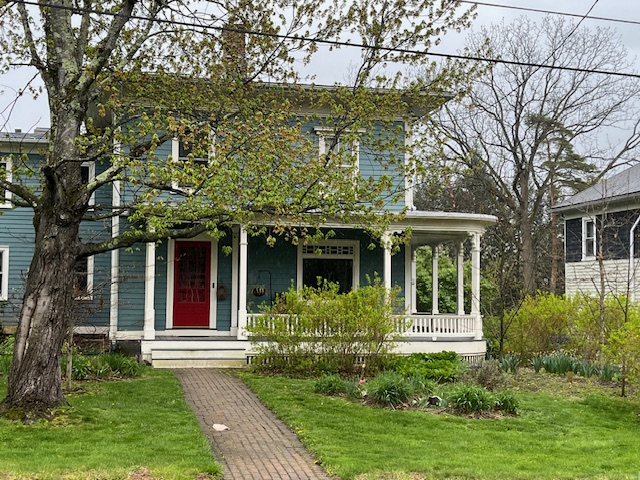
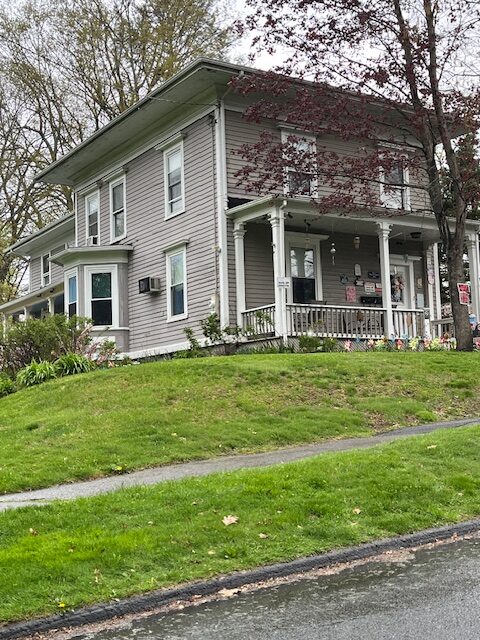
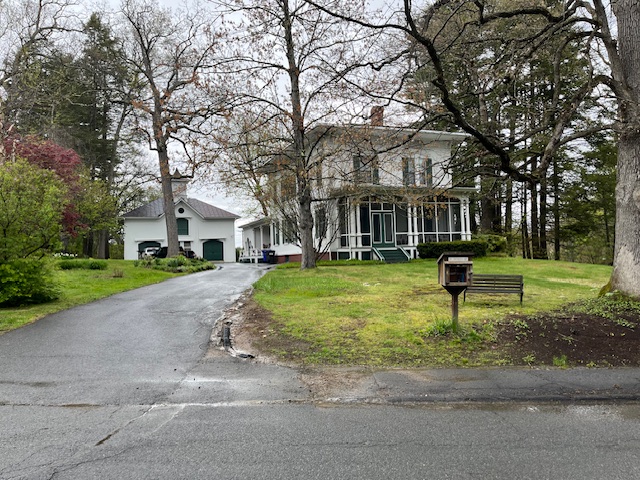
The proportions of these buildings are generally spacious. Some have elaborate porches with columns and tall first-floor window openings topped by rounded arches. Others have bay windows offering inhabitants better light and a prospect of the street — think 19th-century people-watching from a porch. Sometimes the front porch supports a balcony, suggesting a more temperate climate than New England actually provides. While these buildings were first constructed in Europe using stone or brick, in New England wood was the more practical solution, especially for private homes. Painted finishes sometimes conferred the look of marble or stone.
Photos of Italianate homes on North Whitney, High, Gray and Lessey Streets. Porches, elaborate brackets and tall first floor windows are characteristics of this style. Note the tiny third story showing decorative grates seen in the detail view. Photos by Hetty Startup.
Origins of the Style
The Italianate style is considered a revival movement that began in Europe. In the late 18th and early 19th centuries, the “picturesque” — a slightly earlier architectural and design movement in Britain — had promoted the design of new homes that looked like rustic old Italian farmhouses. These differed from earlier houses that had followed stricter ancient classical models, such as the Palladian or Greek Revival styles.
In the young American republic, the designers most responsible for popularizing Italianate design were architect Alexander Jackson Davis and writer and landscape designer Andrew Jackson Downing. The style was further spread through pattern books by well-known designers such as Calvert Vaux, Frederick Law Olmsted’s partner in the design of New York’s Central Park. Pattern books were intended to engage clients in the building process and to provide craftsmen with clear blueprints to follow. Downing, a landscape designer from New York, wrote widely-read works including The Architecture of Country Houses (1850).
Other Italianate buildings can be seen in Hadley (North Hadley Historic District), Hatfield (North Hatfield Historic District), Shelburne and Buckland (Shelburne Falls Historic District), Hawley (East Hawley Center Historic District), and the Haydenville Historic District.
Italian Villas in the Berkshires
A little farther from the Valley, in Pittsfield, a remarkable cluster of three related Italian Villa-style homes survives in Barkerville, a neighborhood on the western edge of the city. The homes were built for the owners of the Barker woolen mills, whose family had purchased land near Richmond Pond and its dam in 1832. The mills burned in 1879, and the company closed in 1890, but the three owners’ homes — along with one example of workers’ housing — survived.
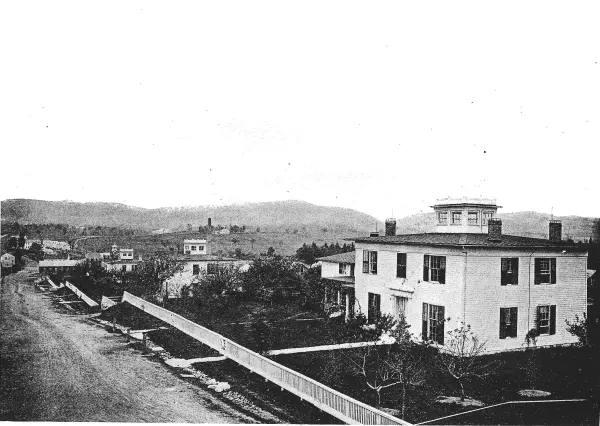
The Barker family Italianate houses, Pittsfield, MA
A Style Rooted in Social Aspiration
Historians of the early republic have noted an intentional search for a suitable “country gentleman’s” house as far back as the mid-1700s, reflecting the significant political and social changes taking place in rural New England. It appears to have been the “River Gods” of the Connecticut Valley who first sought to distinguish themselves from smallholding yeomen through the architectural choices they made for their homes. (See Kevin M. Sweeney’s essay, “Mansion People: Kinship, Class and Architecture in Western Massachusetts in the mid-Eighteenth Century”)
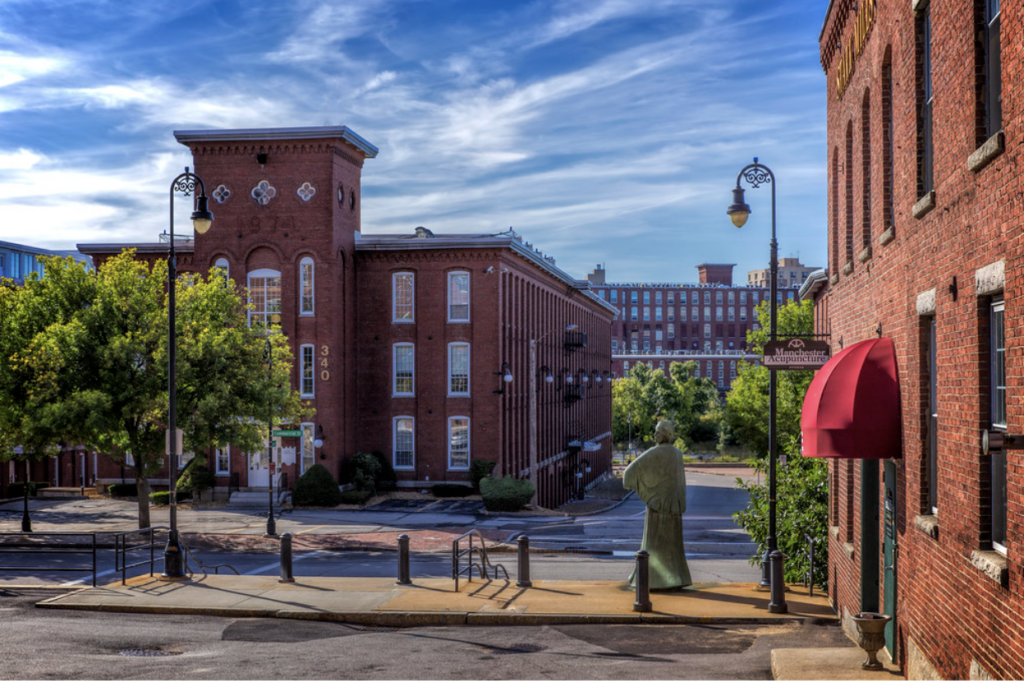
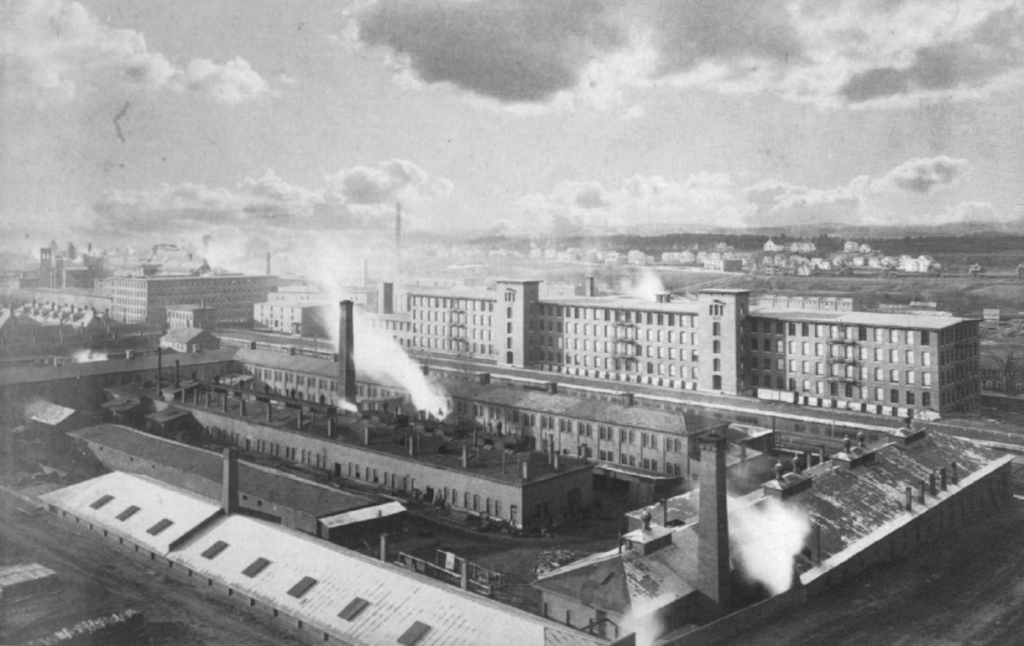
Because this architectural style is associated with the merchant class, the mills and enterprises of these proprietors were often designed in a similar idiom. The mills of Manchester, New Hampshire, for example, are handsomely proportioned factories with tall, wide windows and stair towers that could evoke a Tuscan hilltown’s cluster of family campanili. The mills and workers’ housing in Manchester were built using red brick from brickyards and local kilns in nearby Hooksett.
Civic Italianate: Town Halls of the Valley
Closer to home, other non-domestic examples of the Italianate style in the Valley are town halls near Amherst that one might call “civic Italianate.” Once again, one should not underemphasize the influence of William Fenno Pratt’s design for City Halls based on his plan of 1849-50 for Northampton.
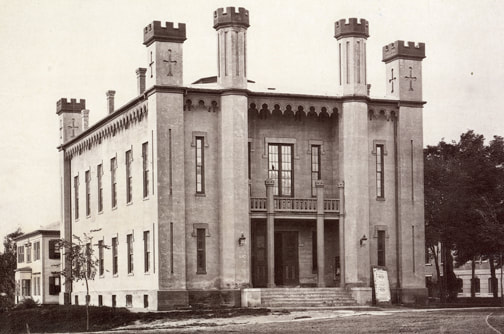
City Hall, Northampton, based on a plan by William Fenno Pratt.
Later examples include Easthampton Town Hall (1869), designed by Charles E. Parker — a splendid building since converted to CitySpace through designs by Kuhn Riddle Architects. Parker also designed Chicopee Town Hall (1871), which was apparently modeled on Florence’s Palazzo Vecchio.
These references to medieval towers in Tuscan cities such as Siena and Florence suggest that in mid-19th-century New England there was some version of campanilismo — an Italian term for an intense local patriotism and devotion to one’s town or region — at work in the Valley. Civic pride, at least, is almost always a good thing.
The Work of William Fenno Pratt in Northampton
Staying close to home, I want to end by featuring more of William Fenno Pratt’s work — he not only designed the first Italian Villa-style homes in Amherst but left a strong imprint on Northampton, where he lived. He had begun his career working in the Gothic Revival style, as seen in his house at 115 Bridge St. in Northampton, built in 1859 for Seth Hunt, owner of the Connecticut Valley Railroad. But it was Italianate architecture that gave him greater freedom to experiment, allowing him to tailor commissions more closely to the needs of his patrons. In that respect, it is worth taking a closer look at Pratt’s severe brownstone commercial building known as the Smith Charities Building, built in Northampton in 1865.
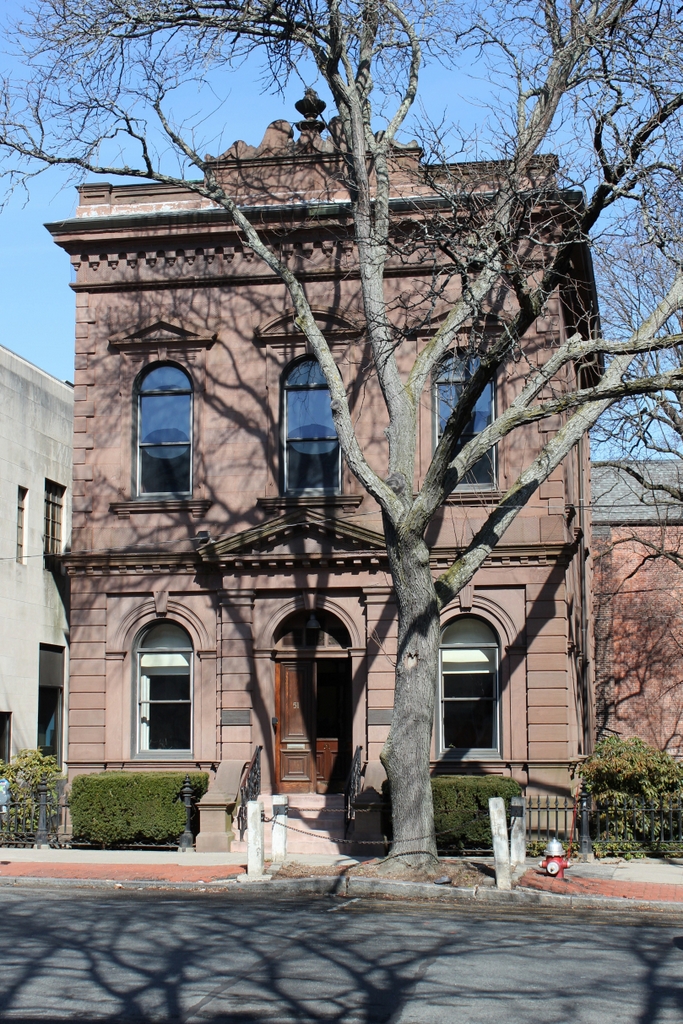
Among the many causes supported by the funds of the building’s benefactor, Oliver Smith, is the Smith Vocational and Agricultural High School, which still bears his name. His estate was historically administered by three trustees representing eight towns in Hampshire and Franklin counties: Amherst, Deerfield, Greenfield, Hadley, Hatfield, Northampton, Whately, and Williamsburg.
Pratt’s output is prodigious. In Holyoke, he designed Wistariahurst Mansion for the Skinner family, silk merchants, in 1868. Their silk factory was in Haydenville — known as Unquomonk Mills — until it was washed away in the catastrophic floods of 1874, after which William Skinner rebuilt his mills in Holyoke.
A footnote on Pratt family history: William’s brother Levi lived in an octagonal house in Fredonia, N.Y., based on designs by Amherst College graduate Orson Squire Fowler (1809–1887), who was then known for his interest in phrenology and for views on race that are by today’s standards indefensible. His octagonal house designs remain celebrated, however, and often incorporated Italianate details.
Beyond the Valley
Beyond Hampshire County, Italianate designs can be seen in Springfield — including the Elijah Blake House (now part of the Springfield Museums complex) and other examples in the South Fountain Historic District.
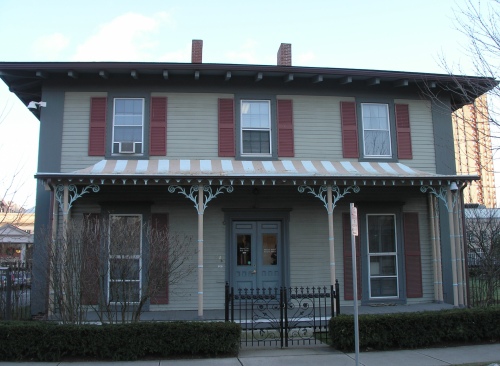
Farther afield, the Italianate homes framing New Haven’s Wooster Square were designed by architect Henry Austin, who also designed the splendid Morse-Libby House in Portland, Maine, with interiors by the Herter Brothers. Now a museum open to the public, it is well worth a visit.
I dreamed this winter of an Italian vacation, perhaps following in the footsteps of Stanley Tucci or Frances Mayes — or older guides such as artist, reformer, and architectural critic John Ruskin. As it turns out, this isn’t a foreign-travel year for me, so happy sleuthing in our Valley for Italianate architecture!