
Planning Board and Community Resources Committee Review Draft of Clean Energy Bylaw
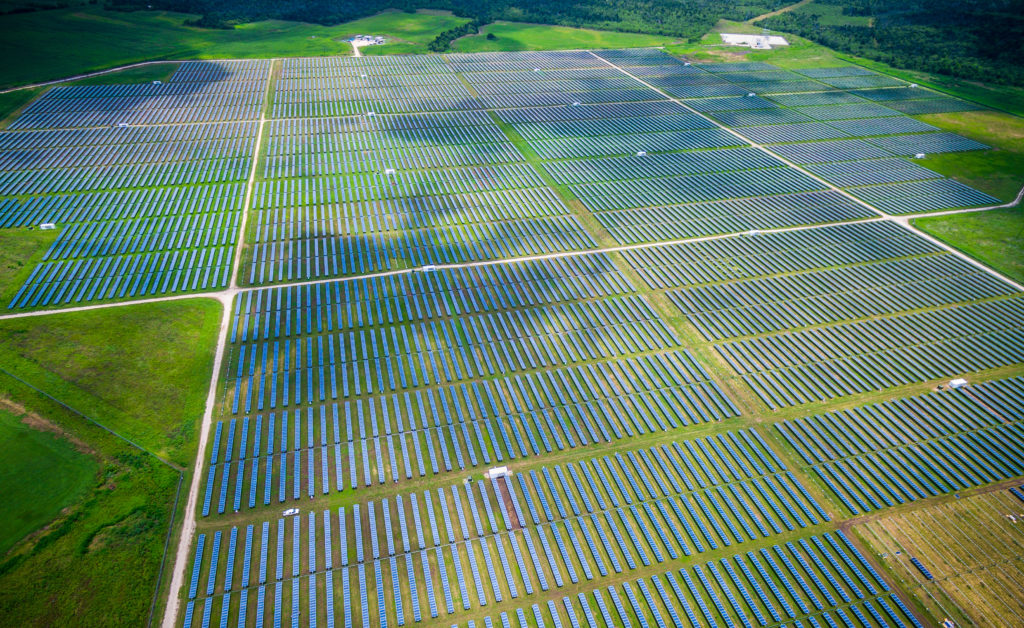
Solar farm near Austin, Texas. Photo: RoschetzkyistockPhoto.. Istock
Report on the Meeting of the Amherst Planning Board and Community Resources Committee, May 20, 2026
This meeting was held over Zoom and was recorded.
Present
Planning Board: Doug Marshall (chair), Bruce Coldham, Fred Hartwell, Johanna Neumann, and Angus McLeod. Absent: Jerah Smith and Jesse Mager. Community Resources Committee: Pam Rooney (chair), Mandi Jo Hanneke, and Andy Churchill. Absent: Jennifer Taub and Ellisha Walker.
Staff: Stephanie Ciccarello (director of sustainability), Walker Powell (planner), and Pam Sadler Field (planning program assistant).
The Planning Board and Community Resources Committee (CRC) held a joint hearing on the proposed Clean Energy Bylaw (Article 18 of the Zoning Bylaw) on May 20. The group went through each section but completed its review of only about half of the 20-page draft bylaw. They will meet again Wednesday, June 3, to continue the review.
After review, the proposal will be sent to the town attorney for legal review and then must be approved by the Town Council.
CRC Chair Pam Rooney introduced the history of the bylaw, on which work began in 2022 with the creation of the Solar Bylaw Working Group. The CRC began working on the bylaw in 2024, but new state regulations required the inclusion of battery energy storage systems (BESS) and, in 2026, a requirement that all municipalities complete review of proposed projects within 12 months necessitated reworking of the local bylaw.
All solar panel installations (SPIs) exceeding 25 megawatts and BESS exceeding 100 megawatts will be permitted by the state. Municipalities must comply with the new state guidelines by October 2026.
The state offered a model bylaw, and Mandi Jo Hanneke said the CRC compared Amherst’s draft with the state’s to tailor the local bylaw to state requirements. The local bylaw specifically exempts small solar installations, such as parking lot canopies and agrivoltaics, from the extensive requirements.
Planning Board members criticized the length and complexity of the local bylaw, which they said seemed to impede rather than encourage solar installations. Johanna Neumann asked whether the CRC had received any feedback from the solar industry on whether companies considered the regulations burdensome. She also asked about the rationale for pursuing an Amherst-specific bylaw — which she referred to as a “unique snowflake bylaw” — as opposed to simply adopting the state bylaw.
Rooney replied that the CRC had not received feedback from solar companies on the Amherst bylaw, but that the state had received input, as had the Solar Bylaw Working Group, which included an industry member who contributed to the early draft. Hanneke added that one of the major concerns the CRC heard was that the state law was not sufficiently protective of the local water supply. The state mandates a 200-foot “no disturbance” zone near drinking water supplies, but no one was clear on how this applied to private wells.
Hanneke noted that while the bylaw is complicated, it consolidates all provisions of the comprehensive permitting process in one place, making it easier for applicants to find all the information they need without consulting multiple sections of the zoning bylaw.
Angus McLeod expressed concern that the Planning Board would be asked to evaluate areas in which they have little expertise, but Sustainability Director Stephanie Ciccarello said the Planning Board would be responsible only for the parts of the application that pertained to it. Other aspects will fall under the jurisdiction of the Conservation Commission, the Fire Department, electrical inspection services, the Planning Department, and the Zoning Board of Appeals, among other relevant boards.
The meeting then proceeded through each point in the proposed bylaw. The consensus was that SPIs and BESS projects should not be subject to more stringent requirements than other proposals in each zone. An exception was made for an increased setback of 600 feet for BESS. Because the group finished reviewing only half of the draft, a follow-up hearing was scheduled for June 3 at 6:35 p.m. on Zoom.
Although this meeting was scheduled as a public hearing, only one public comment was offered during the nearly four-hour session. That comment came from Solar Bylaw Working Group member Steve Roof, who noted some inconsistencies between Department of Energy regulations and those in the March 2026 state regulations, and said he suspected the state regulations would take precedence.