
Opinion: Hampshire College Didn’t Fail; Society Failed Hampshire
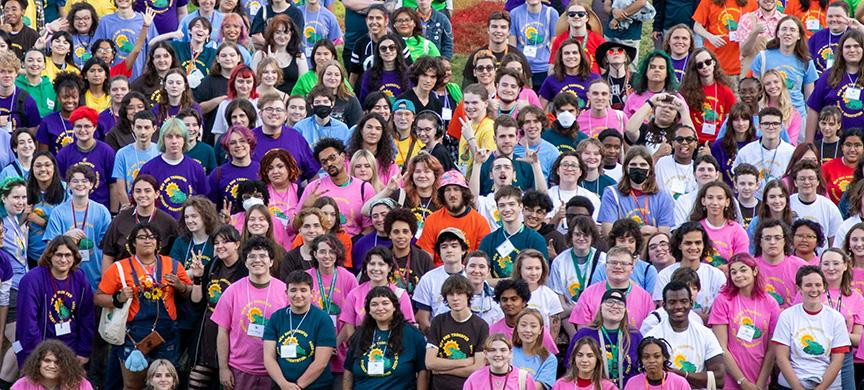
Hampshire College Students (F23). Photo: hampshire.edu

Since the public announcement of its imminent closure on April 14, many have opined on why Hampshire College “failed.” Many of the reasons offered on outlets ranging from new social media to established international news agencies have been both reasonable and predictable: that Hampshire did not have sufficient time to build an endowment, that the perceived value of a liberal arts education has declined, that Hampshire was out of step with broader society’s values, and that the college was mismanaged.
These postmortems are all partially correct. But they miss a much more important, larger reality.
The broader truth and the most important lesson is that society failed Hampshire. Specifically, Hampshire was failed by the American higher education ecosystem and the wealth that funds it. Instead of supporting Hampshire, wealthy peer institutions — including our Five College neighbors and consortium members — philanthropic foundations, corporations, educational influencers and gatekeepers, and even affluent alumni stood by as the college struggled. By hoarding resources and reinforcing a hyper-wealthy, traditional model of schooling, this conservative higher education ecosystem starved Hampshire.
Hampshire did not fail because of anything it did or failed to do. It did exactly what it was designed to do. Despite garnering so little external support, it was a marvel to witness firsthand. It was intellectually engaging and exciting, and at the same time an economically efficient and effective educational institution. It played a leading role in transforming thousands of inquisitive students into self-aware, critical, and creative adults. And it managed that on a shoestring budget.
I’d like us all to stop blaming Hampshire for its closing and instead evaluate how the system failed Hampshire.
Hampshire’s Economics 101: Innovation on a No-Frills Budget
For the 40 years that I taught at Hampshire, we struggled to balance our annual budget. I was there and saw it all firsthand. We often closed the gap between revenues and expenditures with an annual ritual of last-minute fundraising or by cutting excesses that weren’t there. But we nonetheless persisted.
I served as Hampshire’s Dean of the Faculty and Vice President for Academic Affairs from 2009 to 2012. During this time, the total Hampshire budget was a bit north of $50 million. As we were enrolling around 1,400 students, Hampshire’s total cost to educate a student was around $35,000. At that time, total tuition, room, and board (TRB) revenue was around $42 million, or about $30,000 per student. So the college needed about an additional $8 million, or about $5,000 per student, to balance its annual budget.
A bit of comparison is useful here. Amherst College is Hampshire’s neighbor and founding partner institution. At the time I was serving as Dean of Faculty, Amherst College’s per-student cost was well over $80,000. Their athletics department’s budget alone was not far from Hampshire’s entire academic budget. In other words, at that time it cost Amherst College more than twice as much to educate a student.
I found this hidden Hampshire economics story to be astounding. How did Hampshire’s faculty and staff manage to work with students in writing, performances, art, and scientific work — producing exceptional independent work and senior theses — at such low cost overall and per student? New students enrolled without many special qualifications, other than a desire to approach college differently and to challenge themselves. How did this college turn these students into graduates who went on to create diverse, creative, and illustrious careers?
How did Hampshire manage to allow each student to design their own majors, or areas of concentration, and complete a unique senior thesis? How did the faculty have time to write thoughtful narrative evaluations for each student in each class? How did Hampshire offer such a unique and effective education at less than half the cost per student as Amherst College?
The Seven-Year Death Spiral (2019-2025)
So why did Hampshire transition from tight but manageable annual financial gaps into a full-on death spiral?
Clearly, first and foremost was the mortal wound delivered in early 2019 by new President Miriam Nelson and the Board of Trustees. Nelson and the trustees did the unimaginable to a tuition-dependent college: they closed the advancement office and, most lethally, stopped accepting new students. Through this action, they choked off the college’s revenue streams. They argued that Hampshire had become unsustainable as an independent college — with what evidence? — and thought they had a buyer. But that deal never materialized. As others have said, turning off all sources of revenue was not just wrong; it was cruel and ultimately lethal.
Instead of closing immediately, as Nelson preferred, a passionate group of students occupied her office for a record-breaking 72 days, finally leaving after Nelson resigned. The board reversed course, reopening advancement and admissions, and Hampshire continued — wounded and severely weakened, but alive.
Fearing the college would close, many continuing students left, and in the fall of 2019, Hampshire opened with a student body about 40% the size of the prior fall. Hampshire faced an economies-of-scale problem because its infrastructure and workforce were designed for more than twice the number of students enrolled. Creditors and accrediting agencies — key parts of the higher education ecosystem — were well aware that Hampshire had been mortally wounded. They specifically failed to support Hampshire.
Admissions had to fight against a tsunami of bad publicity. Top Google search results at this time associated with Hampshire included “Is Hampshire still open?” The obvious result was that parents and guidance counselors directed fewer prospective students toward Hampshire. Equally important, the gap between the average TRB revenue and the cost of educating a Hampshire student widened from the manageable $5,000 per student in the early 2010s to between $30,000 and $40,000.
2023-24 financials from Hampshire indicate that TRB revenue per student fell from over $30,000 to about $24,000, despite more than a decade of inflation. Meanwhile, the cost of a Hampshire education increased to about $60,000 in 2023-24. Fundraising and a draw on a small endowment could close a gap of a few million dollars, but not $20 million to $30 million every year.
That $60,000 per student might seem high, but it isn’t. It is well below inflation-adjusted costs. It is bare-bones low.
The college rallied. Already overworked faculty somehow managed to take on more advisees, teach more classes, write more evaluations, and guide more senior theses. The remaining staff absorbed the work of laid-off colleagues.
Back to Amherst College. Its published cost per student in 2023-24 was $152,000. In other words, it now costs Amherst 2.5 times as much to educate a student as it does Hampshire. If anything, the gap has widened — not just in real dollars, but also in percentage terms. This comparison is not unique. Even relative to other small liberal arts colleges with small endowments, Hampshire stands out as particularly frugal. And this is true even though Hampshire is the most individualized, hands-on, and labor-intensive among comparable institutions. Hampshire got a lot of bang for its educational buck.
And that is my point. Hampshire was efficient and effective.
Failing Hampshire College
The prevailing view of Hampshire is that it was too fluffy, too hipster, too political, too liberal, too radical, too alternative, too focused on DEI, too unstructured, too out of step with today’s students — too much of one thing when it should have been another. Not a good return on investment. Too pricey for this moment.
Hampshire didn’t fail because it did something wrong. It was a unique, niche-broadening educational program that worked. It took students where they were and guided them toward becoming creative, critical, and inventive adults.
But the opposite is true. Hampshire didn’t fail because it did something wrong. It was a unique, niche-broadening educational program that worked. It took students where they were and guided them toward becoming creative, critical, and inventive adults. Hampshire’s faculty and staff drew deeply on their own resources and energy and channeled them into their students. Hampshire was exactly what it was supposed to be: an innovatively different education.
Hampshire’s educational model did not fail. Hampshire’s faculty, staff, and students did not fail. Rather, Hampshire proved to the world that an institution could provide a deeply personalized, rigorous, and radically creative education at a fraction of the cost of its older and wealthier peers. Moreover, in less econometric terms, Hampshire graduates — the writers, actors, doctors, science Ph.D.s, and more — pass the eye test for great achievement.
What led to Hampshire’s closure was its lack of an endowment, compounded by mismanagement. And perhaps even more important is the broader context. Hampshire could have survived if it had been supported by powerful individuals and institutions, as well as by the broader society it served.
Hampshire was an American invention of the 1960s, embodying creativity, boldness, individuality, liberalism, democracy, and faith in humanity. And we failed to see that it was working.
We are left with more conventional colleges and universities. Now we have far less adventure and experimentation — far less imagination of what is possible. Students who learn differently and think outside the box will struggle more to find community and an intellectual home. Little boxes, little boxes.
In the song “Big Yellow Taxi,” penned the year Hampshire opened, Joni Mitchell wrote, “Don’t it always seem to go that you don’t know what you got ’til it’s gone.” Hampshire College’s legacy will be one of having provided innovative and necessary educational excellence. Meanwhile, Hampshire’s campus will soon be sold to whatever comes next.
Instead of being celebrated, studied, and sustained by American higher education and philanthropy, Hampshire was starved to death by a system that only values and protects accumulated, stagnant wealth. Hampshire College didn’t fail; we failed Hampshire.
Alan Goodman taught at Hampshire for 40 years (1985-2025) and is a former Dean of the School of Natural Sciences and Dean of Faculty and Vice President for Academic Affairs.
Alan,
Once again your clear thoughts and opinions are greatly appreciated by me.
It’s important for a community to have the broadest view of issues and in terms of Hampshire you were always on the field .
I wish Hampshire College was available or known to me in the 1960s. The article touches on many societal problems today and loss of core human values in so many institutions. To quote another 60s song by Bob Dylan “ When will we ever learn”…
Wonderful write up. I’m so sad my daughter’s college is closing. I know many successful people who graduated from Hampshire. It’s a great loss to the community.
Thank you Alan for the best analysis on the closure yet. Look forward to working with you in Hampshire Next!
not an “Amherst loss” (I saw no help from the city) but a national loss. Yes, we will have a hole in Amherst/Valley/Regional soul’n life but… in terms of educational philosophy the nation itself is at a big loss. Goddard, Marlboro… and more. And with just Antioch, Reed, one or two others left? Shame! What happened to community of support? Let’s see what can happens w/‘Hampshire Next’. In my one man (joyful) poverty pocket (come by’n visit) I have pledged a % of yrly income toward “Next” with hopes held high. Your’s?
Grateful for my time at Hampshire College and for the perspectives and thinking tools I developed there. “Higher” education seems too much focused on funneling students towards specific careers and narrow skill sets now. The loss to our society will show itself before long.
Thank you for this piece.
For seven years from 1974-1981 while I was a graduate student at the University of Massachusetts I lived and worked at Hampshire College as Assistant Master of Dakin House and a Faculty Associate in the School of Humanities and Arts.
Hampshire not only transformed students. As someone privileged to work with Hampshire students and all participants in this remarkable undertaking I ,too, was transformed in ways that speak directly to who I am now and those things I hold most dear.
Hampshire goes on…
I am a New College of Florida alumna. I was grateful and moved when Hampshire College opened its doors to our students fleeing from externally imposed changes. For more on New College, see John Oliver’s LWT for a bitingly funny account and for the single best long-form analysis read the In These Times piece by Hampshire alumna, Kathryn Joyce. But don’t stop with the story of what happened. I don’t think Hampshire’s story is over and I know the New College story has not been fully written. See how New College alums continue to work. We know we received an education with fighting for and I think Hampshire College alums know they did too. Check out the ongoing fight at novocollegian.org. Join to get updates. Perhaps our already partially merged groups can intentionally join together with dedicated faculty and administration to bring forth a “New Hampshire” so future generations of students can access the kind of robust, student centered undergraduate experience we enjoyed.
Currently in higher ed and was an 86F — thank you for multiple, robust educational experiences, Alan (I still recall and use several key things you taught me)! After 32+ years in higher ed, I understand so much more now about how we failed Hampshire, and also, the implications of this failure. Thanks for this essay.
Joan MD, I believe Pete Seeger wrote and performed the song “When Will They Ever Learn” and later Joan Baez with Bob Dylan performed it as a duo.
Kurt Geryk is right that Pete Seeger wrote the anti-war song “Where Have All the Flowers Gone?” which features the lyric. However, it may have never become the classic that it is if Joe Hickerson didn’t add the two verses that turned it into a circular song.
Incidentally, Pete Seeger’s grandson Kitama Jackson-Seeger is a Hampshire grad.