
Opinion: Belonging Is a Public Health Issue
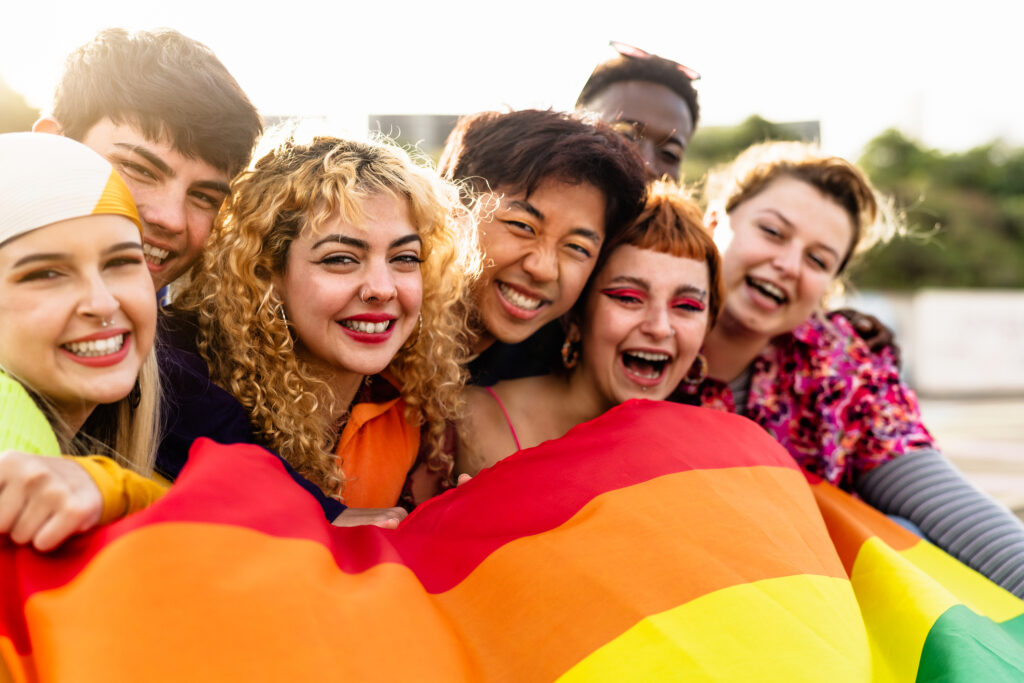
Photo: Alessandro Biascioli for istock.
by Amy Cronin DiCaprio, for the LGBTQIA+ Caucus of Amherst
This is the second of five pieces that the LGBTQIA+ Caucus of Amherst has prepared for Pride Month. The Indy will publish one piece each week during the month of June. Read the first article in the series here.

When we think about health, we tend to think about doctors, hospitals, medications, or insurance. We rarely think about belonging. Yet belonging may be one of the most powerful influences on health that exists.
Most people understand this intuitively. We know what it feels like to be welcomed into a community. To be accepted for who we are. To feel safe enough to ask for help, share our struggles, and build meaningful relationships. We also know what it feels like to be excluded. To feel isolated. To wonder whether a space was really meant for us. Those experiences affect more than our emotions. They affect our health.
Over the last several decades, public health research has increasingly shown that social connection, community support, and a sense of belonging are strongly associated with better physical and mental health outcomes. Isolation, discrimination, and exclusion can have profound consequences for well-being.
For LGBTQ+ people, belonging has often been hard-won. That is one reason Pride matters. Pride is a celebration, but it is also something more. It is a public expression of a simple but powerful idea: everyone deserves to be seen, valued, and welcomed as they are. For many people, that message is affirming. For some people, it is transformative. And for some young people, it can be life-saving.
The statistics are difficult to ignore. According to The Trevor Project’s 2024 National Survey on LGBTQ+ Youth Mental Health, nearly 40 percent of LGBTQ+ youth seriously considered suicide in the past year. Among transgender and nonbinary youth, nearly half did. Nearly half of LGBTQ+ youth reported experiencing bullying.
These numbers are alarming, but they are also revealing. They tell us that the challenges facing LGBTQ+ youth are not simply individual struggles. They are reflections of the environments young people are navigating every day.
Public health teaches us to look beyond outcomes and ask what conditions produced them. Are young people safe? Do they have trusted adults in their lives? Do they feel protected by the institutions that serve them? Do they know they belong?
A few years ago, many Amherst residents found themselves asking those same questions. Reports of bullying and concerns about how queer and transgender students were being supported in the schools sparked difficult conversations throughout the community. Families, educators, students, and community members wrestled with what it meant to create environments where all young people could thrive.
Out of those conversations came the Amherst LGBTQIA+ Caucus, a group committed to advocating for the safety, dignity, and well-being of LGBTQ+ community members, especially young people. The caucus was born from a specific moment, but the questions it grapples with are much larger. How do we create communities where young people know they matter? How do we ensure that protections exist not only on paper, but in practice? How do we build systems that foster belonging rather than simply responding after harm occurs?
These are public health questions. Public health is often described as the work of preventing problems before they happen. We invest in clean water before disease spreads. We prepare for emergencies before disasters occur. We strengthen community systems before they are needed.
Belonging works the same way. It is a form of prevention. Young people who feel connected to their communities are more resilient. Young people who have supportive adults fare better. Young people who know they are valued are more likely to seek help when they need it and more likely to envision a future for themselves.
Earlier this year, I spoke at an Amherst Regional School Committee meeting and responded to a comment on the “queer agenda,” and summarized the work of the Amherst LGBTQIA+ Caucus this way: our “agenda” is to make sure queer and trans kids get to become adults. Beyond the politics, beyond the headlines, beyond the debates, the goal is remarkably simple. We want young people to be safe. We want them to be healthy. We want them to know they matter, and they belong.
As Pride Month unfolds, that feels worth remembering. Pride is not only a celebration of identity. It is a celebration of community. It is a reminder that belonging does not happen by accident. Communities create it. Protect it. Strengthen it. The conditions that help LGBTQ+ people thrive—safety, inclusion, and mutual support—help create stronger, healthier, and more connected communities for everyone. And when they do, health follows. Because belonging is not simply a social value. It is part of what helps people survive, heal, and thrive.
This article was written by Amy Cronin DiCaprio and behalf of the LGBTQIA+ Caucus of Amherst.
The LGBTQIA+ Caucus of Amherst is a grassroots group formed in the fall of 2023 in response to a clear need to push for transparency, accountability, and equity from the local administration, and to mobilize greater advocacy and support for queer and trans students. The Caucus works with the community, including Amherst Regional Public Schools staff and administration to identify and meet the needs of LGBTQIA+ students. To protect its members from potential retaliation and intimidation within the community, the Caucus operates with an anonymous membership structure relying on a designated spokesperson for public communication. The caucus can be contacted at CaucusLGBTQIA@gmail.com.