
Summer Wanderings No. 3: Blueberries and the Town of Heath
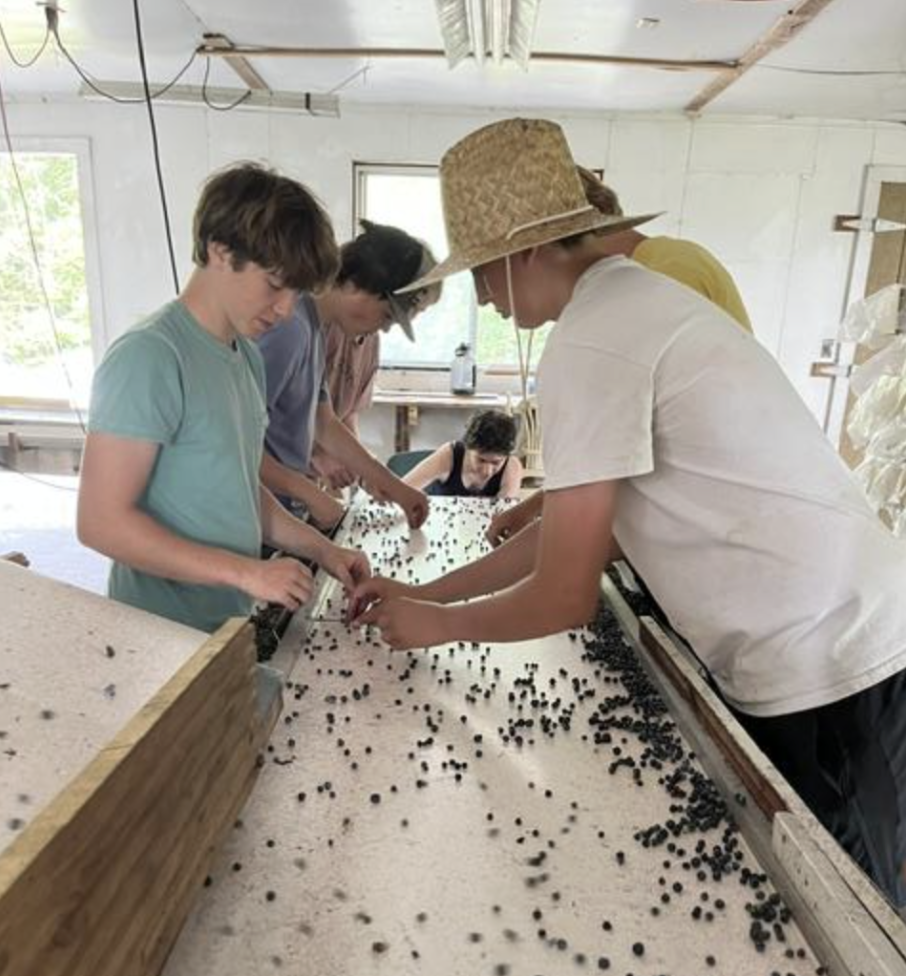
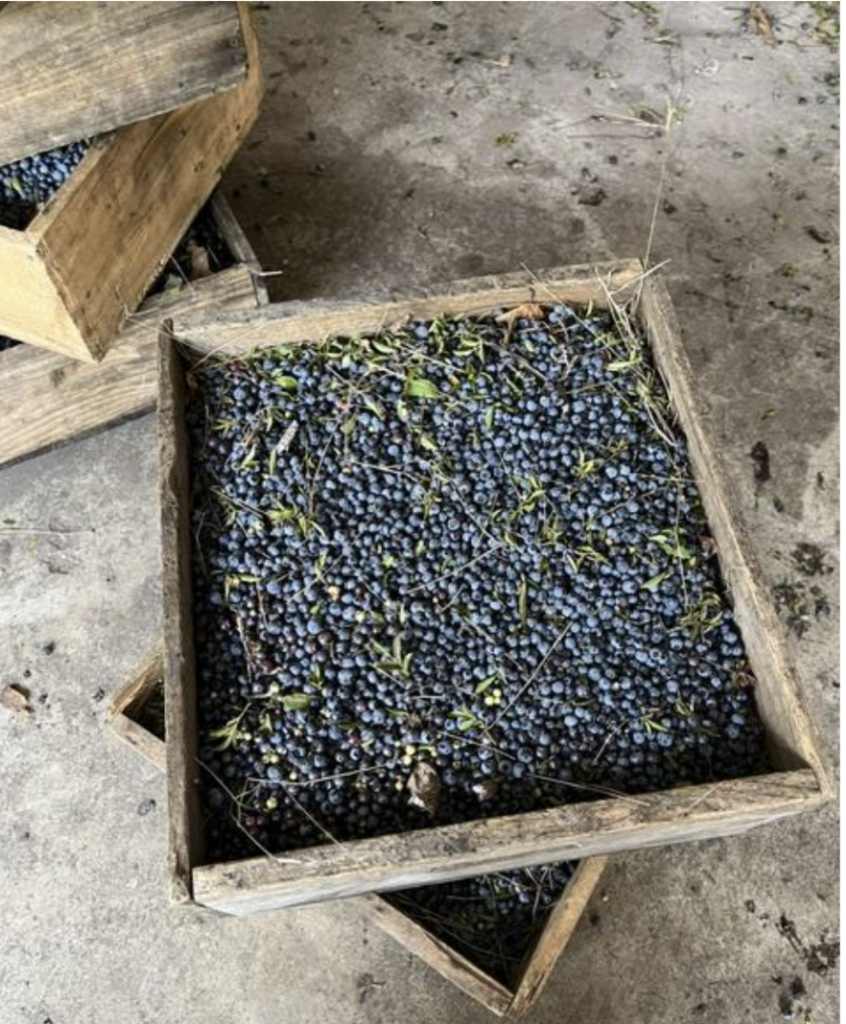
Berry sorting at the Benson Place blueberry farm, Heath, MA. Photo: Hetty Startup
This summer has offered me a change of pace and a chance to widen my lens on issues of historic preservation and related local history themes. This is the third article in a new series called Summer Wanderings. Read previous installments here.
Routes 8 and 8A off the Mohawk Trail in Charlemont take you to Heath, a town on the Vermont border whose population in the 2020 census was 723. It sits in the foothills of the Berkshires, 1,729 feet above sea level. Your ears pop as you climb to the historic town center. I first drove through this area in the early-to-mid-1990s on work assignments, heading — multiple times, in all weather — to an art conservator’s studio near North Adams.
I was in Heath last week to pick up my CSA (community-supported agriculture) share of wild blueberries from The Benson Place blueberry farm. I’ve always thought these taste better than the larger high-bush variety. As I walked around the town common — where there isn’t even a flashing yellow light — my map showed several blueberry farms out on Burnt Hill (Flagg Hill Road), where I was indeed headed.
Admittedly, we are quite far from Amherst — relatively speaking — but historically, and in terms of Heath’s ethos today as a rural farming community, we are still, in cultural terms, in our Valley’s hilltowns. The roads are dirt, and as I drove, I wondered whether there were paintings of blueberry pickers to compare with the historic paintings of cranberry harvesters by Eastman Johnson in eastern Massachusetts and on the Cape. I found several artists who made blueberry-themed paintings, including the contemporary realist Neil Welliver and Andrew Wyeth, who painted blueberry pickers in Maine and also made still-life works of this kind of specialized farming.
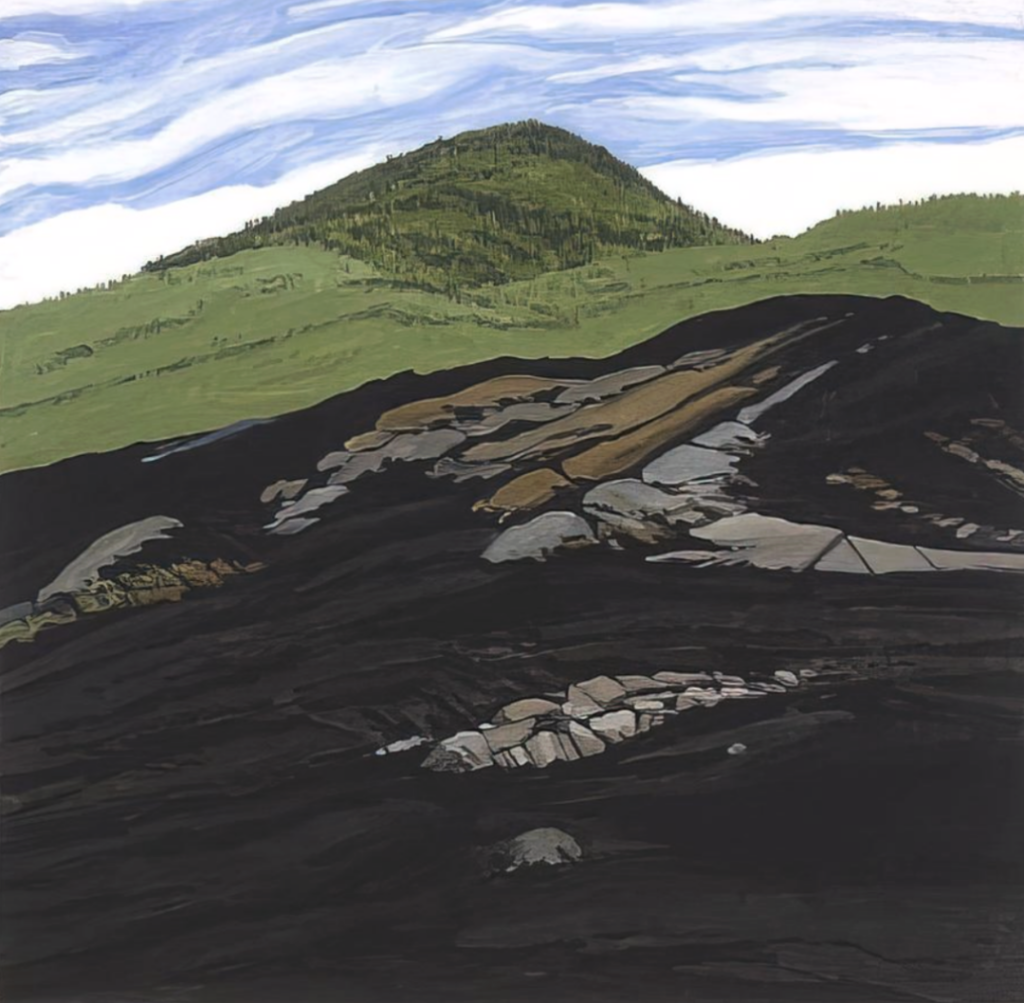
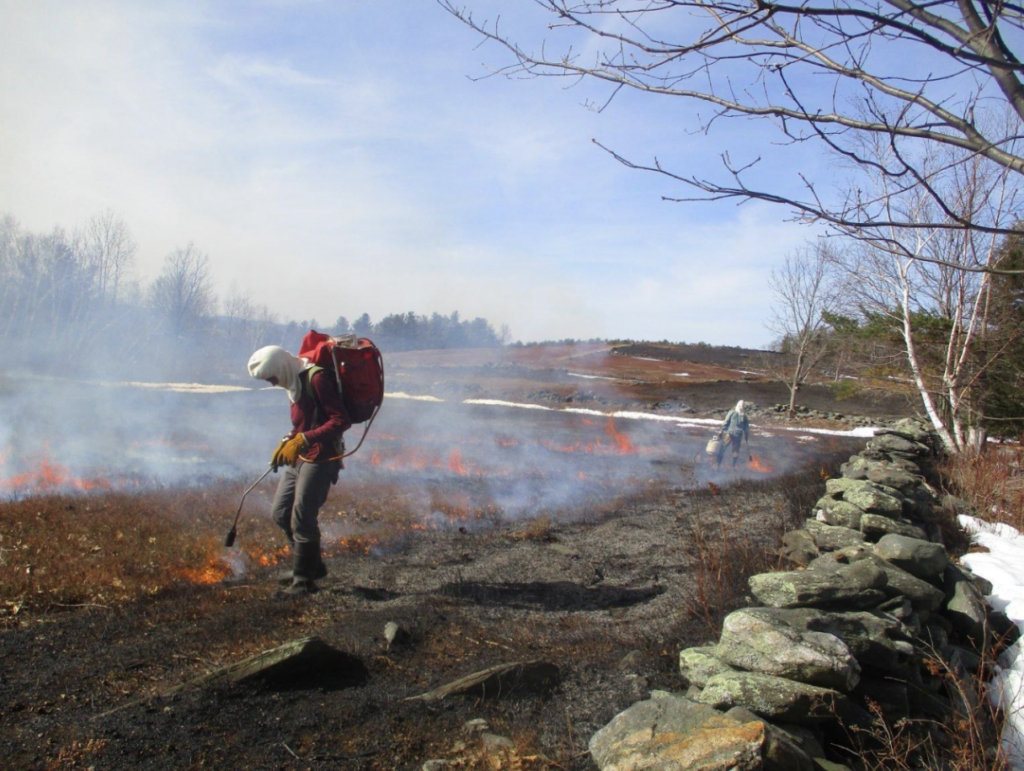
Neil Welliver, 1997. Photo: https://www.wikiart.org/en/neil-welliver/blueberry-burn-morey-s-hill
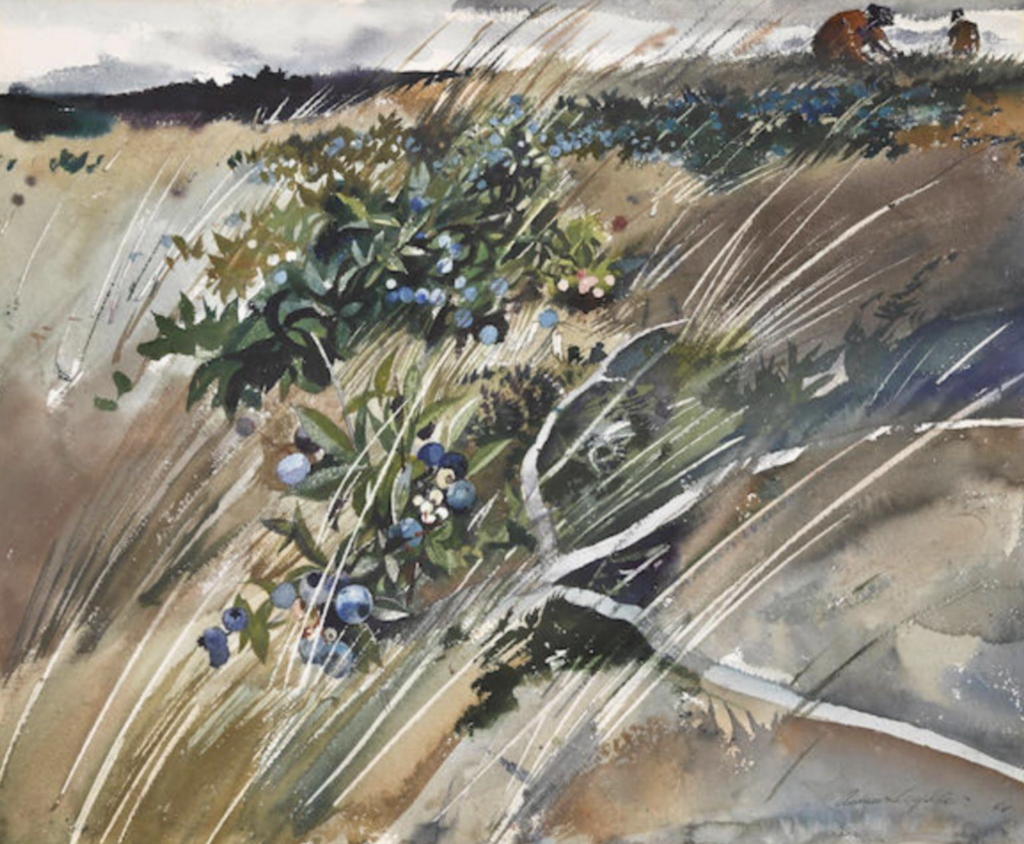
watercolor and pencil, 1942.
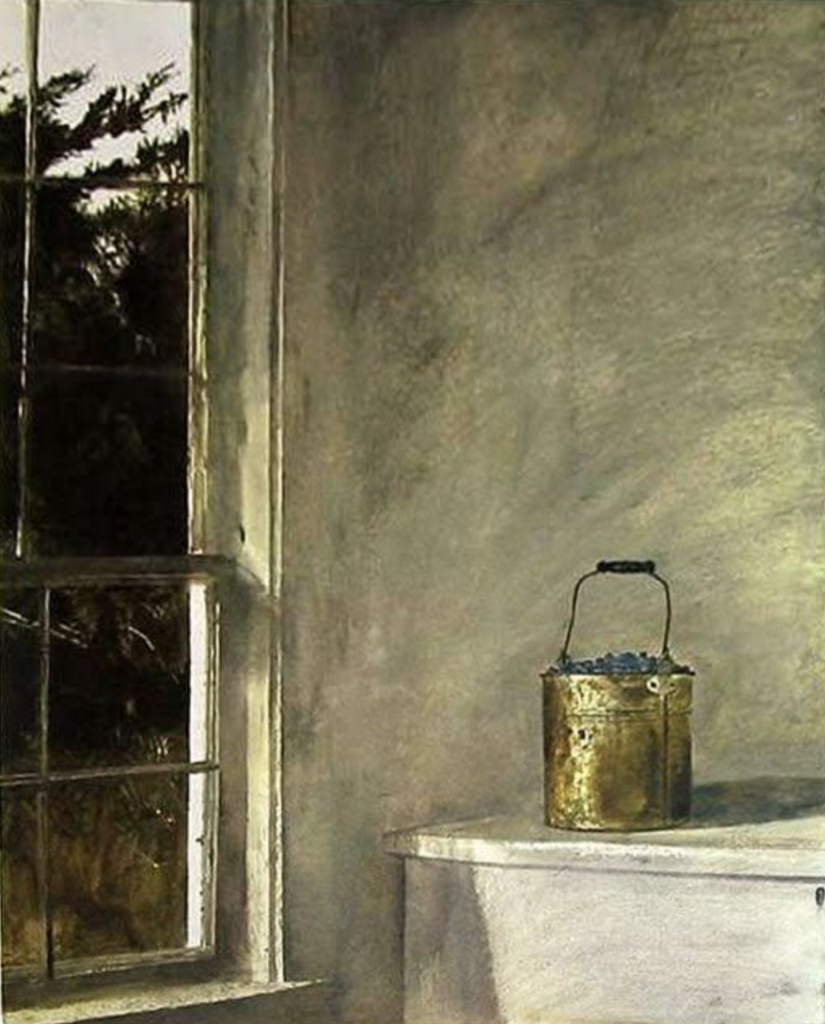
To evoke a mood for this article, here is his take on a Blueberries for Sal-type pail of blueberries — quintessential Wyeth, with a window view at left and an interior scene of pale blond-gray furniture, woodwork and stark plaster walls.
Maine was where I — like the mother and daughter in Blueberries for Sal — first encountered wild, low-bush, mountain-variety blueberries. On our way to Donnell Pond, my family and I found bushes on the side of the dirt road near our rental cottage on the barrens near Schoodic Mountain.
Apparently, when the glaciers receded about 10,000 years ago, wild blueberry shrubs began to establish themselves in hilly areas of the northeastern United States and Canada. Low-bush blueberries love rocky habitats. The barrens turn dark purple when the fields are burned in the fall (as the Welliver painting shows above), and with the first frosts, the vines themselves can turn crimson. I can see why such places have appealed to Wyeth and the other artists I’ll mention in a moment.
The Benson Place is at the end of the road on Burnt Hill, not far from the historic Heath Center, established in 1789. I had previously visited the contemporary municipal center in Heath, where the elementary school and public library are located, but the historic center contains older buildings where historic architectural styles predominate. My column last week noted that it’s possible to go back to a place that once meant something to you and feel that same wonder all over again. Just before reaching my destination, an old wooden sign marked where the first colonial settlers, Jonathan and Lucy Taylor, lived, starting in 1743.
There is a divergence of opinion regarding Indigenous presence here. It was once thought that Native tribes didn’t settle in this area because of the rugged terrain and lack of major water sources. But a series of standing stones on Burnt Hill — associated today with writer H.P. Lovecraft — apparently dates to pre-Columbian times. It’s likely that, centuries ago, Indigenous bands learned to burn the barrens on Burnt Hill each fall to nurture blueberry cultivation. Burning the fields kept the brush down, and the ashes fertilized the soil — and to this day, wild blueberry plants love it.
The arrival of the first white settlers in what was to become Heath coincided with the creation of Fort Shirley, one of several military forts — called the Line of Forts — built across northwestern Massachusetts during the French and Indian Wars. Between 1749 and 1754, the fort was slowly abandoned as more colonial settlers migrated up from East Charlemont (from the oxbow on the Deerfield River), necessitating the redrawing of town boundaries. Early residents of Burnt Hill included Moses Heyward and his family. The name Burnt Hill is fitting, given Native stewardship of the land and the seasonal burning of the blueberry barrens that has continued for generations.
Heath was incorporated as a town after the Revolution, in 1785, and named for William Heath, a major general and brigadier general in the Continental Army during the Revolution. General Heath donated his pewter flagon and plate to the town; they are on display at the local historical society, housed in what is known today as the Old Town House.
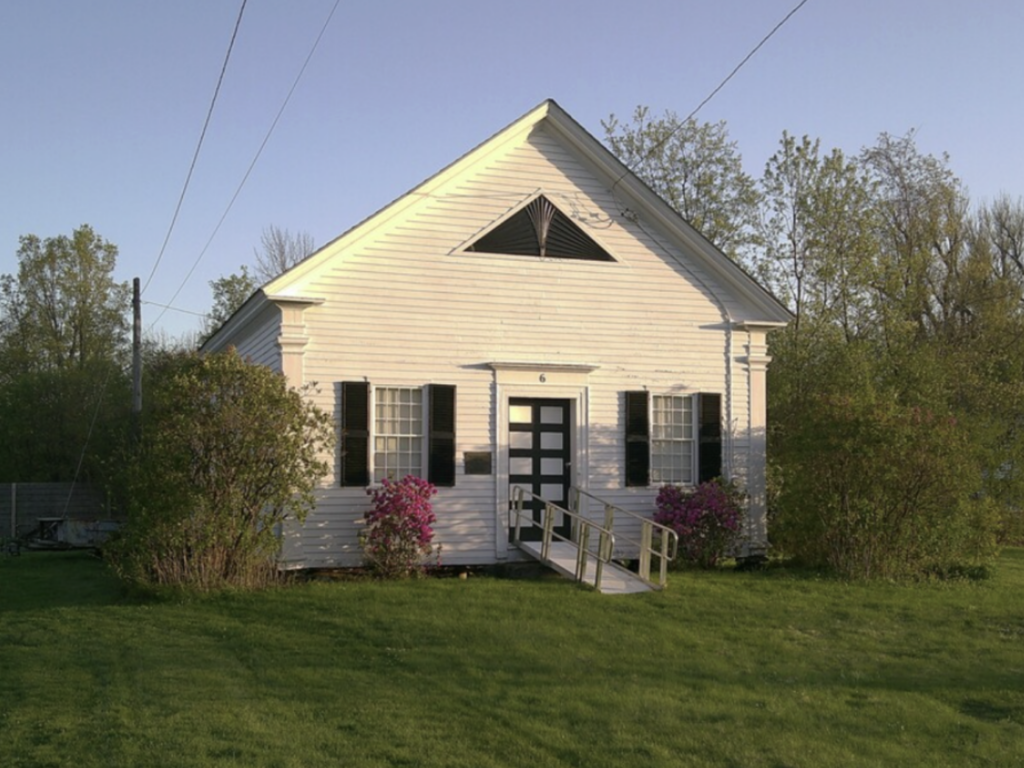
The Town House was built to comply with the 11th Amendment to the state Constitution, which requires separation of church and state, and was used until 1897. Some of its timbers came from the town’s first meetinghouse. It became the headquarters of the Heath Historical Society in August 1900. Descendants of the town’s first colonial residents include members of the Leavitt family, one of whom left his law practice to become an editor of the abolitionist newspaper The Emancipator in the early 1800s. His descendants later became residents of Charlemont, living in a home that was a stop on the Underground Railroad, sheltering enslaved people fleeing the South. The site is on the north side of the Mohawk Trail (Route 2) — but that’s another story.
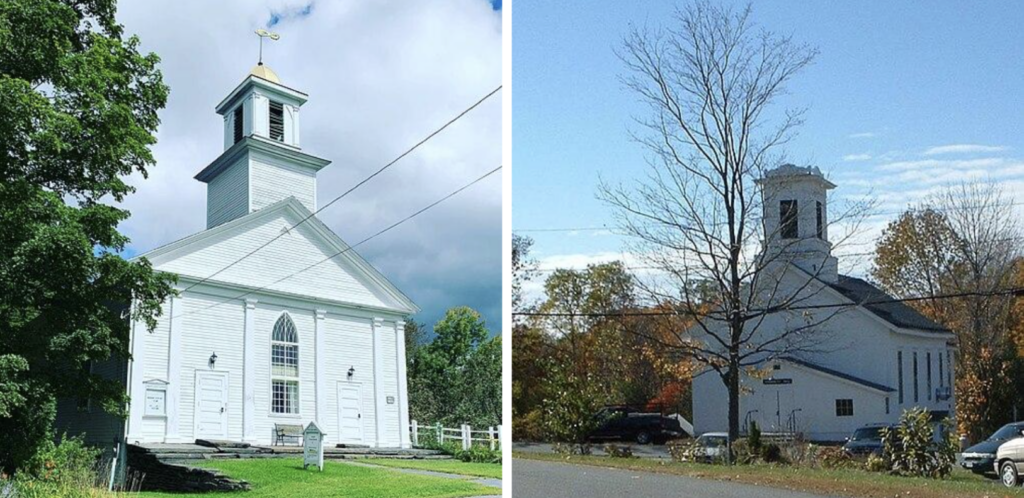
At Heath Center, a three-way intersection shares a unique setting with a church — the Union Evangelical Church, now Unity Chapel — and a town building called Sawyer Hall (serving variously as a post office, town hall and book return for the Heath Free Public Library, now located north of the historic center at the Municipal Center on Jacobs Road). Sawyer Hall was saved from demolition in 1975 by a town vote. There is also a Community House — now the senior center — known as Heath Memorial Hall, once the Methodist Episcopal Church. Unity Chapel (at left, below) is a Gothic Revival church, while Memorial Hall (at right, below) is Greek Revival in style. A handful of fine Federal-era homes here are built of wood, and one — the Rev. Moses and Bethia Miller House (1804), on South Road — is made of brick and sits just off to the left coming into town.
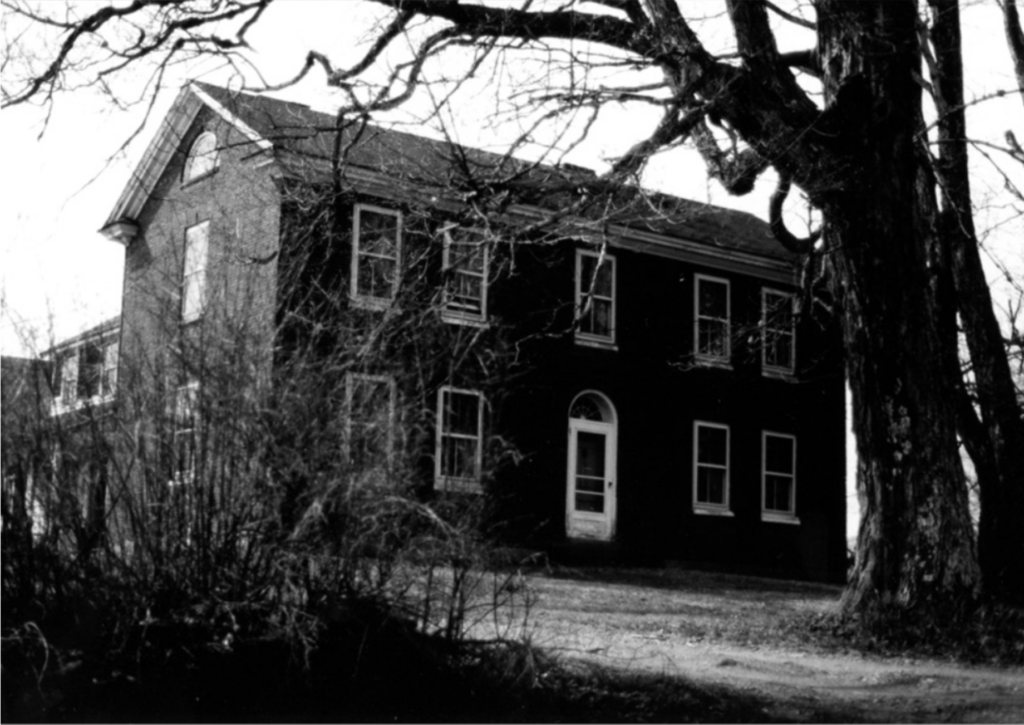
Substantial outbuildings — a silo, a tool shed, an English-style barn, a sugar shack and a sawmill — complete the Miller homestead, reflecting the variety of farming once done here, principally growing hay and milking dairy cows. The Millers’ fields once served as the site of the Heath fairgrounds before the dedicated space on Colrain Stage Road became available. In 1845, Heath led Franklin County in cheese production. Like Amherst, it was also a center in the 1800s for the making of palm-leaf hats. One woman, Melissa Bennett, made 97 hats in 12 days in 1873, trimming the palm leaves, braiding them and readying the hats for market, according to the Greenfield Gazette. Some are displayed in the historical society’s museum.
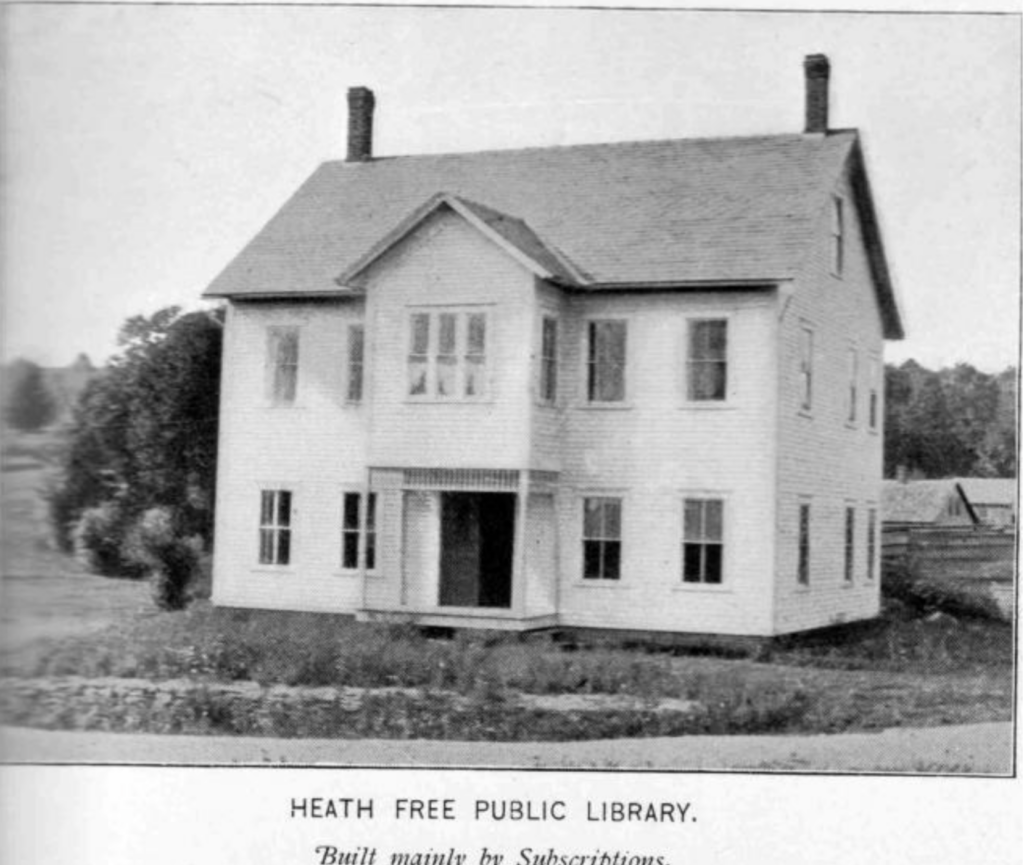
Sawyer Hall is an eclectic Victorian building constructed on the site of an older building called the Red House Tavern, which became the site of the town’s first free public library.
Next door was Heath’s first store (1793), set up by Daniel Spooner, which had an attached blacksmith’s forge and workshop at one time. It’s altered today, but a historic photo shows the original arrangement (below).
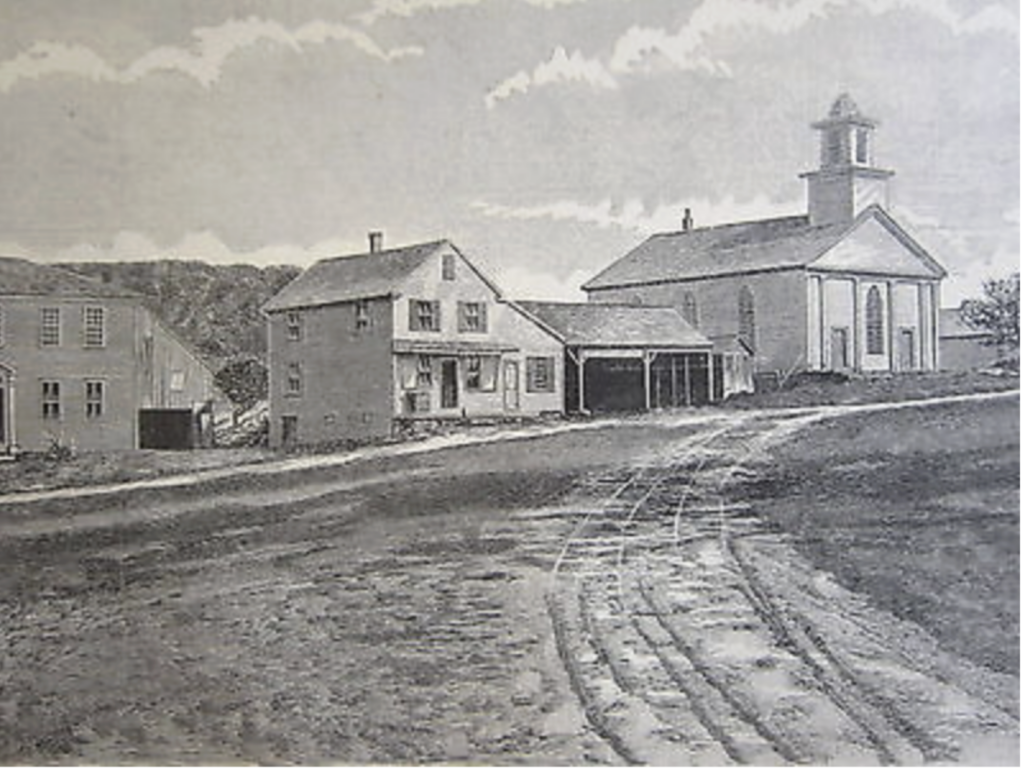
Blacksmiths were an essential part of rural life in New England and were a visible presence in most towns through the early 20th century. These skilled artisans provided goods and services of all kinds, especially in the pre-automobile era. Squire Benson Jr. and his wife, Hannah Green, arrived on Burnt Hill in 1815 and “hunkered down,” raising a large family. One of their sons was a ropemaker who sold his goods in Boston. Their descendants managed the blueberry fields on Burnt Hill until 1857, and more recent descendants still live in North Heath today.
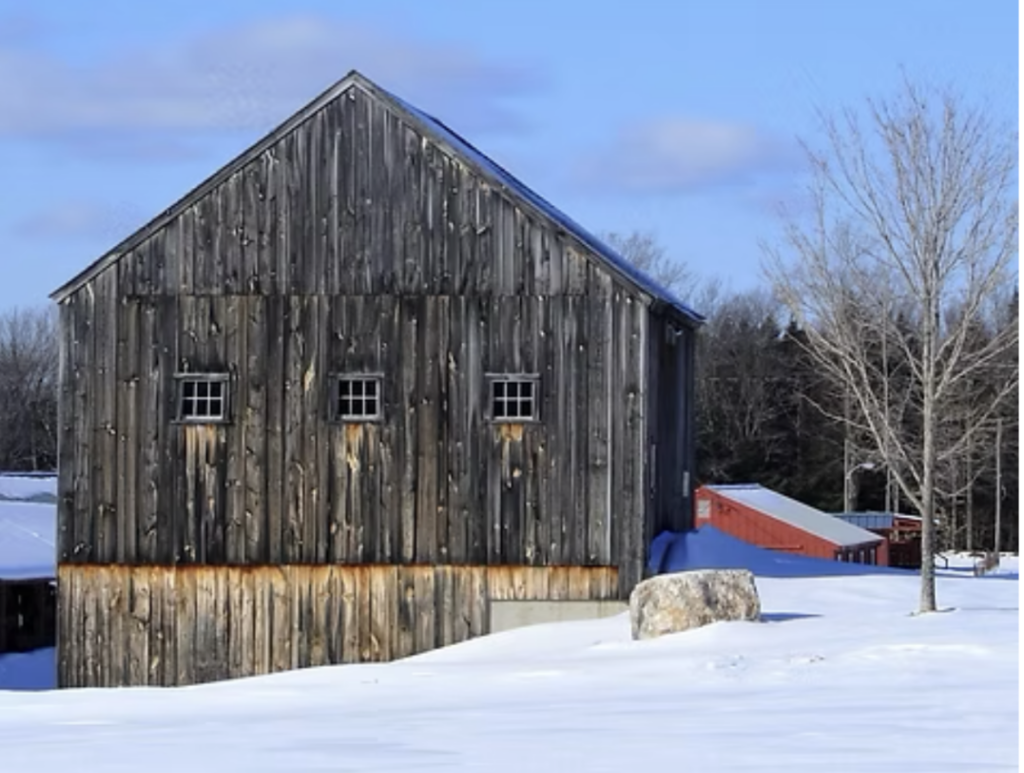
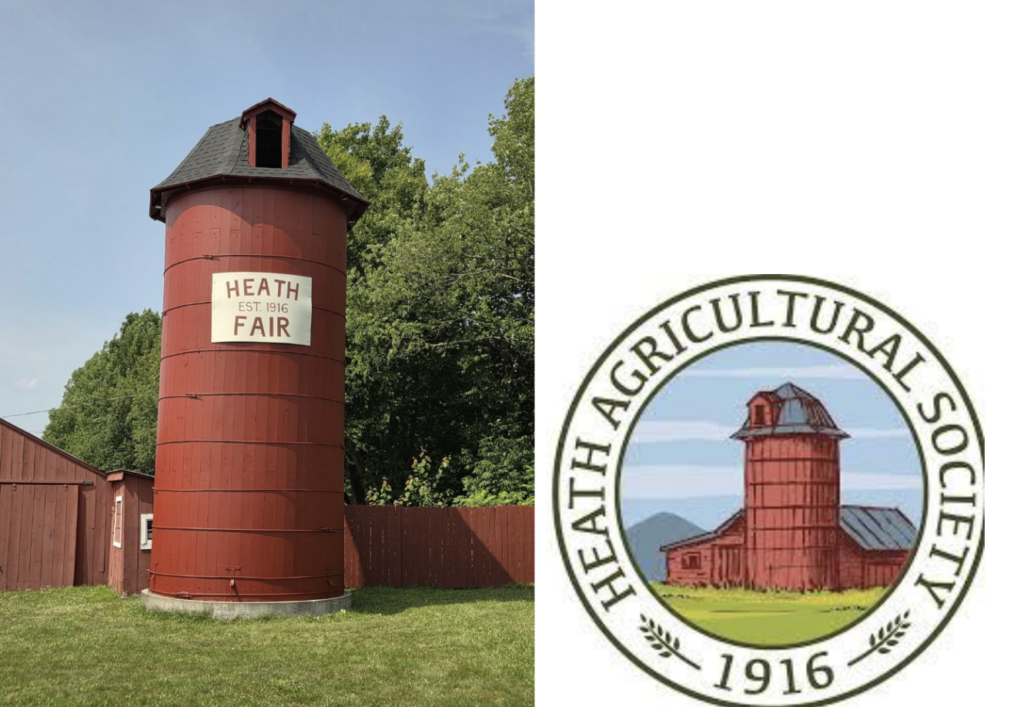
Fast-forwarding to the early 20th century, I would be remiss not to mention the Heath Fair, founded by sisters Mary and Flora Wright and the Heath Agricultural Society in 1916-17. The fair takes place two weekends before Labor Day, in August, making small-town Heath a destination far beyond its borders. The local Grange, founded in 1900, helped support the fair and local craft activities. Heath’s local history bears some resemblance to that of other nearby towns, such as Belchertown, which had similar cultural stakeholders championing historic preservation and curating local history around the same era. Heath’s historical society helped move an important 18th-century barn — the Solomon Temple Barn, donated by the Rev. and Mrs. Richard Gary — to the fairgrounds, where it was reassembled and preserved as a farm museum. “The Solomon Temple Barn Museum exhibits farm tools, equipment, and machinery as well as trapping gear. Looms and other weaving accessories are on display on the upper floor of the barn; many larger artifacts, including a wide variety of harvesting devices, are located on the lower floor.” More recently, the fair’s organizers rebuilt the fairgrounds silo in its traditional barn-red color; the silo is part of the fair’s logo.
In an interesting coincidence, I’ve learned that The Benson Place was managed, starting in 1937, by the post-Impressionist artist Robert Strong Woodward, whose home and studio were in Upper Buckland, practically across the street from where Mary Lyon had taught school a century earlier. Woodward is a fascinating artist whose paintings of the hilltowns in all seasons charmed me when I first arrived in this region. He took to riding through the countryside — first in a horse and buggy, then in a Packard Phaeton — looking for places to paint, and bought the Burnt Hill site that is now The Benson Place for its wonderful views.
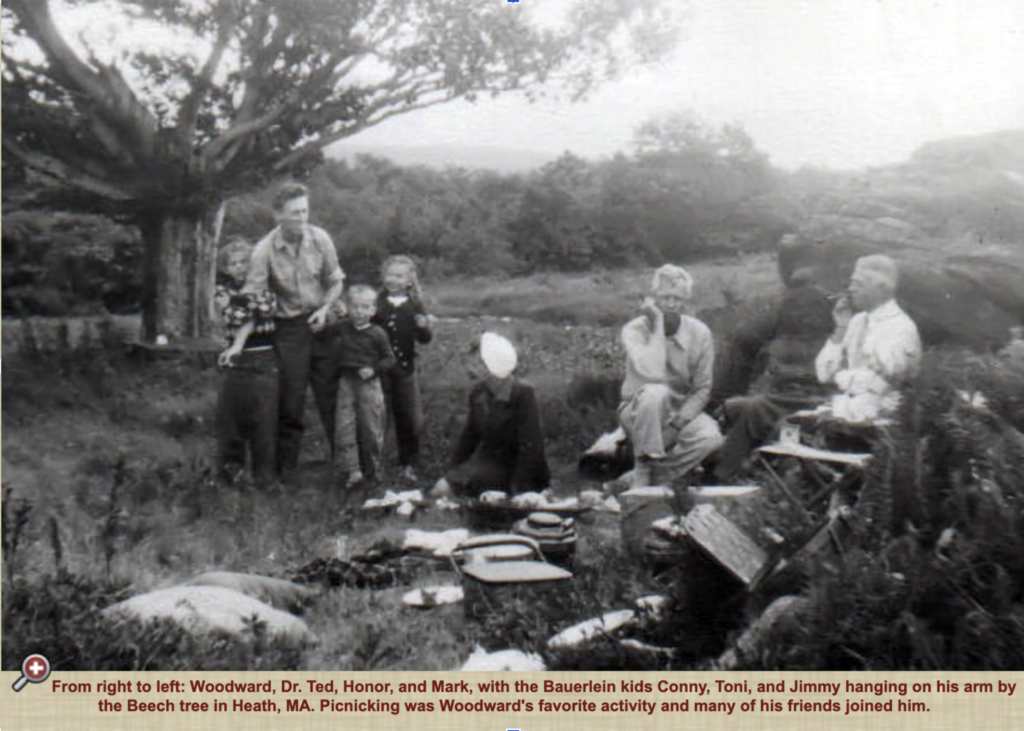
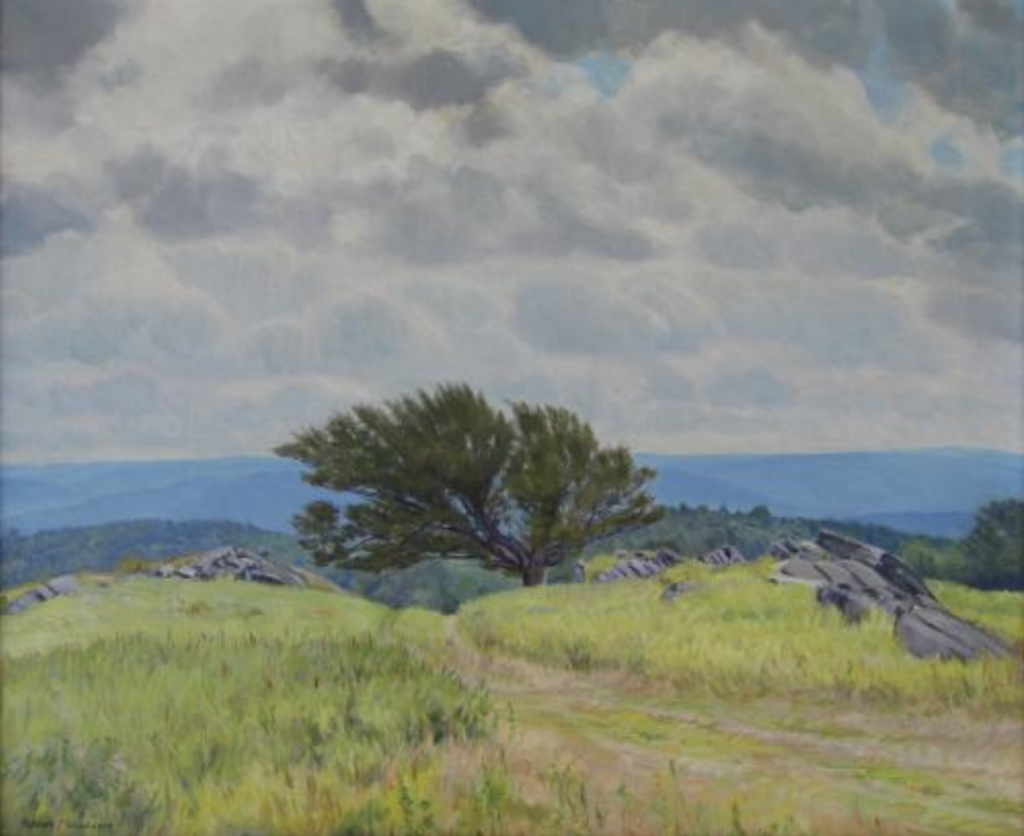
At certain times of year, Mount Greylock could be seen from Woodward’s temporary studio, in an era when the town didn’t maintain the road in wintertime. Woodward had a mobility impairment and needed helpers to get around; together, they made trips from Buckland to the Heath studio until 1957. It seems to have been a much-loved, quiet getaway. Below is a view of an old beech tree on Burnt Hill, a motif Woodward painted often.
I want to finish by sharing some pictures of the kind of “living culture” enterprise that The Benson Place represents today. I arrived on the first pickup day, and the crew was still sorting berries. I chatted with them as they finished their shift. The owners, Meredith Wecker and Andrew Kurowski, were there, too, and Andrew walked me out to the barrens to find Meredith, who was bringing in the last box of berries for the day.
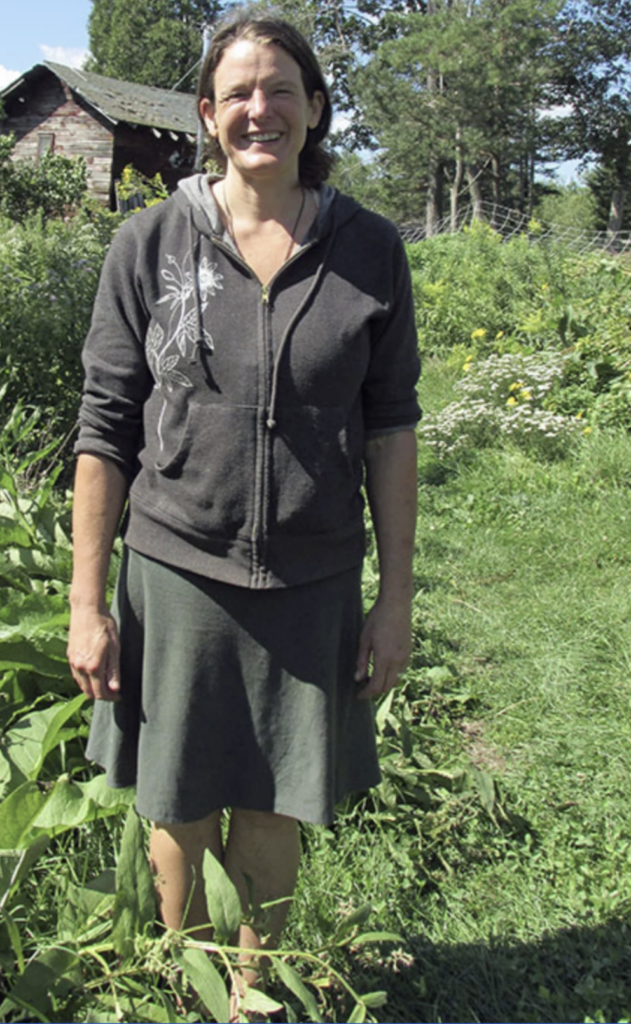
She writes a great newsletter and blog about running a farm like this. Their daughter, Juniper, let me take her picture as she stepped down from the ladder she had climbed to tip boxes of unsorted berries into the sorting machine.
I confess I had a hard time imagining how the whole operation was once done by hand. Andrew is a carpenter, and he spent part of the pandemic learning to build a new sorting machine. Like other CISA-supported CSAs in our region, this is a small, family-run business. Meredith and Andrew were both avid pick-your-own customers before working for the farm’s previous owners, Dave Gott and Ted Watt. They took over in 2012. Now, in addition to blueberries, they grow vegetables and have planted groves of chestnuts and elderberries to eventually sell. Dairy goats joined the farm a few years back. Tying it all together, they recently started raising pastured meat chickens, fed organic grain and goats’ milk whey while foraging freely in the chestnut and elderberry orchard. This year they’re raising two batches of chickens, ready for pickup in July and October. Preordering information is available at bensonplace.org.
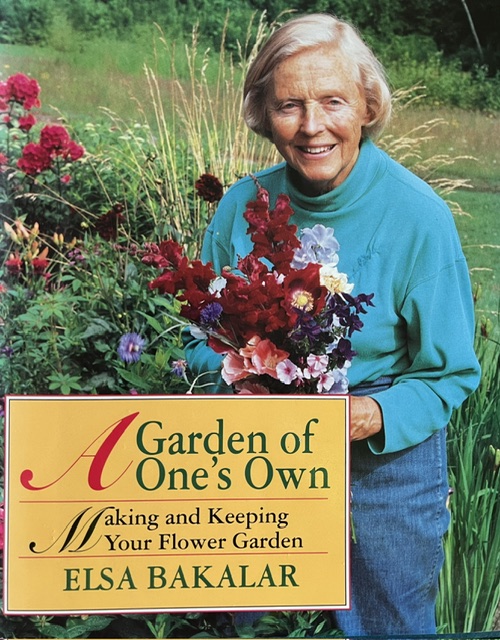
In my eyes, the Benson Place family are the Heath equivalent of local celebrities, helping keep the town a vibrant, interesting rural community — just as people like Robert Strong Woodward did in the mid-20th century. They are not alone in this effort. Before she moved to Ashfield and later died, the beloved landscape gardener Elsa Bakalar also lived in Heath, an inspiration to many professional gardeners and students to this day. Other, more widely known people who lived in Heath include Supreme Court Justice Felix Frankfurter and the early 20th-century theologian Reinhold Niebuhr. Niebuhr and his wife, Ursula, who was also a theologian, spent their summers in Heath from the mid-1930s to the 1950s, living in Stone Cottage on West Main Road. An early critic of Henry Ford’s labor practices, Niebuhr thought of himself as an activist as much as a theologian. At the local church in Heath, he composed the famous Serenity Prayer, which originally sounded a bit different from the 12-step Alcoholics Anonymous version used today: “God, give us grace to accept with serenity the things that cannot be changed, courage to change the things that should be changed, and the wisdom to distinguish the one from the other.”
Much of Niebuhr’s work, including his anti-Vietnam War writings, was created in Heath. More broadly, the summer clergy community in Heath appears to be a long-standing one, drawing summer residents from Washington, D.C., New York, Boston and Cambridge.
There has also been a strong presence of Smith College alumni and professors, some of whom were friends of Woodward’s or the Niebuhrs.
At the end of summer, in late August and early September, the Heath Cultural Council hosts an annual art exhibit at Community Hall/Heath Memorial Hall. What better reason to visit — for that event, as well as the Heath Fair — even if you’ve missed the height of blueberry season? The views will still be amazing, and your ears will still pop getting there.
I love this piece telling us the story of the Heath and Burnt Hill and the blueberries. Wyeth’s painting capture the spareness of the blueberry fields perfectly. This took me back in time to when I raked blueberries on the top of a sort of bluff in Machias, Maine. The blueberries on one side and the Atlantic on the other. It was rigorous work and we got paid by the five gallon bucket. It was fun to experience but I wouldn’t want to do it all season.
Thanks Hetty!
Hello Patricia – Thank you! I’m so glad this piece resonated for you. I did hear that The Benson Place was looking for people to help with the harvest. Blueberries epitomize summer!
Such interesting stories! We’ve enjoyed buying blueberries from Meredith/Benson, as well as chickens – and it’s been a tough choice between picking all that up at a convenient Amherst location or driving down the dirt roads to the farm. I’ve also enjoyed the Heath fair, and blueberry pancakes are famous there, as is the contest of whose ox can pull a huge cement block furthest. For all the struggles of the rural towns of Western Mass, they are so charming and calming (and deserve all kinds of support).
Reading this piece about Heath is like stepping into an Andrew Wyeth painting from more than half a century ago.
Serenity and low-bush blueberries: what more do we need?