
Opinion: A Human Library for Amherst
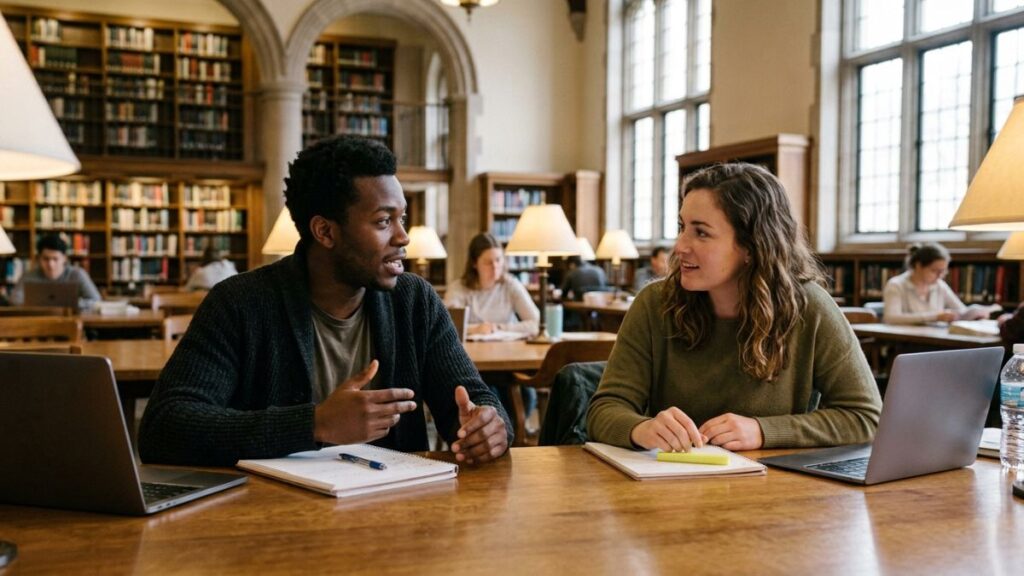
Photo: Ai generated image, Google Nano Banana
I attended a recent Jones Library listening session facilitated by Dr. Pat Romney and Angelica Castro. They gathered people’s hopes and concerns about the library, then opened the room for discussion. In a town where the Jones Library has too often become a divisive political argument, I appreciated the chance to hear people speak directly about what they value and what worries them.
During the session, I raised an idea that I remember the Jones Library considering—or nearly considering—years ago: a Human Library.
The concept is straightforward. Instead of borrowing only a book, a library patron could “take out” a person for a 20- or 40-minute conversation. The human “book” would be someone with knowledge, experience, or a life story worth sharing. A visitor could reserve a short conversation with a local expert, a person with unusual experience, or someone whose perspective they might not otherwise encounter.
Farah Ameen, a Jones Library trustee, was enthusiastic about the idea. I also mentioned it to Art Keene, publisher of the Amherst Indy. Art said something that stayed with me: Amherst has so many subject-matter experts and other people that this kind of project could be genuinely unifying.
I think he is right.
What Amherst Has to Offer
Amherst has an unusual concentration of people with deep knowledge. We have educators, researchers, scientists, artists, writers, business owners, farmers, skilled tradespeople, longtime residents, newcomers, advocates, caregivers, veterans, people who have rebuilt their lives after difficult experiences, and people who have spent decades learning things that may never show up in a formal résumé.
Imagine being able to sign up at the Jones Library for a half-hour conversation with:
- A local farmer about food, land, and the realities of agriculture.
- A historian or longtime resident about how Amherst has changed.
- A small-business owner about what it takes to keep a local enterprise alive.
- A UMass or Amherst College professor willing to explain a subject in plain English.
- A nurse, teacher, carpenter, musician, artist, engineer, or mechanic.
- Someone who can speak from personal experience about caregiving, disability, recovery, immigration, military service, or another part of life that many people do not understand firsthand.
This would not need to be a lecture series. It could be much more personal and useful: a respectful, time-limited conversation between two people.
More Than an Interesting Program
The Human Library idea has existed for years. It began in Copenhagen in 2000 as a way for people to borrow “human books” and have conversations that might challenge stereotypes and encourage understanding. The International Human Library Organization still operates today, organizing conversations in which people volunteer to be read as “open books.”
Often, Human Library programs focus on people who have been stereotyped or marginalized, inviting readers to ask respectful questions and hear directly from someone whose life experience differs from their own. That purpose is important. Programs have been used to encourage empathy, challenge prejudice, and spark conversations people might otherwise avoid.
But Amherst could develop a version that includes both lived experience and local expertise. We could offer human books who help people better understand one another, while also making the town’s knowledge more available to the public.
That could mean a conversation with someone whose life has been shaped by a disability, immigration, addiction, caregiving, faith, poverty, racism, or recovery. It could also mean a conversation with someone who understands zoning, local history, climate science, farming, entrepreneurship, the arts, education, engineering, or another subject that affects our community.
A Library that Belongs to Us
I do not believe a Human Library would solve Amherst’s disagreements. It would be unrealistic to claim that 20 or 40 minutes with another person can settle deep arguments about development, money, preservation, governance, or the future of our town.
But perhaps it could improve the way we have those arguments.
We don’t need to agree about everything to become better listeners. Amherst residents do not lack opinions. What we sometimes lack is an opportunity to encounter one another outside the usual public-comment period, social-media thread, campaign, meeting, or controversy.
A Human Library could make the Jones Library feel less like an object of dispute and more like a shared civic resource. It could remind us that a library is not only a building, a budget, or a collection. It is also a place where people can find knowledge—and where the community can find itself.
Doing this at the Jones Library feels especially fitting. Libraries have always connected people to ideas. A Human Library would connect people to the people behind those ideas.
A Practical Pilot
This would not require an enormous commitment at the outset. The Jones Library could start with a pilot program: perhaps one evening or Saturday afternoon each month, with a modest number of volunteer human books and short, scheduled conversations.
A first event might include 10 or 15 people with varied backgrounds and areas of knowledge. Each could offer two or three 20- or 40-minute sessions. The library could provide a simple catalog describing each person’s topic or experience, while protecting privacy and establishing clear ground rules.
Those rules would matter. Volunteers should be able to set boundaries and decline intrusive questions. Participants should understand that the purpose is respectful learning, not interrogation, argument, or performance. The library could train volunteers, provide a host or moderator, and evaluate the program after each event.
If it works, Amherst would gain several things at once:
- A practical way to share local knowledge.
- A distinctive public program that could draw attention beyond Amherst.
- A reason for more residents to visit and value the Jones Library.
- A chance for people who disagree about many things to meet outside the usual political settings.
- A small but real contribution to morale in a town that often feels divided and discouraged.
The Human Library model has endured in communities around the world, and scholarship has examined its potential to expand libraries’ role as places of dialogue and shared learning. I do not know whether the earlier Jones Library idea ever advanced beyond discussion, or whether the particular model I remember spread widely. But I think it is worth revisiting.journals.sagepub
Amherst has no shortage of books. It also has no shortage of human knowledge.
Maybe the Jones Library can help us borrow a little of both.
Read More
Locations of Human Libraries in the USA (Facebook)
Note: The preceding article was written with the assistance of Perplexity AI.
Ira Bryck has lived in Amherst since 1993, ran the Family Business Center for 25 years, hosted the “Western Mass. Business Show” on WHMP for seven years, now coaches business leaders, and is a big fan of Amherst’s downtown.