Amherst Arbor Spotlight: Sugar Maple
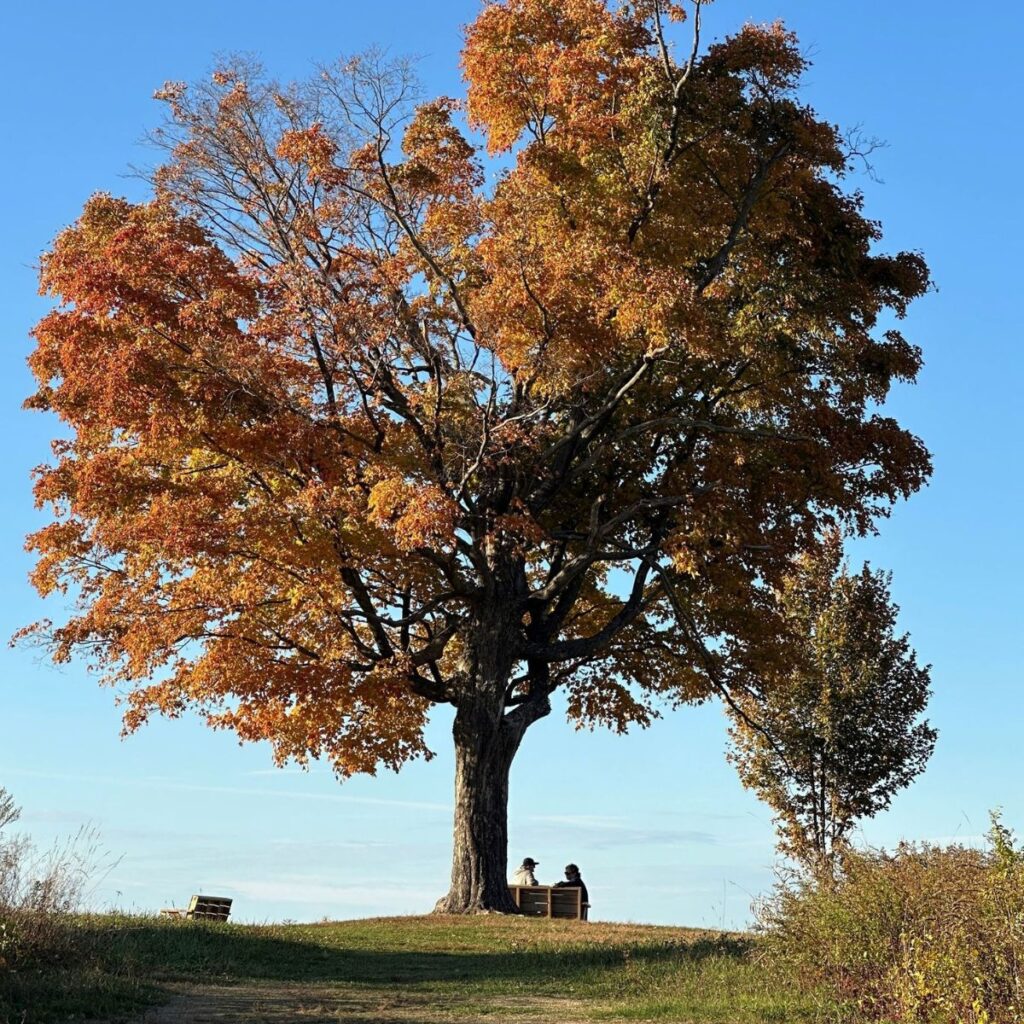
This large sugar maple grows atop Mount Pollux in South Amherst. Photo: Amherst Public Shade Tree Committee
Acer saccharum
This is the eleventh in a series of 12 articles produced by the Amherst Public Shade Tree Committee (APSTC) titled “Amherst Arbor Spotlight.” The series focuses on the town’s 12 species of shade trees and features a different tree each month. New articles are posted on the first day of the month on the APSTC website and in the Amherst Indy, with links on Facebook and Instagram. Read the previous columns here
The sugar maple is one of New England’s most beloved trees; its annual displays of color herald the arrival of autumn. In Amherst, the maple genus (Acer) accounts for one-third of the town’s public shade trees, including 769 sugar maples (ArborPro Inventory, 2024). These native trees grow to 75 feet tall and can live for 400 years. People have depended on sugar maples for centuries to provide sap for syrup and strong wood for furniture. Sadly, climate change and human impact have damaged the overall health of sugar maples across southern New England. The trees struggle to thrive in warmer winters and are adversely affected by road salt and air pollution. They also don’t tolerate prolonged drought. For these reasons, APSTC no longer plants sugar maples and instead opts for hardier varieties of red maples and sweetgums.
The sugar maple leaf is iconic; its silhouette is the centerpiece of the Canadian flag. Several visual clues help distinguish sugar maple leaves from red maples. Sugar maple leaves have five pointed lobes with U-shaped sinuses between the lobes. Red maples have three to five lobes and sharp V-shaped sinuses. The edges of sugar maple leaves are smooth whereas a red maple’s edges are toothed or serrated.
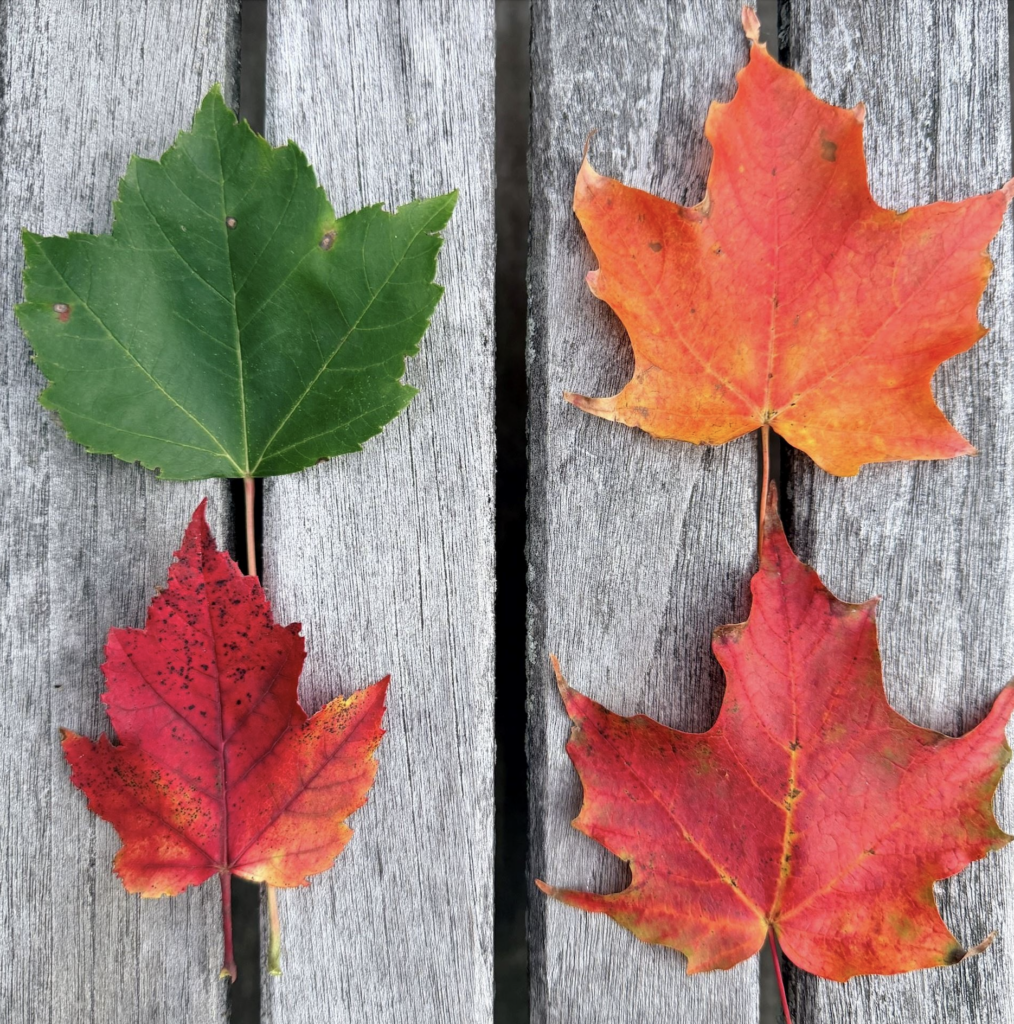
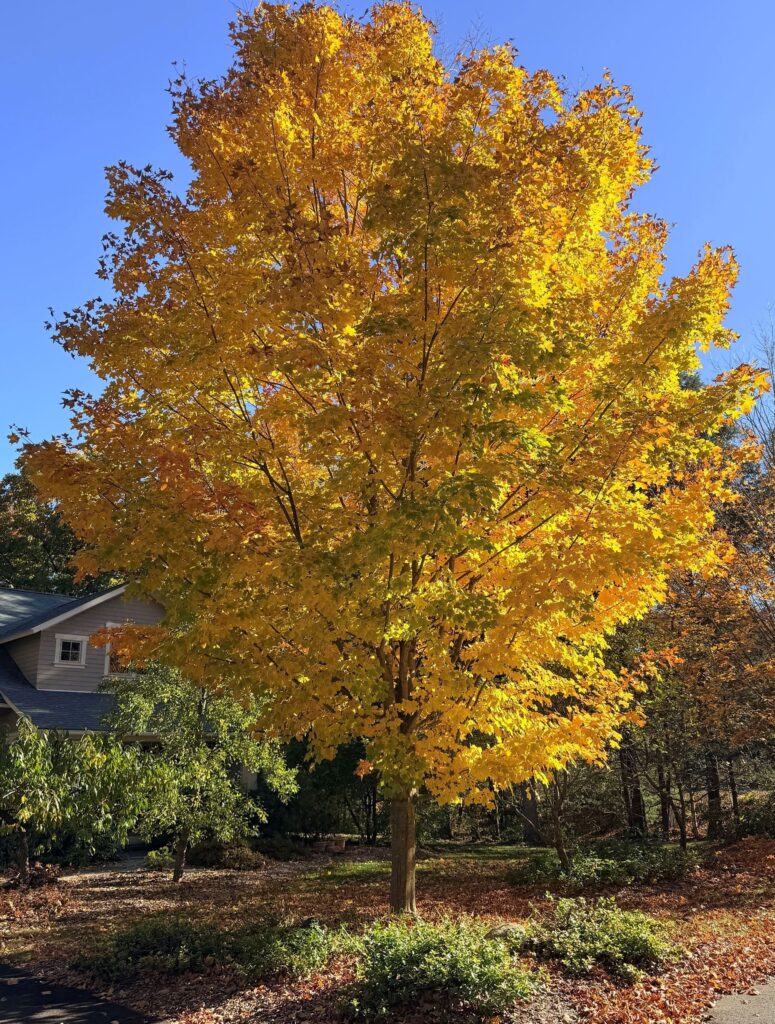
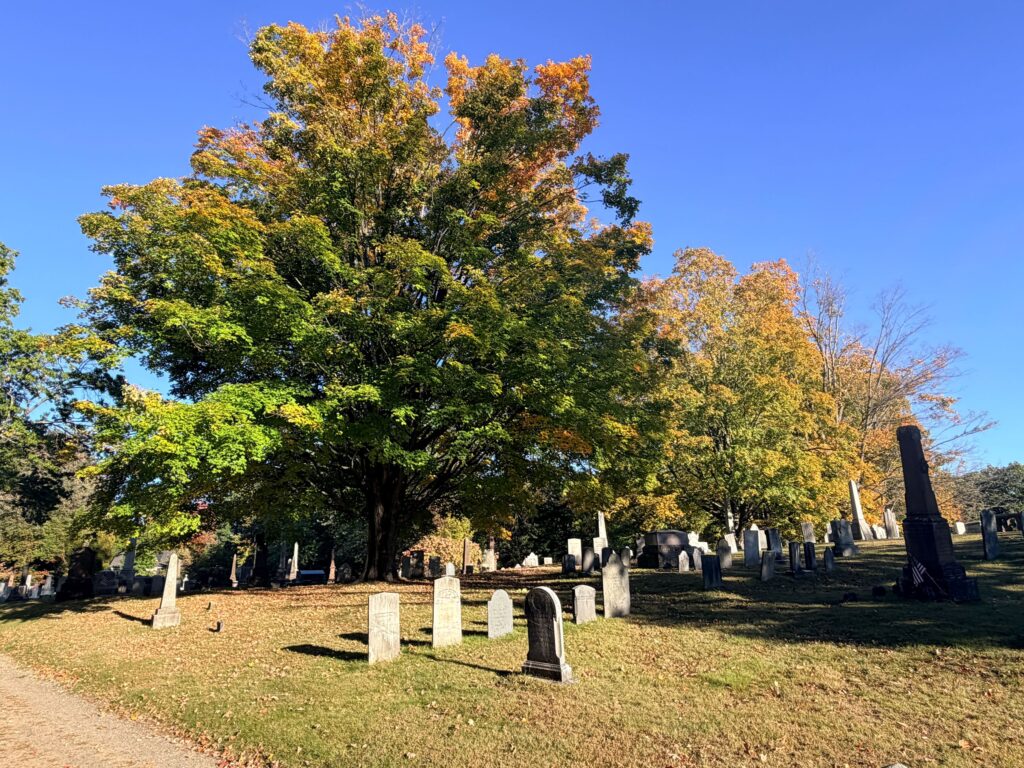
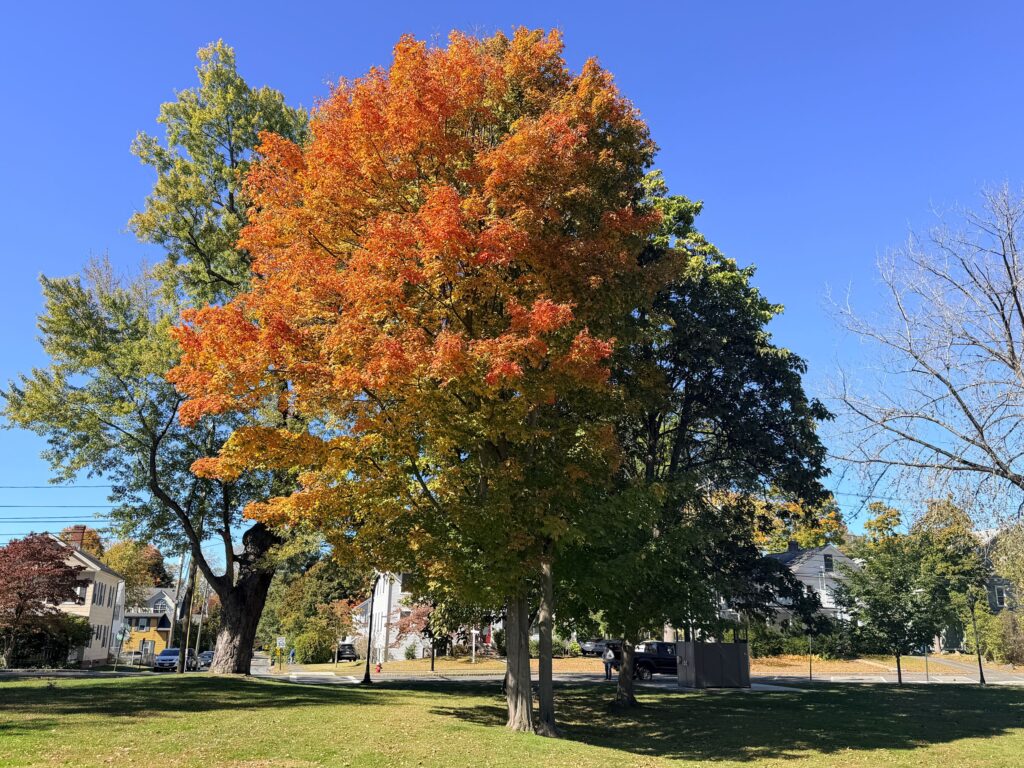
Each fall, sugar maple leaves turn brilliant combinations of yellow, red, and orange. As the days grow shorter and the weather cooler, the trees stop producing chlorophyll, which absorbs sunlight and gives leaves their green color. When the chlorophyll fades, other cells in the leaves can finally show their true colors.
The bark of sugar maple trees acquires great character as it ages. Over time, the smooth bark of young trees becomes deeply furrowed, often with peeling plates. West Cemetery has three old, very large sugar maples. Two younger maples grow along the perimeter fencing. The older trees display thinning canopies, a result of heavy moisture and extended drought cycles.
Sugar maples feed abundant wildlife. Squirrels feast on its seeds and buds while moose, white tailed deer, and snowshoe hares munch on fallen twigs and leaves. Yellow bellied sapsuckers drill small holes in trunks to drink the sweet sap. Sugar maples produce tiny spring flowers, providing an important food source for the cellophane bees that feed maple pollen to their offspring.
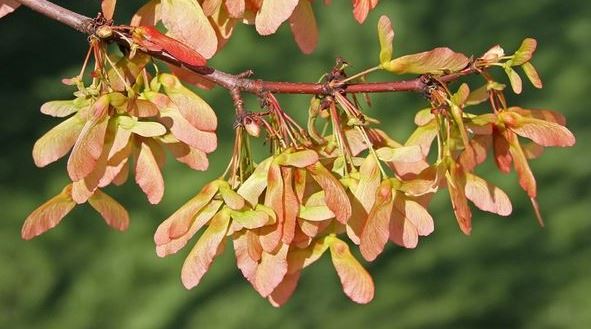
Sugar maples develop double-winged seed pairs called samaras. These structures are designed for travel! Dispersed by the wind in autumn, the seeds “spin” distances of three hundred feet or more, earning them such nicknames as spinners, helicopters, and whirligigs.
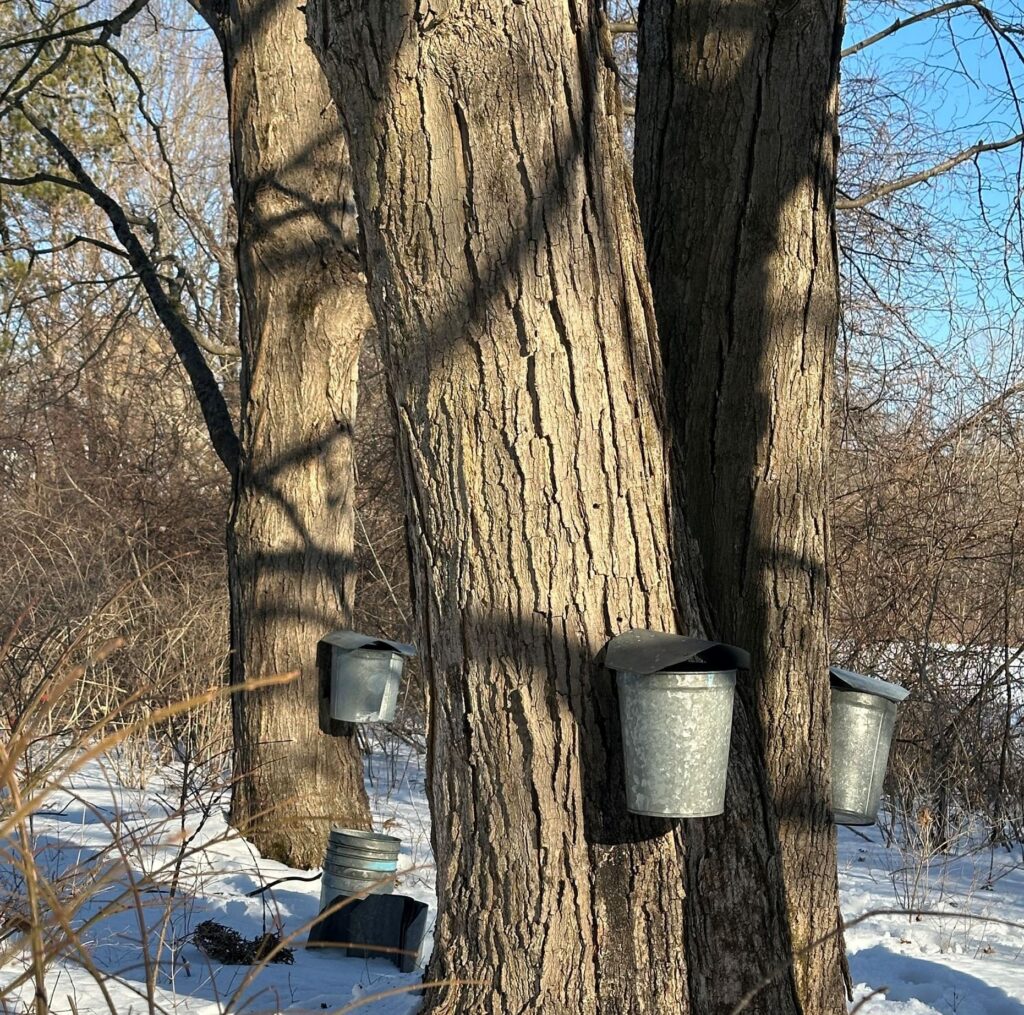
Sugar maples are famous for their syrup. One sugar maple tree can provide ten to twenty gallons of sap per tap (it takes 40 gallons of sap to boil into a single gallon of syrup). Every spring, farmers try to determine when the tree sap will begin flowing, which depends largely on the right weather conditions. Sugar maples use an internal hydraulic system to move sugars stored in their roots up into their trunks and branches. The trees store carbon dioxide in the dead cells of their bark. This CO2 expands and contracts with temperature, acting as a pump for the sap. Cold nights shrink the CO2 volume, creating a vacuum to draw the sap upward. When the trees warm up during the day, the CO2 expands and pushes the sap upwards and out the drilled holes.
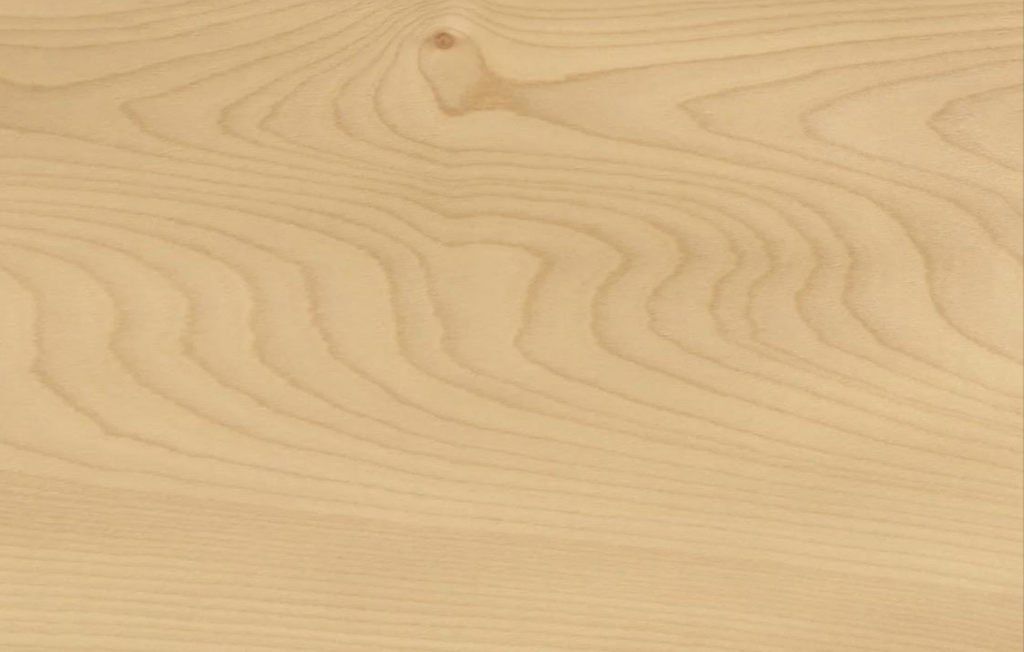
While humans have long valued maple syrup, they’ve also prized the close-grained lumber of sugar maples for centuries. Manufacturers and craftspeople use the beautiful wood to construct durable furniture, musical instruments, and flooring. Today the strong, shock-resistant wood is used for every basketball court in the the WNBA and NBA with one exception: the Boston Celtics, are the only NBA team permitted to play on red oak.