
Trustees of Reservations and Kestrel Land Trust Offer a Shared Vision for Conservation, Community, Agriculture, and Education at Hampshire College
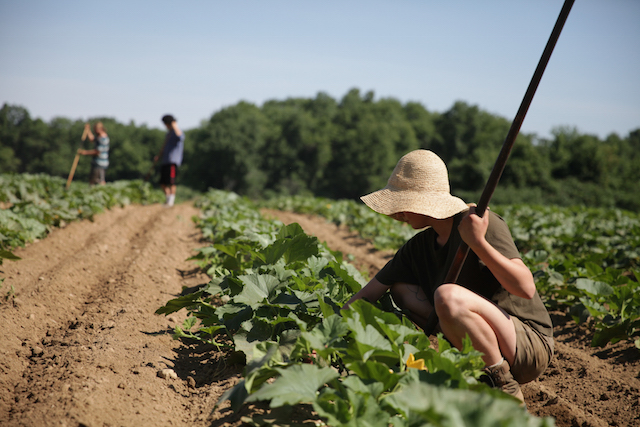
Hampshire College farm. Photo: hampshire.edu
Source: The Trustees of Reservations
The Trustees of Reservations and Kestrel Land Trust, a statewide and regional land trust, have joined forces to offer a unified conservation vision for Hampshire College’s rural landscape surrounding the core campus.
Hampshire College has long been defined by a bold vision of innovation, sustainability, community, and deep connection to place—and its expansive farmland and woodlands are central to that identity. The vital and irreplaceable rural landscape surrounding the college’s core campus in Amherst and Hadley was once active working farmland, and still supports biodiversity and local agriculture, strengthens climate resilience, and provides meaningful access to nature for the surrounding communities.
The Trustees and Kestrel aim to permanently protect intact forests, fields, and wildlife habitats, protect farmland as the foundation of a thriving agricultural operation, and support environmental education, and community gathering in the associated buildings on the Hampshire Farm and Red Barn.
Together, Kestrel and The Trustees have the necessary expertise and are committed to thoughtful stewardship that balances ecological preservation with opportunities for farming, education, recreation, and community engagement.
“The Trustees, as the Commonwealth’s oldest conservation and preservation organization, brings statewide reach, long‑term stewardship capacity, management of active farmland, infrastructure and buildings, public engagement, and a deep commitment to creating community through conservation and place-making,” stated Katie Theoharides, President and CEO of The Trustees. “We are thrilled to be partnering with Kestrel to explore with Hampshire College the potential for conservation, agriculture and engagement to be part of the future of this landscape alongside other important community uses.”
This shared conservation vision of Kestrel and The Trustees recognizes that thoughtful development will need to take place within the college campus core, which covers only about 25 percent of Hampshire’s 810-acre holdings. Meaningful engagement with the town, interested developers, and other community stakeholders will be critical to the successful master planning to ensure that conservation and development complement each other in this still rural landscape.
“Kestrel Land Trust is committed to developing partnerships with communities throughout the Valley to conserve forests, farms, parks and trails,” states Kristin DeBoer, Executive Director of Kestrel. “Given Kestrel’s long history in Amherst since 1970, our shared connections with Hampshire College going back to its founding, and deep partnership with The Trustees, we are hopeful that the college board, alumni community, and townspeople will embrace this community-centered conservation vision, as complementary to a carefully planned redevelopment/reuse of the campus core area.”
While the College determines how it will proceed, The Trustees and Kestrel’s goal is clear: to ensure that any future vision for this land reflects a shared focus and commitment to protecting open space and strengthening community connections for living and learning in Amherst, while honoring the legacy and ethos of Hampshire College
About The Trustees
The Trustees is Massachusetts’ largest—and the nation’s first—land conservation and preservation nonprofit. Today, through the support of Members, donors, and partners, The Trustees helps conserve nearly 52,000 acres and welcomes the public to more than 120 inspiring locations across the state to experience landscapes where nature, wildlife, and people all thrive.
AboutKestrel Land Trust
Kestrel Land Trust was founded in 1970, and has conserved more than 32,000 acres of wildlands, woodlands, farmland, and waterways in the Connecticut River Valley in partnership with willing landowners, communities, and state and federal agencies. Kestrel’s strategic priorities are guided by science, inspired by the desire to make conservation meaningful to communities, and designed to build momentum to conserve more land with landowners and partners.
The joint statement by Kestrel Land Trust and the Trustees of Reservations comes across as nothing but beautiful generalized rhetoric. It is completely devoid of anything specific about exactly how they intend to achieve their laudable lofty goals to help preserve Hampshire College land. For example, Hampshire Next people are working very hard at fund raising. Activist Jerome Segal and his allies have put forward a proposal to make the College self-sustaining financially. I respectfully challenge Kestrel and the Trustees of Reservations to roll up their sleeves and join the many people in the trenches who are working very hard to save Hampshire College land. Kestrel and the Trustees would be welcome allies in that endeavor, IF they have specific resources to devote to the cause. How much money can they contribute to prevent foreclosure by the commercial lenders whose demands for payment are driving the Hampshire College Trustees’ decision to list the campus for sale with a real estate broker?