
Letter: Board of Health Calls for Lyme Disease Vigilance in Response to Surging Tick Populaton
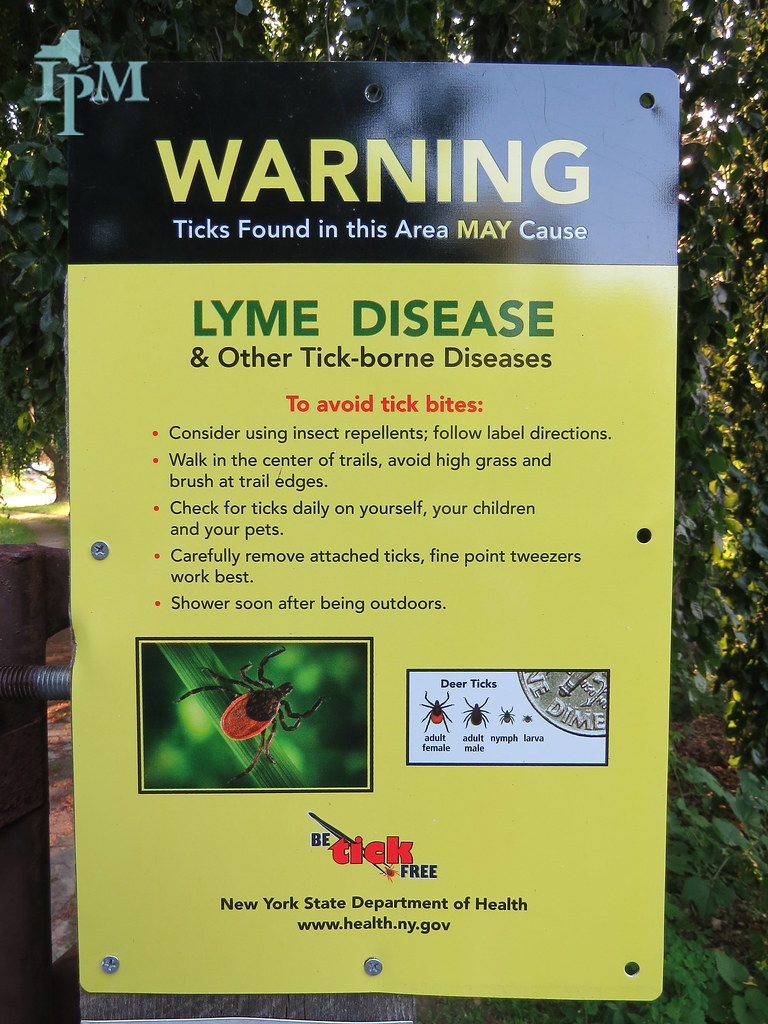
Photo: flckr.com. (CC BY 2.0)
by The Amherst Board of Health
The following letter appeared previously in the Daily Hampshire Gazette.
As we observed Lyme Disease Awareness Month this May, the Amherst Board of Health (BOH) wants to alert the community to a sobering trend. According to the Massachusetts Department of Public Health’s latest surveillance data, the 2026 tick population is soaring, and Emergency Room (ER) visits for tick bites are exceptionally high. Year-to-date, Hampshire County has already recorded 42 ER visits for tick bites, a threefold increase from the 14 visits reported during the same period in 2025.
This surge in tick population is suspected to be fueled by our overall warmer winters, with this past winter potentially encouraging survival due to the insulating effect of the steady snow cover we experienced. Anecdotally, many of us have witnessed a tick explosion along some of Amherst’s recreation trails. For instance, one South Amherst BOH member encountered dozens of ticks while walking the grassy portion of the KC trail that straddles the high-voltage transmission lines.
Almost 90% of tick-borne disease cases are carried by black-legged ticks, also called deer ticks. Ironically, these ticks are spread more by mice than by deer. Lyme Disease, or Lyme borreliosis complex (LBC), is caused by the borrelia burgdorferi bacteria. Other diseases carried by the black-legged tick include anaplasmosis, babesiosis and ehrlichiosis, which are all on the rise. These tick-borne illnesses can cause fever and/or flu-like symptoms and are treatable with appropriate antibiotics. Notably, as of last month, alpha-gal syndrome – the tick-borne red meat allergy – is now a reportable condition in Massachusetts, signaling the northward migration of the Lone Star tick into our backyards, a trend that may also be attributed to climate change.
It is crucial to recognize that Lyme Disease is a complex illness that often defies the “classic” symptoms many expect. While many look for a bullseye rash, it does not appear in all cases. If early Lyme disease goes undetected or untreated, the consequences can be severe and life-altering. Patients may face debilitating neurological issues like facial palsy and cognitive “brain fog,” severe migratory joint pain, or dangerous heart arrhythmias known as Lyme carditis. Recent research highlights how these bacteria use protective protein “armor” to evade the immune system, making early detection and treatment vital.
See related: Amherst Public Health Update – Ticks
Living in the Valley means sharing space with these arachnids, but we aren’t defenseless. Daily tick checks remain our most effective weapon; removing a tick within 24 to 48 hours significantly reduces the risk of infection. If a tick is engorged or has been embedded for more than 24 hours, it is a good idea to contact your medical provider as treatment may be indicated.
As we enjoy our local trails this May, let’s prioritize prevention. Use repellents on skin, treat your gear with permethrin, deploy tick-control tubes if you have concerns in your yard, and stay vigilant. Awareness is the first step in keeping our community healthy. See the Amherst Public Health Department website for additional information.
Amherst Board of Health: Risha Hess, Chair, Betsy Brooks,Ileana Carrion, Jack Jemsek, and Premila Nair
Historically, fields were burned in the early spring so as to kill ticks and their eggs.
We stopped doing this about 40–50 years ago, and now are overrun with ticks.
On the Elizabeth Islands at Cape Cod we have huge numbers of ticks and all the allergies and illnesses that go along with them. We also have no pavement or vehicles so we are into tick habitat as soon as we step out the door. To defend ourselves we have developed an oversock to stop ticks on the foot and lower leg where they often hop on. We chose a tight-weave parachute fabric so that even the tiniest ticks can’t get through, and found a fabric that is light and breathable but tough, and we used a turndown at the knee to stop ticks from climbing. We treat these at Insect Shield in NC so that they are double protection: repelling ticks with permethrin and blocking access to skin with an unbroken barrier over the foot to the knee. We had a lot of interest outside our island community so we sewed up a big batch in Fall River MA and have made them available. Search Ticktogs if you think they might help you like they have helped us. They have cut way back on our tick bites.e
As someone who spent nearly a decade battling the effects of Lyme disease and ehrlichiosis contracted more than 15 years ago, I know firsthand how devastating tick-borne illnesses can be. It took me nearly three years to receive an accurate diagnosis and find a specialist knowledgeable enough to recognize what was happening and provide appropriate treatment.
What our communities need is far more than awareness campaigns. We need affordable access to tick testing. At roughly $100 to test a single tick, many families simply cannot afford to test every tick they remove. We need healthcare professionals who regularly update their knowledge of tick-borne diseases, including the growing body of research on Lyme disease, ehrlichiosis, babesiosis, anaplasmosis, Alpha-gal syndrome, and other emerging threats.
We also need broader access to the most advanced diagnostic tools available. Early diagnosis and treatment can make an enormous difference in outcomes, yet many patients continue to face delays, uncertainty, and difficulty obtaining appropriate testing.
Education is equally important.
https://www.lymedisease.org/
Daycare providers, teachers, school nurses, and pediatric healthcare providers should receive training on the signs and symptoms of tick-borne illnesses in children. Behavioral changes, fatigue, anxiety, difficulty concentrating, and other symptoms can have many causes, but tick-borne diseases should not be overlooked in areas where these infections are common as it has been in our community for over a decade.
Finally, we need greater public awareness of Alpha-gal syndrome, a potentially life-altering allergy linked to tick bites that can trigger severe allergic reactions, including anaphylaxis. Massachusetts recently began tracking Alpha-gal syndrome
https://www.cdc.gov/alpha-gal-syndrome/about/index.html
through the Department of Public Health, an important step that reflects growing concern about this emerging condition. Anecdotally, many of us who live in heavily tick-populated regions are seeing increasing numbers of cases. I was floored by a recent thread on our NextDoor app where an alarming number of local folks were responding that they too had Alpha-gal and how it had changed their lives. Not for the better.
Parents, healthcare providers, schools, and the public need better education about the risks and warning signs. There currently is not a tick test for Alpha Gal according to my inquiry at the local Tick Lab – so it’s imperative parents and healthcare professionals know the signs of infection and what to do if an allergic response occurs.
Tick-borne diseases are a growing public health challenge in New England. Addressing them requires better surveillance, better education, better diagnostics, and a healthcare system prepared to recognize and respond to these illnesses before they become life-changing.
Hampshire College has the equipment and people with the scientific knowledge to test ticks for lyme disease. When I was a student there, I did some napkin math and figured we could test ticks for lyme for about $20 per tick, if we started buying supplies in bulk. (Not including salary). The samples take 40 minutes (call it an hour) to prepare, and you can prep a batch of 15-20 at a time. They then need to be loaded into a machine and run for 3ish hours, during which time you can prep the next set of samples.
You would need probably one full-time person preparing and loading samples, one person doing support (intake of samples and sending results) and only about one room worth of equipment. If the town were to step in and utilize part of the college, I think that tick testing should be seriously considered.
The average Hampshire bio graduate is more than capable of doing this testing. I know multiple people who could do this.