
Tree Warden Alan Snow on Climate Change and Development
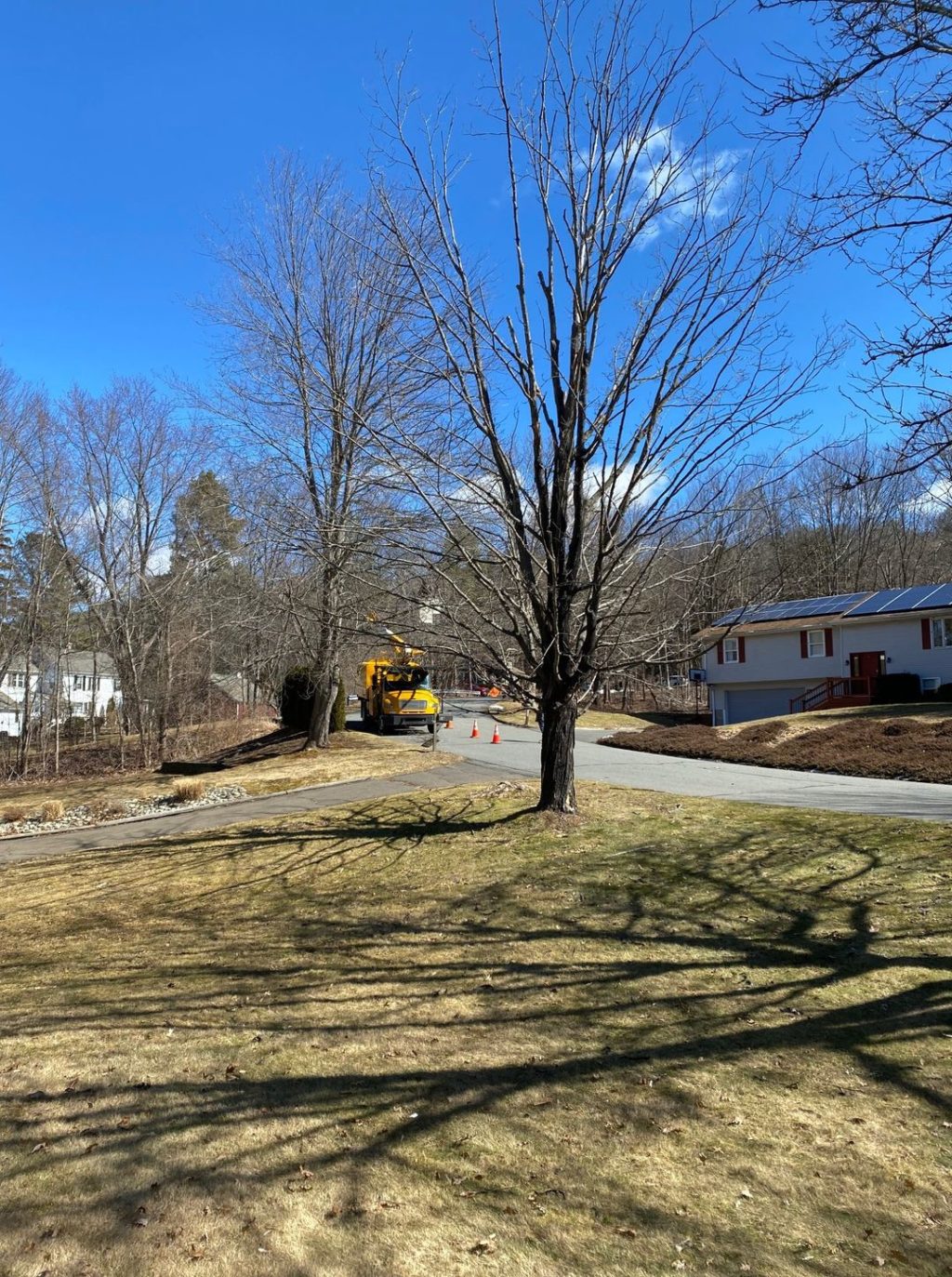
An Amherst sugar maple tree in decline. Photo: Art Keene
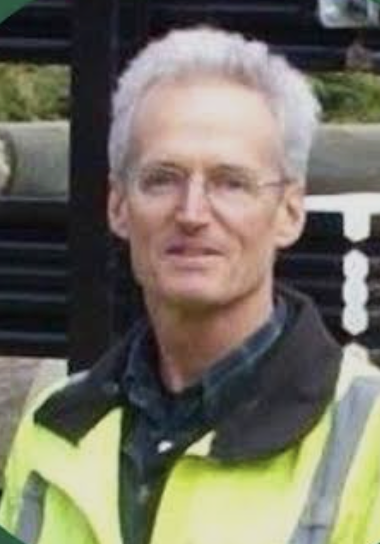
Amherst Tree Warden Alan Snow has no doubt that the climate is changing. Growing up on Cape Cod, his grandfather told stories of ice on the saltwater town cove thick enough to support a Model T. His father recalled iceboat racing on thinner ice. But today, said Snow, “it doesn’t freeze over other than just a skim coat of ice most winters.”
And in his 15 years planting and maintaining Amherst’s public shade trees as Tree Warden, Snow has witnessed the dramatic impacts of this warming on Amherst’s trees, including the economically and culturally central sugar maple. “Sugar maple trees are really struggling,” Snow said in a July 2 interview. “There’s a lot of decline and dying of sugar maple trees.”
Some of the biggest culprits are droughts, more extreme precipitation events, and more prevalent insect pests, all consequences of increased temperatures. For sugar maples, alternating droughts and floods kill off tree roots, first from thirst and then from fungi. “You get waterlogged soils and excessively dry soils: too dry, too wet, too dry, too wet.”
Hemlock, beech, and pine trees are under threat from worms and insect pests, whose numbers have skyrocketed as winter temperatures have risen. Freezing winter temperatures provide natural, annual pest control. “If you’re not getting those temperatures anymore, the population of hemlock woolly adelgid,” which infests and kills hemlock trees, “is going to build.” And the southern pine beetle “can now have multiple generations of insects a year. Instead of just one generation, they’re having three or four, so they can populate en masse on a tree and kill it.”
And while Snow lauds Amherst’s commitments to building up its urban forest by planting new trees and maintaining its existing ones, he says trees often fall casualty to other priorities and good intentions, including the fight against climate change. Public trees are increasingly removed to make way for ADUs, larger driveways (new ordinances require more paved surface for rental properties), “complete streets” (integrating bike lanes, sidewalks, and ADA-compliant curb cuts), and even solar panels. “If you get one or two neighbors who want to put solar on their house, it’ll go from a shaded area to pretty close to full sun almost overnight. … An individual property owner or business that puts up solar is getting a financial benefit for putting solar up, and the common good of the tree for the community is being lost.” Beyond the panels themselves, increasing electrification requires taller, wider, and more storm-proof distribution and transmission lines. “We’re cutting more trees to make everything safe and prepare for the climate change storms that [are] going to get more severe.”
Then there’s what Snow calls “landscaper disease”. “We lose most of our newly planted trees to string trimmers and lawn mowers just zipping around the cambium [the layer of live tissue below the bark through which water and nutrients flow] of the tree and killing it,” he said. “Everybody does it and they don’t necessarily think about it, but it physically damages the tree.”
Snow counts every tree that falls as a big loss. Beyond putting syrup on our plates, trees cool things down in the short term (providing shade) and the long term (pulling carbon dioxide from the atmosphere). They play a crucial role in mitigating storm water, a rising concern driving increased planning and investment in urban forest management from Springfield to New York City, and one relevant to Amherst. “We just had a little rainstorm the other day, and East Pleasant Street over by Lincoln Avenue was flooding” recalled Snow. “It probably wasn’t even 20 minutes.”
Trees support life of all kinds, including human life. “That beech tree over there is covered in life other than the tree: lichens, moss, insects, fungi, beech nuts, birds, and squirrels,” Snow observed on the Town Common. “If you want to live, reduce stress, have a better quality of life, and have better air to breathe, we need them,” he said. “For our own spiritual sense of being a living thing on this planet.”
What We Can Do to Protect Our Urban Forest
So what can we do, as individuals and as a town, to protect our urban forest? In your yard, Snow suggests reducing the amount of lawn, replacing it with coarse wood chips and the kinds of plants you’d find on the forest floor. Besides fending off landscaper disease, this nourishes trees. “Lawns compete for nutrients and water,” said Snow. “For the tree’s sake, we want to recreate the forest floor underneath it in our urban environment, where things fall, decompose, and microbial activity in the soil breaks it down and makes those nutrients available for trees.”
As the climate warms, trees at the southern extent of their range in Amherst –like hemlock and sugar maple – will continue to be replaced by trees adapted to warmer temperatures. “We’re seeing some trees that we can plant now that we just couldn’t plant before because they wouldn’t handle the winters,” Snow said. The MassWoods project provides a wealth of resources that can help landowners choose climate-change resilient species for new forestry and landscaping initiatives.
At the town level, Snow said, “I appreciate what the taxpayers of Amherst have given to trees.” He applauded the previous and the current town manager for providing funding to plant new trees and manage existing trees, and the work of the Public Shade Tree Committee. “They’re out there every second Saturday planting trees throughout the growing season, doing education and outreach, and working on a significant tree ordinance to help preserve trees on private property.”
New ordinances with trees in mind are crucial to maintaining the urban forest. “We’re at the point now where development is really kicking in,” he said. “Our human footprint is impacting Amherst’s urban canopy more and more. … There’s often no space in the public way for a tree to be planted, even in front of Town Hall.” Snow thinks it will be crucial to include trees in the early stages of planning, making the urban forest an integral part of the town’s response to climate change. “We need to work on our permitting and regulations around development to incentivize leaving space for trees,” he said. “It’s not just funding; it’s about incorporating it into green infrastructure and being sustainable. We incentivize mini-splits, solar, and many other things … the same thing applies to trees.”
Ultimately, Snow said, preserving the urban forest and adapting to climate change will require compromise and, yes, doing with less. “The core to being really aggressive about climate change is to not use the power. … [Amherst] provides services for many things; we host a lot of events and parties for the community that generate mountains of trash and use energy.” Collectively and individually, we’ll need to change our lifestyles_and our aesthetics. “Trying to reduce the amount of lawn and having non-grass surfaces underneath … it’s difficult because it’s an aesthetic value,” said Snow. “I have a really tall lawn most of the year, so I don’t fit in with my neighbors who like a manicured lawn.”
See related: A Few Questions For Alan Snow, The Guy In Charge Of Trees On Public Land In Amherst (Amherst Indy)
A very important article — thanks for writing this, Ben! I hope folks will read this to the very end, where Alan Snow reveals his tall-lawn mowing strategy: less is more!
I’m on the same page as Alan with regard to mowing: start in June, do it at first with a human-powered whip, and if with a machine, then less than once a month — you’ll be rewarded with a remarkable diversity of wildflowers and other interesting plants and micro-habitats!
I am so grateful for Alan Snow and the Shade Tree Committee for having the long view.
Alan Snow and the Shade Tree Committee members and volunteers are one of the things that add to QOL in Amherst. As things heat up in all ways imaginable, we benefit from their attention to our town.
Kudos to this public servant.
This week a group of us sat at a Kendrick Park picnic table, one benchfailing from 3 bodies on the 4 seats. A bolt had fallen out. It’s the age of cell phones”, and a call was made for public safety/DPW awareness. Alan Snow showed up in 5 – 7 minutes w/tool box in hand! Had it fixed and back in use before our meeting concluded!
I’m catching up after reading through recent comments, and applaud the efforts of Alan Snow to help protect and improve the natural environment of Amherst. I’ve voiced my views in the past about the downside of growth. There is negative feedback from human activity, with additional infrastructure a major part. A steady state economy would help minimize that.