
State’s PILOT Listening Session Highlights Shared Challenges for Amherst and Rural Towns
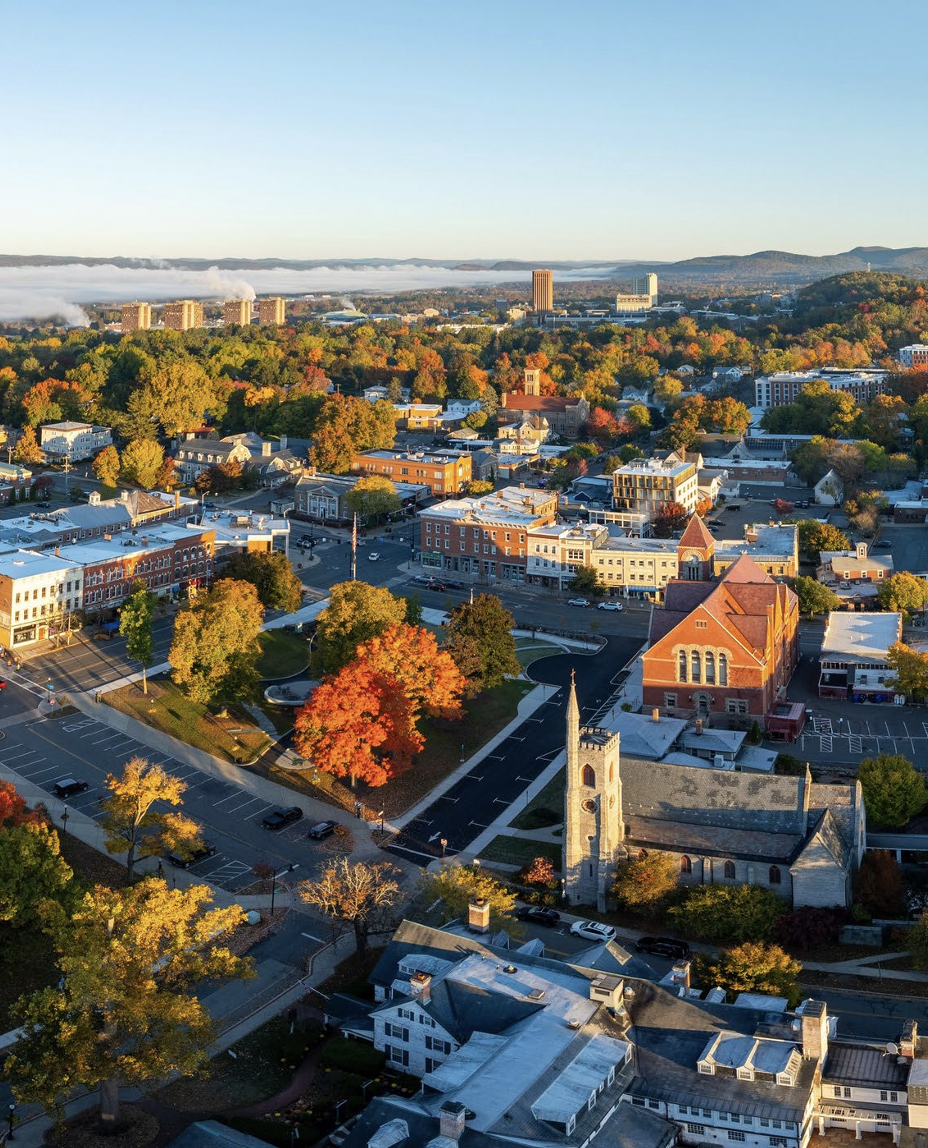
Photo: amherstma.gov
The state’s Special Commission on Payment in Lieu of Taxes (PILOT) held one of its western Massachusetts listening sessions this week at the Franklin Regional Council of Governments in Greenfield, drawing a largely senior audience from small rural towns as well as representatives from Amherst. The session is one of several being held around the region as the commission gathers input on how to fix a program many communities see as opaque and unfair.
Attendees included state Rep. Jo Comerford (Hampshire, Franklin, and Worcester) and other commission members and staff, plus four Amherst town councilors: Lynn Griesemer, Pam Rooney, Andy Churchill, and Jennifer Taub. Instead of a traditional public hearing, the evening was structured around small breakout groups of about 10 people, each joined by a commissioner or state staff member who asked questions and took detailed notes.
In my group, facilitated by Comerford, participants from rural towns described being squeezed by large amounts of state-owned, tax-exempt land and relatively low PILOT reimbursements. I argued that Amherst, with UMass and other tax-exempt institutions, faces a parallel problem: the town shoulders costs that benefit the whole state while receiving far less than a straightforward property-tax-based standard would provide. I pointed to the example of SUNY campuses paying about 34% of what full property taxes would be in their host communities as evidence that a more rational benchmark is possible (see also here).
Griesemer, in my same breakout group, emphasized that Amherst is not unique but one of 29 higher-education host communities dealing with similar pressures: high service demands, constrained tax bases, and an uneven state formula. Others in the group underscored how distorted the current system can be, from a single millionaire moving into a small town worsening that town’s position in the PILOT algorithm, to Nantucket receiving a high reimbursement per acre despite having relatively little tax-exempt land.
Both Comerford and others from the commission expressed confidence that the governor intends to significantly overhaul the PILOT program, and that the concerns raised in Greenfield — about rural towns, college communities, and state-owned land generally — will feed into that effort.
Whether Amherst and its neighbors see real change will depend on how these western Massachusetts listening sessions shape the commission’s final recommendations and the state’s political will to adopt a more coherent, equitable formula.