
Chronic Absenteeism and Discipline Disparities Persist in Regional Schools
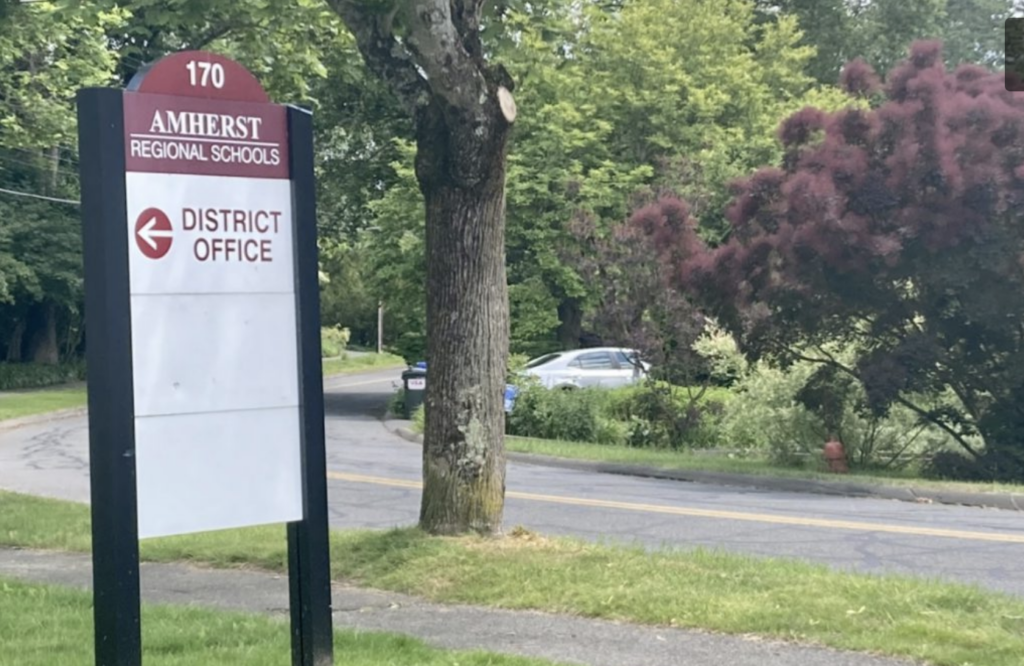
Photo: The Graphic
Report of the Meeting of the Regional School Committee, Oct. 20, 2026
The hybrid meeting was held in the high school library and was recorded.
School District Working to Maximize Time in School
Chronic absenteeism and disparities in discipline and academic achievement remain a concern in the regional schools. A student is considered chronically absent after missing 10% or more of school days. Superintendent E. Xiomara Herman (Dr. Xi) said 22% of high school students and 19% of middle school students in the Amherst Regional Public Schools fall into that category. Those rates match statewide figures, but Dr. Xi said improving attendance is a priority.
“We can’t teach students if they are not in school,” she said.
Attendance was discussed at a recent town hall for high school seniors, where students were enthusiastic about encouraging their classmates to attend.
Disciplinary referrals at the high school decreased 64.5% last year but remain high at the middle school. Herman attributed the middle school’s 1,004 referrals last year to the difficulty of moving to a larger school, where students change classrooms and teachers for the first time.
Black, Hispanic, multiracial, and male students are overrepresented in disciplinary referrals. Black students are referred three times as often as white students, and Hispanic and multiracial students are referred 1.3 times as often. Male students are referred 1.38 times as often as female students. Economically disadvantaged students are 1.84 times as likely to be referred as students who are not economically disadvantaged.
There have been no expulsions in the past three years, and 80% of suspensions are served in school. Last year, the middle school had 13 out-of-school suspensions, and the high school had one. Dr. Xi stressed the importance of keeping students in school by minimizing out-of-school suspensions. She outlined the district’s multi-tiered approach to discipline: prevention; transparent response; intervention, including attendance programs, peer mediation, dean and counselor check-ins, and advisory monitoring; student support, including success plans, Saturday Academy, and behavioral health referrals; and bimonthly monitoring. Saturday Academy, which will let students make up missed class time, is scheduled to start this month.
Enrollment in the regional schools has remained relatively stable, with 1,174 students this year. There are 30 fewer 12th graders than last year, but last year’s senior class was especially large. Twenty-five percent of students receive special education services, 6% are English language learners, and 12% have a 504 plan.
Regional school students perform well on statewide assessments, except in ninth-grade math. Administrators are examining the reasons for that gap to develop a plan to address it.
Middle School Repairs Nearing Completion
Dr. Xi told the committee that the middle school gym has reopened but will close again in November for more roof work. Chinese and art classes have returned to their regular classrooms, and the baseball field that had been used to stage construction equipment has been restored. Apart from some shared staff, sixth graders at Chestnut Street Academy are kept separate from middle school students.
Transportation Issues Are Being Addressed
Dr. Xi said many students still arrive late because of long bus routes, and a shortage of bus drivers remains a challenge. Katirya Parrish Segarra, the district’s new transportation manager, has been redesigning routes to reduce the number of stops. The schools held two listening sessions for caregivers and distributed a survey. The district will update the routes later this month and then hold another listening session on the changes. The new routes will consider walkability for students who live too close to school to qualify for bus service.
Micki Garland Is Serving as Interim Principal at Summit Academy
Summit Academy began the school year without a principal after Diane Chamberlain moved to Amethyst Brook Elementary School to become administrator of the AIMS and Building Blocks programs. Tom Simon, the district’s new director of student services, filled in until Assistant Principal Micki Garland, formerly Gromacki, stepped in as interim principal.
Simon said he has been impressed with the teamwork in student services. But he said several positions remain open and are difficult to fill at this time of year, especially given the regional district’s rigorous hiring process. Openings include a nurse manager, a middle school AIMS teacher, a special education English language arts teacher, an assistant technology coordinator, a speech-language pathologist, and several paraeducators.
The district has hired the Rennie Center and Thriving Minds to conduct a thorough review of Summit Academy’s programs, focusing on its therapeutic elements. The review will include outreach to families, focus groups, and in-depth interviews with staff members.
“We’ve asked them to find the strengths that we can build upon and help guide us as we move forward,” Simon said.
Simon said more than 50 district staff members have completed a 12-hour trauma-informed, neuro-affirming training with Ross Greene. Several staff members also completed Ukeru training, a trauma-informed, restraint-free approach to crisis management and de-escalation that Simon said aligns well with the district’s other approaches.
Simon also asked committee members to help publicize the open positions.
“This is a great place to work,” he said.
Committee Approves Hiring Two Permanent Substitute Teachers
The committee unanimously approved Herman’s request to hire two permanent substitute teachers for the middle and high schools. The teachers will move among classes to cover staff absences and provide a consistent presence in the schools. Their salaries will come from the substitute teacher line of the budget.
Amherst to Get Extra Seat on Regional Agreement Committee
Following the Sept. 26 Four Towns Meeting, the Regional School Committee proposed forming an advisory committee with members from all four towns to review the Regional Agreement and recommend changes. The original proposal called for each town to send a Regional School Committee member, a Finance Committee member, and a town councilor or Select Board member. Amherst members asked for a second Amherst town councilor because Amherst students make up 80% of the district’s enrollment.
The committee approved the change 5-3. Voting yes were Sarah Marshall, Bridget Hynes, Deb Leonard, and Andrew Hart of Amherst [query: confirm all four are from Amherst] and Tim Shores of Leverett. Voting no were Anna Heard of Shutesbury and William Sherr and Sarahbess Kenney of Pelham.
Each town will also choose an alternate to serve when a regular member is absent. The committee is advisory only; the full Regional School Committee and each town’s government must approve its recommendations.