
Why I Love Local Small Country Stores
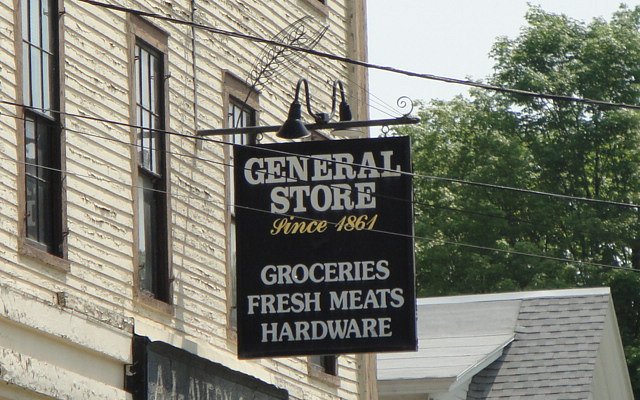
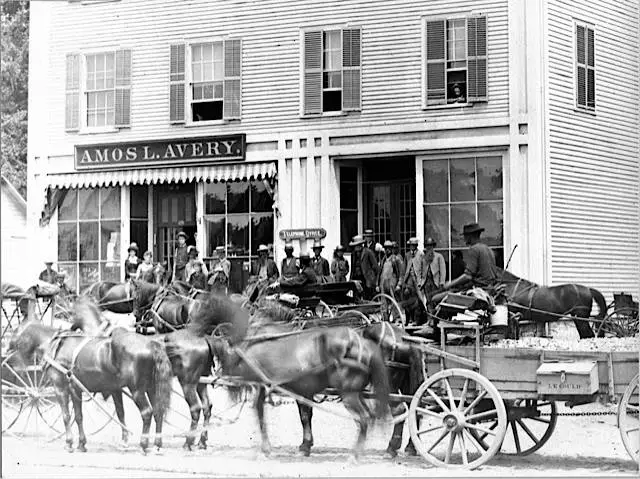
Avery's General Store, Charlemont. Photo: Avery's General Store
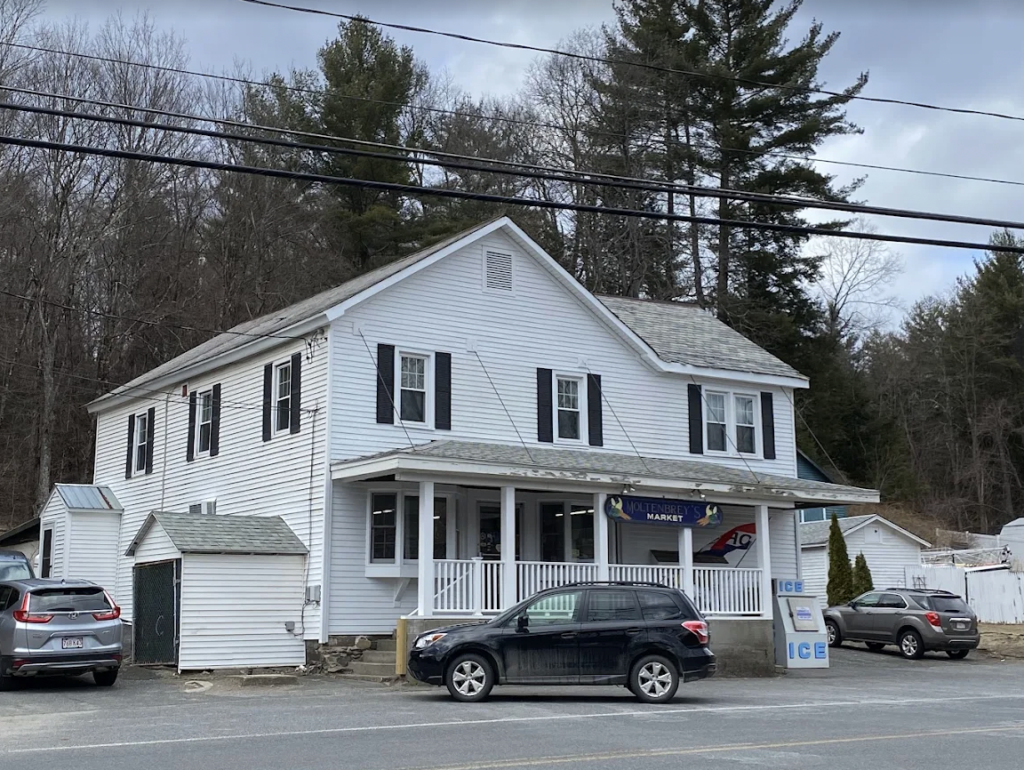
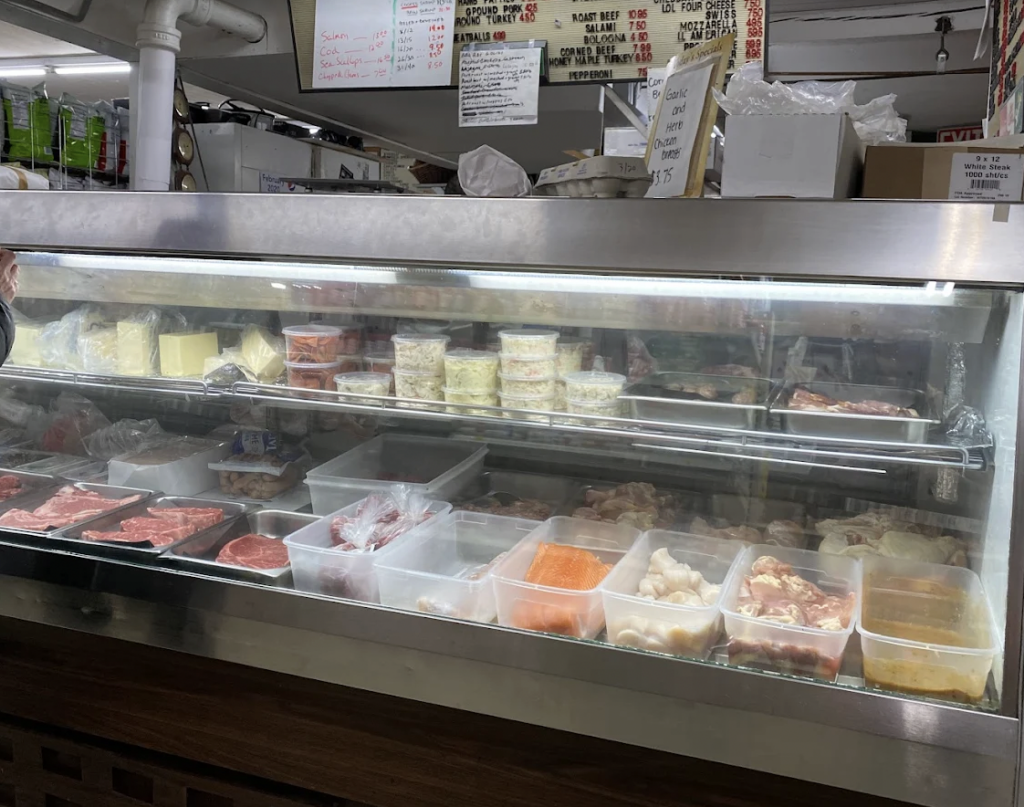
Recently, while in Huntington, I stopped by Moltenbrey’s Market, located in a modest house on Route 112. With sparse signs of other commercial activity nearby, this country store is a little gem selling fresh fruit and vegetables, prepared foods, baking supplies and an assortment of meats from its own meat counter. I keep a mental inventory of interesting country stores in our region — especially those that incorporate a specialized meat and deli counter and/or the town’s post office.
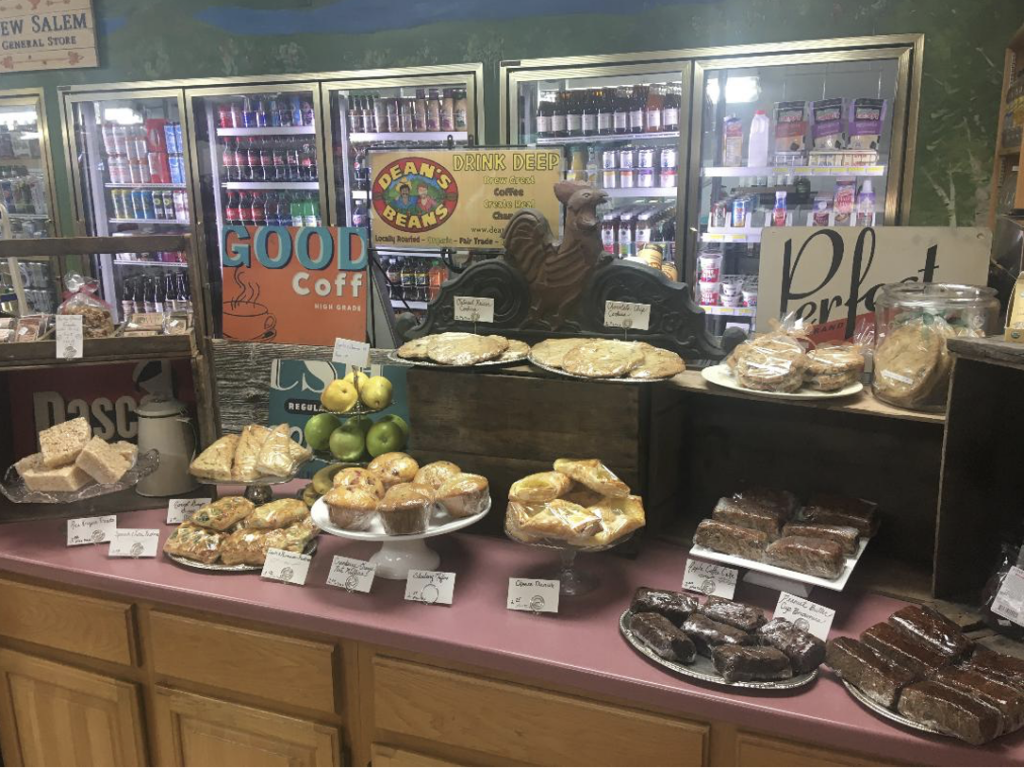
In this category is the New Salem General Store, which checks all these boxes with its striking old-fashioned brass mailboxes inside. I also “collect” diners and independent hardware stores. While not as large as Lowe’s, town hardware stores are often amazingly well-stocked and a visual treat, with a range of household merchandise often spilling out onto the sidewalk.
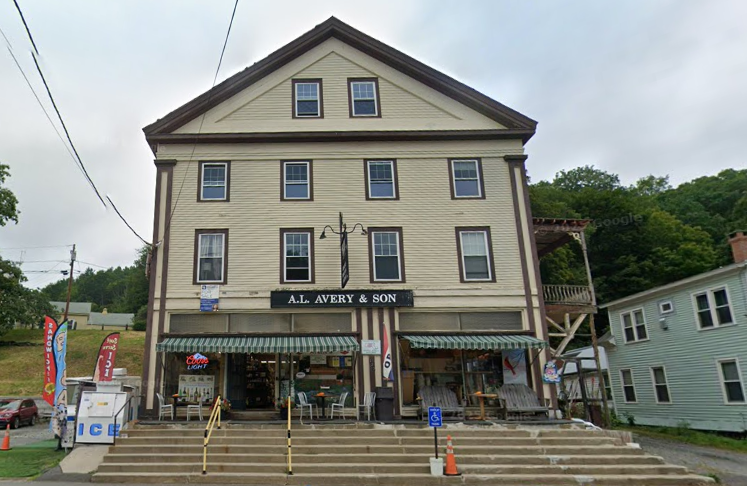
One notable combined hardware and country store is Avery’s General Store, housed in one of the most splendid Greek Revival buildings in Charlemont village center on Route 2. Built in 1855, the building — once known as “The Baltimore” — looms over visitors as they ascend its massive granite steps, and it largely retains its original floor plan. Avery’s has its own meat counter but, moving with the times, now offers bubble tea from a food truck parked on-site. The store has operated as a country store since 1861.
Meat counters are not really the point of this article, but their history is an interesting American story. At the turn of the 20th century, exposure of poor working conditions in meatpacking factories led to sanitation reforms, including the Meat Inspection Act and other product safety legislation. Upton Sinclair’s novel The Jungle (1906) brought national attention to the issue.
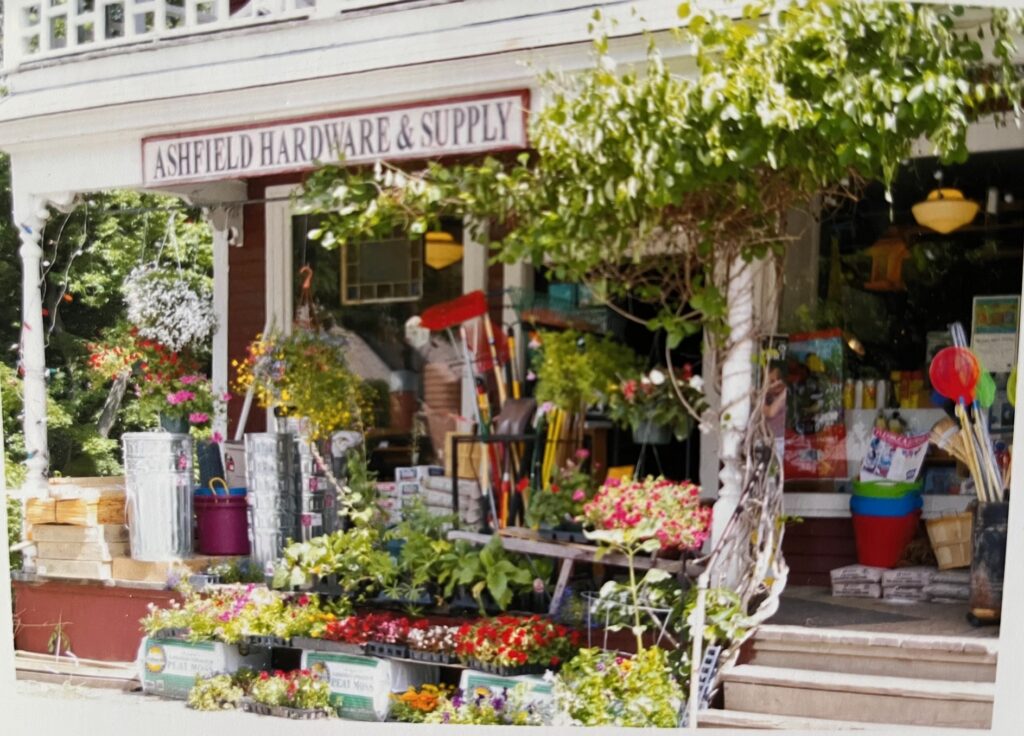
Ashfield has a remarkable hardware store operating out of a building that historically housed the town post office. Ashfield Hardware is known for its $1 ice cream cones and wide-ranging inventory that includes rainwear, Hawaiian shirts, socks, coffee and pet supplies. It is located on Main Street, near Wicked Good Cafe — formerly Elmer’s Cafe, which was once Ashfield’s general store before the arrival of Neighbors, a convenience store franchise also operating in Conway and Buckland.
Closer to Amherst is another interesting country store with historic ties to our town — or rather, the site where one once stood. A country store once operated inside the Williams-Boltwood House in Goshen. Early settlers Mercy Weeks and her husband, John Williams, ran a mercantile business there and also sold liquor. John Williams operated a blacksmith shop from the same property, which sat in a strategic location on what was then, as now, the main road west for miles around. Another section of the home served as the local post office.
The Williams family had 15 children, 10 of whom survived to adulthood. They were related to Lucius Manlius Boltwood of Amherst, who married the Williams’ granddaughter, Clarinda Boardman Williams. Boltwood and his wife spent summers at the Goshen house. Although Boltwood attended Andover Theological Seminary, he was never ordained; he went on to become an avid local historian, briefly serving as Amherst’s postmaster and as a librarian at Amherst College.
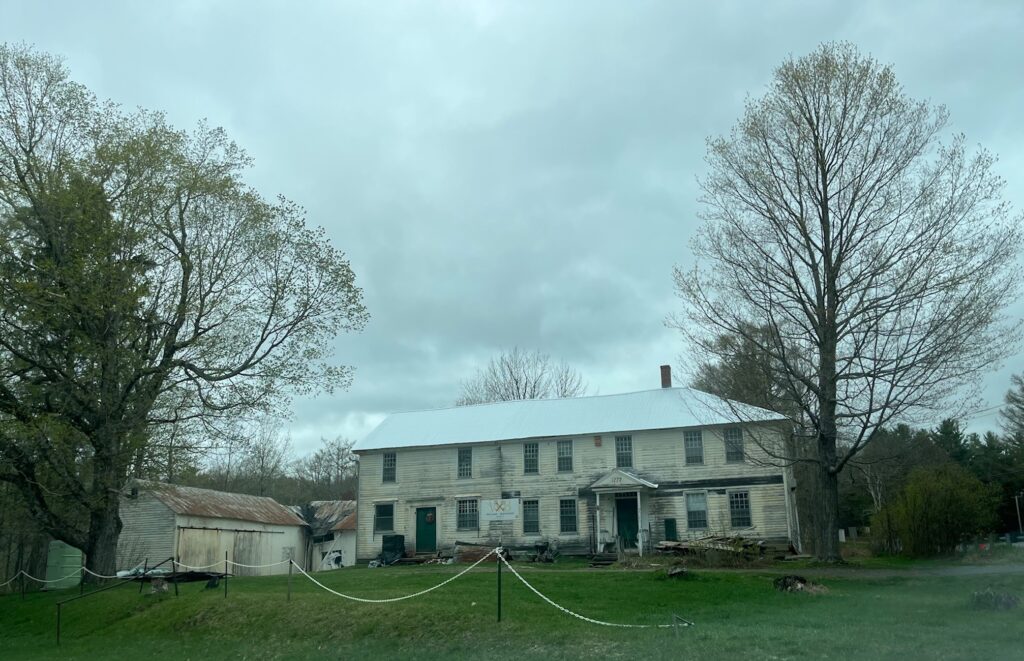
The Williams-Boltwood House, completed in 1779, has always had the appearance of a large Colonial-style home and continues to do so today. It is currently undergoing a significant preservation effort. John Williams was a landowner whose holdings included what is now the town cemetery and the current DAR State Forest.
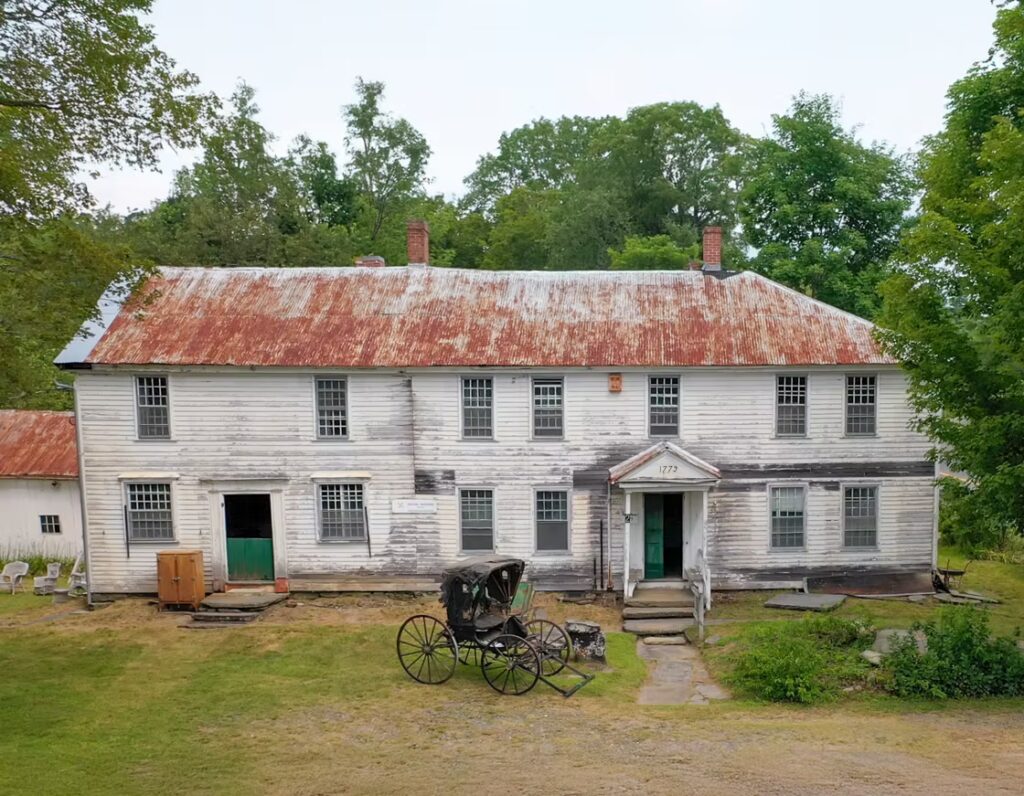
Williams Boltwood Project
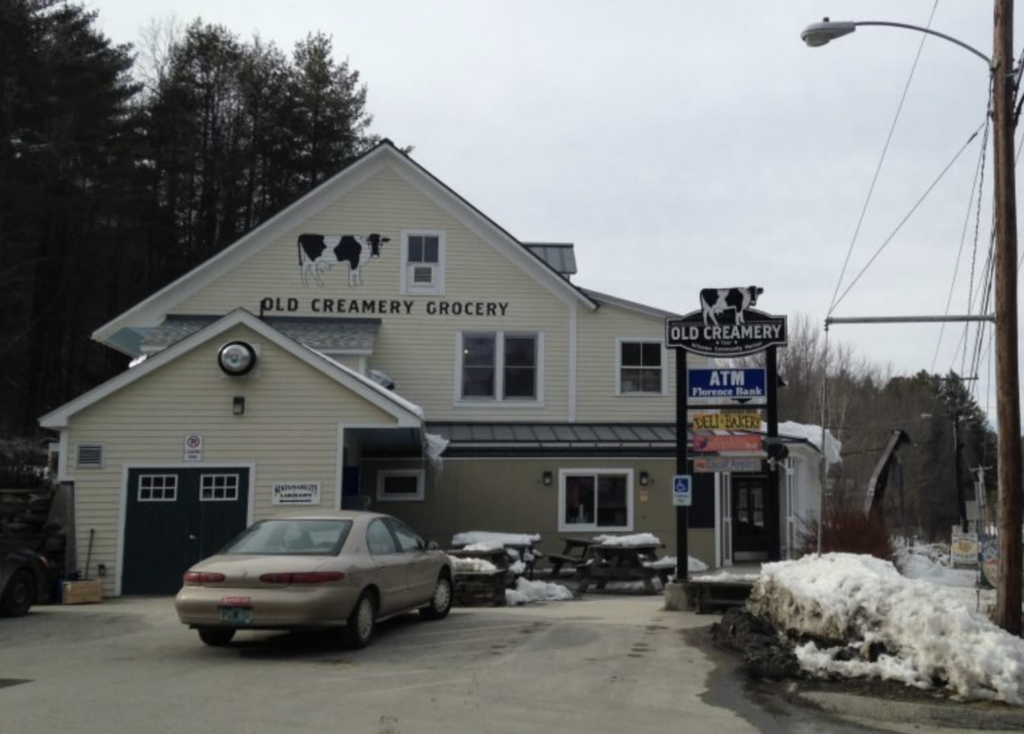
Continuing west along Route 9 — in the past or today — travelers remain in Hampshire County but draw closer to the Berkshires and Albany, New York. The terrain shifts, with denser evergreens edging the Westfield River. The road climbs shortly after passing an important Cummington landmark: the Old Creamery Co-op, housed in a building dating from the mid-to-late 1800s.
In 1866, Cummington established its first cooperative creamery, drawing on 145 dairies for fresh cream and producing as much as 20,000 pounds of butter a month for many decades. As the automobile age arrived, the building became a garage, and after World War II it operated as a package store until the end of the 20th century. Since the 1980s and ’90s, the co-op has embraced its cooperative roots as a member-owned store, now offering an extensive deli counter, a small general market and a liquor store.
The Old Creamery is a true entrepôt — a specialized commercial trading post — for Cummington, neighboring Plainfield and West Cummington. It is a great stop for anyone headed to Notchview, a property in Windsor belonging to the Trustees of Reservations, or headed to the many summer theater and music festivals in the area. With the nearest large food market more than 18 miles away, it is a community treasure. For those heading toward Northampton, the Williamsburg Market, also on Route 9, offers another well-stocked option closer to the valley.
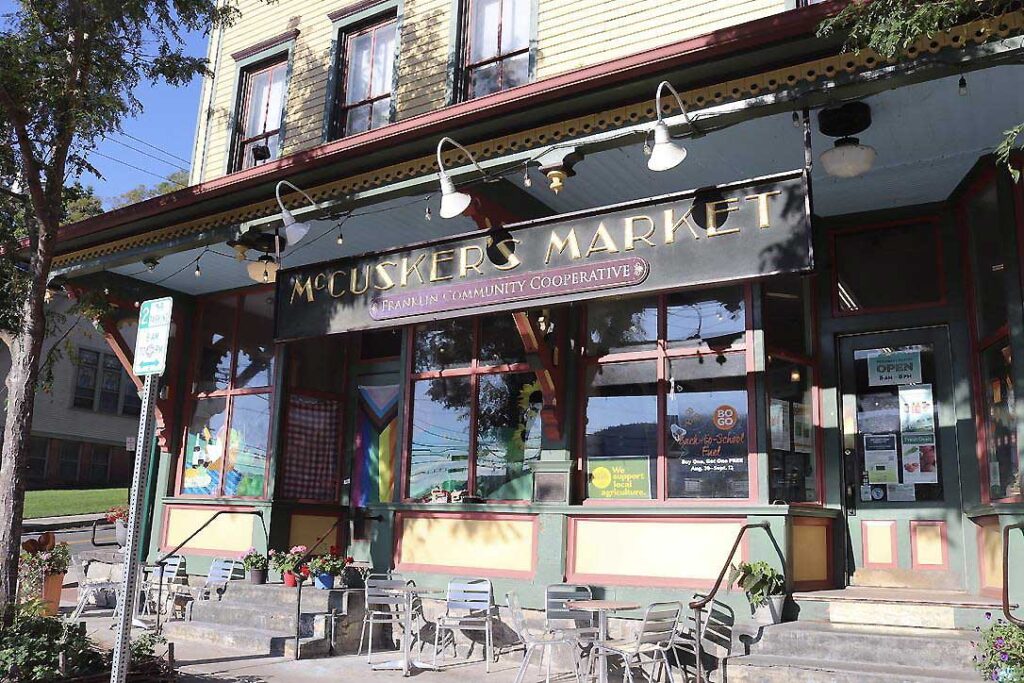
McCusker’s Market is found further north, in Shelburne Falls on the Buckland side of the Deerfield River. It occupies an architectural gem — the historic Odd Fellows Hall, designed by Putnam and Bayley and built in 1877. One notable feature is its decorated dentilated wood cornice, a dimensional trim painted in historically accurate colors befitting the building’s Victorian character. Two Palladian windows on the third floor, added after a fire in 1895, bring a bold and eclectic contrast. McCusker’s is part of the Franklin Community Co-op, founded in 1976-77.
On the Shelburne side of Shelburne Falls is Keystone Market, a small general store that was once filled with large chest freezers of frozen food. Keystone has a reputation for serving older adults living alone and describes itself as a “locally owned full-service market” with a meat department, deli counter, and produce and grocery sections. It is minority-owned.
The inspiration for this article came a few years ago when friends and I were staying at Temenos Retreat Center in Shutesbury. Cell service was spotty — fitting, given that we were on retreat — but we occasionally needed to drive down Horse Hill Road to reconnect with the outside world or pick up supplies from the New Salem General Store. It struck me then how vital these small hilltown stores are to local residents. (Cell service in the area has improved considerably since the pandemic.)
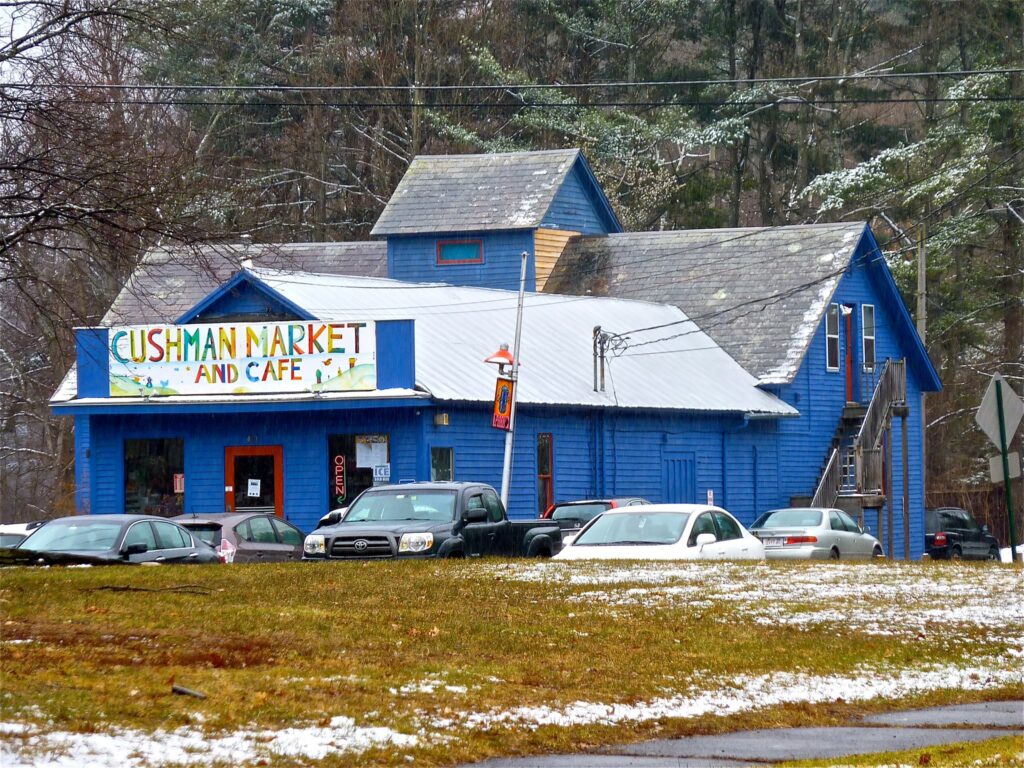
In this same category, I would include the Wendell Store (which calls itself a convenience store, located right next door to the town post office), the Leverett Food Co-op on North Leverett Road (which calls itself a community center and market), and North Amherst’s Cushman Market. Once known as a dry goods store, Cushman also served as the local post office and now operates a popular café from the same building.
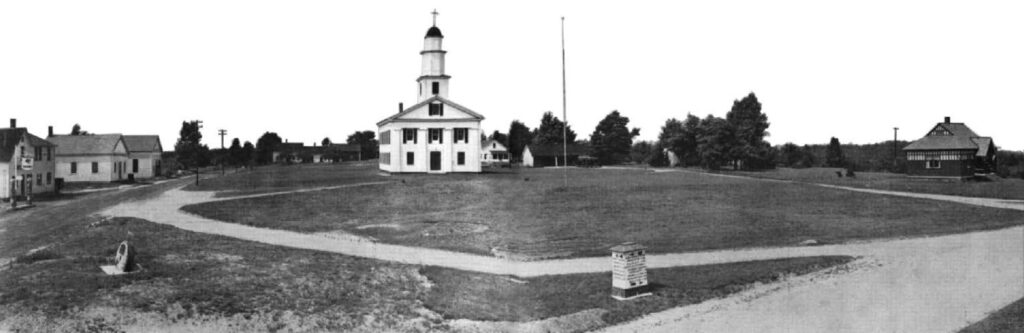
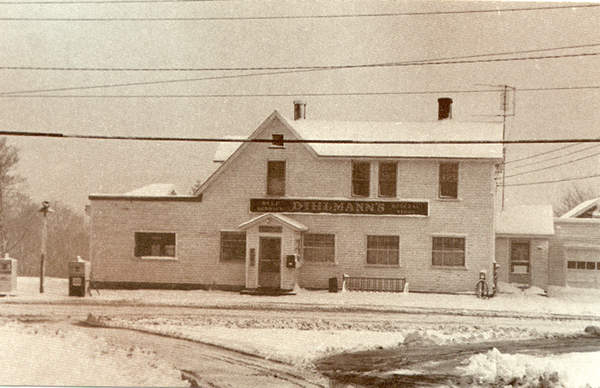
At Wendell Depot on Lockes Village Road, a former post office and store now serves as a local history museum — home to the Wendell Historical Society, which plans to add a coffee bar and lunch counter. Shutesbury no longer has a general store; it was once located on the town common and was called the Dihlmann Store.
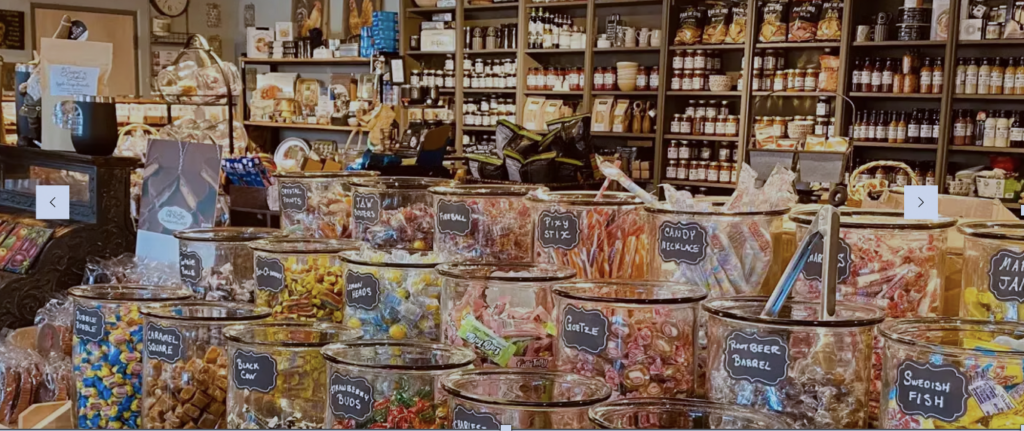
My first Saturday job as a teenager was at my local convenience store, which sold candy, newspapers, stationery, shelf-stable foods and cigarettes. For anyone who craves the old-fashioned candy that country stores once sold, head to the Mill District in North Amherst, where the General Store offers the best penny candy money can buy alongside a wonderful local art gallery.
Country stores are our local markets, post offices, hardware stores, front porches and community centers. Like the entrepôts of old, they link roads, people, goods, services and ideas. All of these qualities are alive in what the country store has meant to our region — and long may that continue.