
Letter: Downtown Design Standards Should Be Adopted. Proposed Zoning Changes Require More Study
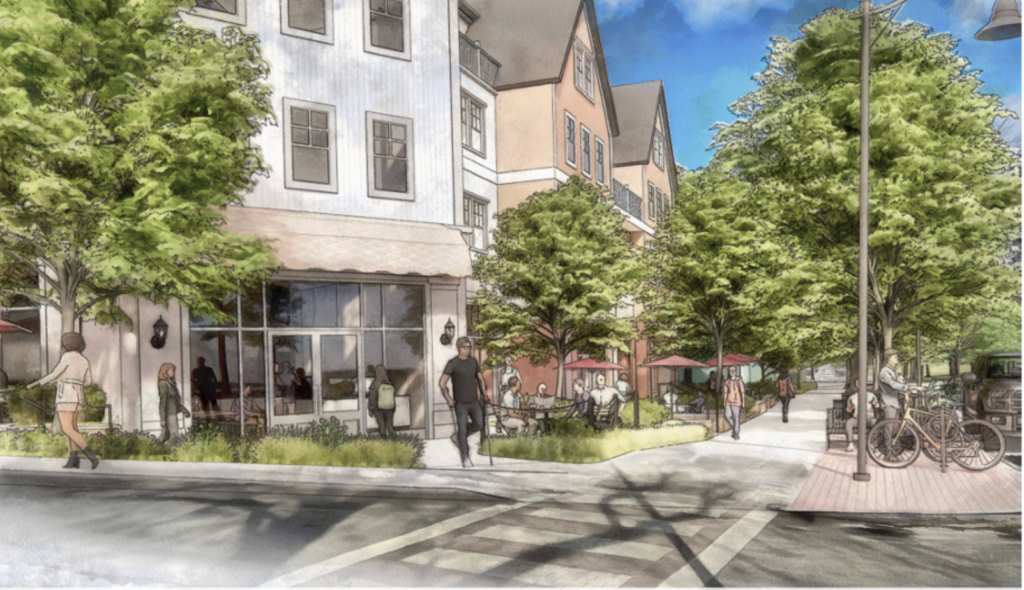
Architect's conception of Downtown Village neighborhood in the vicinity of Cowles Ln. and N. Pleasant Street, under the proposed Downtown Design Standards. Photo: amherstma.gov
The following letter was sent to the Amherst Planning Board and Amherst Town Council on May 14, 2026.
As a former Planning Board member and member of the stakeholder group during the design standard process with Dodson Flinker consultants, I am writing to offer my perspectives on the draft design standards.
1. Much of the proposed design standards are strong and well-thought-out. Dodson Flinker took much time and effort to develop design standards and new districts that capture and enhance the feel of the different areas of our downtown. New buildings built under most of these design standards will look appealing and as if they fit in Amherst. The standards will improve our sidewalks and encourage people to walk in and stay downtown. The standards will also give developers a strong, clear guide to what to build and they will help reduce the many conflicts over new construction. Most of the standards can be adopted without major rezoning and I strongly recommend adopting them — but not the zoning changes to the dimensional table without further study.
2. Significant zoning changes, especially to the dimensional table, require much more study. The consultants were charged with developing design standards, not to rezone the downtown. Early in the process, I asked if zoning changes would be proposed, and the answer was some. Now the proposed zoning changes are significant, particularly to the BL (Limited Business District). While the design changes were well-discussed and analyzed, our stakeholder group saw the major rezoning changes to the dimensional table very late in the process. We had little information, analysis, or discussion on the impacts of these changes. What could a buildout look like? What will be the potential impacts — positive and negative—on town services, water, sewer, police, fire, traffic, noise, historic buildings, nearby residents, property owners, businesses, taxes, etc.
We simply need to know more, before making significant zoning changes. Affected residents, property, and business owners need to be informed of the proposed changes to the dimensional table and new zoning districts. We need a targeted community process to show people what is being proposed, hear their ideas and concerns, and make needed adjustments.
3. Historic buildings or streetscapes remain unprotected from teardown. Any building in the downtown can be torn down – churches, town hall, historic houses and streetscapes, post office, Victorian and Colonial houses, the buildings along the Common are all vulnerable. These iconic buildings and streetscapes make Amherst’s downtown unique. They create a sense of place that people want to be in, use and visit. Historic preservation is a key element to our economic development. Yet there is nothing in the proposal that creates any incentive or deterrent to tearing down historic buildings and streetscape. Increases in building heights, floors and density only create financial incentives to tear older buildings down. We have to protect the core of Amherst center in the same way we have the districts surrounding the downtown – with a local historic district.
So I strongly support the changes in the proposed design standards. But the major zoning changes, especially the alterations to the dimensional table, require further study and examination—and more community discussion, especially by those most impacted. We also need to ensure that changes don’t lead to teardowns and loss of our historic and well-loved downtown.
Janet McGowan
Janet McGowan is a resident of Amherst’s District 5 and a former member of the Amherst Planning Board.