
Will Town Embrace a Smaller East Amherst Local Historic District?
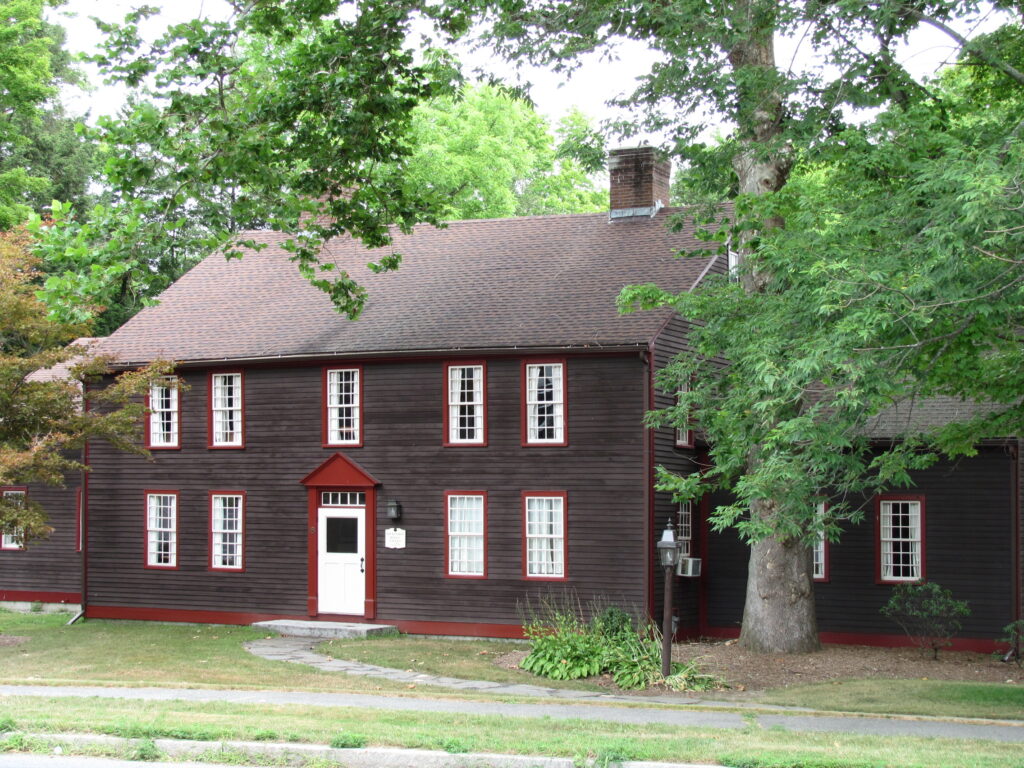
The Dickinson-Baggs Tavern is located in Amherst's East Village Historic District and is listed on the National Register of Historic Places. Photo: John Phelan /Wikipedia (Creative Commons)
Report on the Meeting of the Local Historic District Commission, May 18, 2026
This meeting was held over Zoom and was recorded.
Present: Nancy Ratner (chair), Steve Bloom, Nicole Miller, Bruce Coldham, Becky Sharp, and Ben Lynch. Absent: Greta Wilcox. Staff: Walker Powell (planner).
Design Guidelines for Local Historic Districts
The Local Historic District Commission unanimously approved design guidelines for local historic districts, developed in consultation with historic preservation consultant Chris Skelly. The guidelines are now in effect for buildings in the Emily Dickinson and Lincoln/Sunset Local Historic Districts and require no further legislative action.
East Amherst Local Historic District
The town manager proposed creating an East Amherst Local Historic District, citing concern that the oldest area of town was in peril. But an overwhelmingly negative vote by the Planning Board — 1-5, with Fred Hartwell voting in favor and Bruce Coldham absent — raised concern about the proposal’s fate before the Town Council.
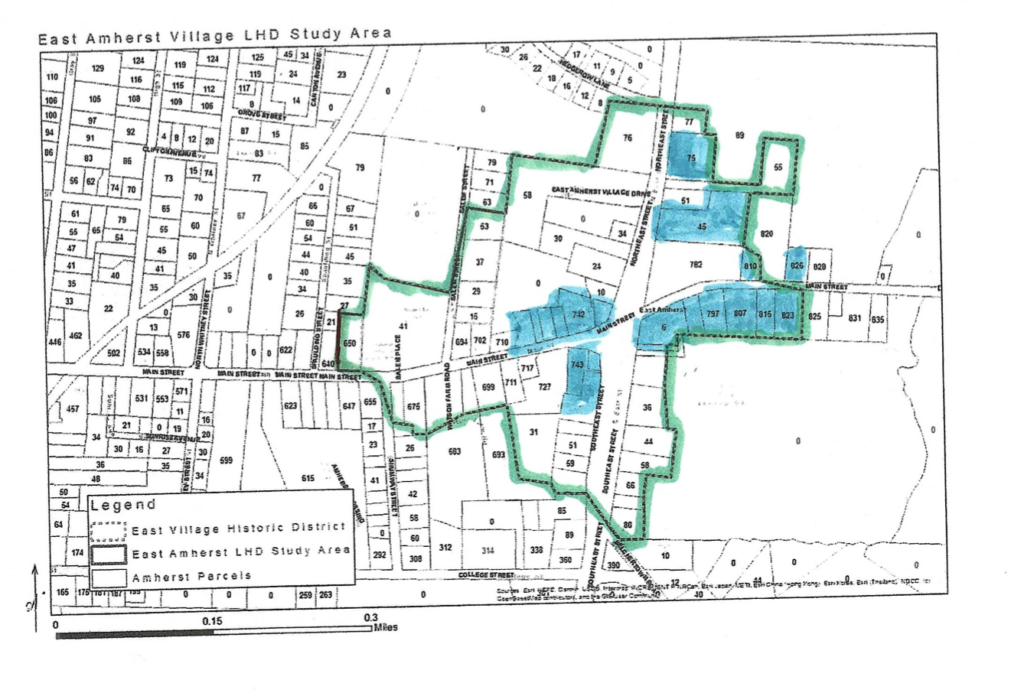
Noting that many members of the council and Planning Board hold a “building everything everywhere” mentality, commission member Steve Bloom presented a plan to reduce the size of the proposed district from 51 buildings to 17 of the oldest and most historically significant, clustered around the intersection of Main and North East Streets at the northern end of the East Amherst Common.
Some Town Council and Planning Board members have argued, without citing supporting data, that historic preservation is bad for the town because it inhibits growth and does not contribute to the tax base. Consulting historian Chris Skelly countered that the research does not support this view. Among the benefits outlined in the design guidelines, he noted that well-planned and well-preserved communities attract tourism that helps local businesses thrive, and that data show no evidence that historic preservation inhibits housing development. People, Skelly said, prefer to buy homes in attractive neighborhoods.
The draft guidelines for the East Amherst district state: “It is important to note that local historic districts do not stop change nor do they attempt to freeze a period in time. The purpose of a local historic district is not to thwart growth, but to guide growth, to allow for thoughtful consideration of change by having a locally appointed historic district commission as part of the process. New housing, new construction, building additions, and alterations all occur within local historic districts.”
Commission members expressed disappointment at the Planning Board’s reception of the proposal but said they hope that reducing the district’s size will still protect the most significant and oldest structures. All members felt the reduction was more than a compromise.
Way Finders, a nonprofit at the fundraising stage of an approved affordable housing project on the East Amherst Common, asked that the 1894 East Amherst school be excluded from the local historic district. The project includes adaptive reuse of the school, and Way Finders said that an additional permitting phase through the commission could jeopardize its funding. The commission approved excluding the current project from enforcement of the guidelines, while protecting any future alterations to the building.
Final action was postponed to the commission’s next meeting, June 8, to allow members and residents time to suggest additional significant buildings for inclusion in the district.
Note: The mid-18th century Kellogg House on the west side of North East Street is not included in the proposed district at the owners’ request. The current owners are Kellogg descendants who said a historic district designation could affect a future sale of the property.