
“Not Just a Class”: Students Find Connection Through Building Solidarity Economies
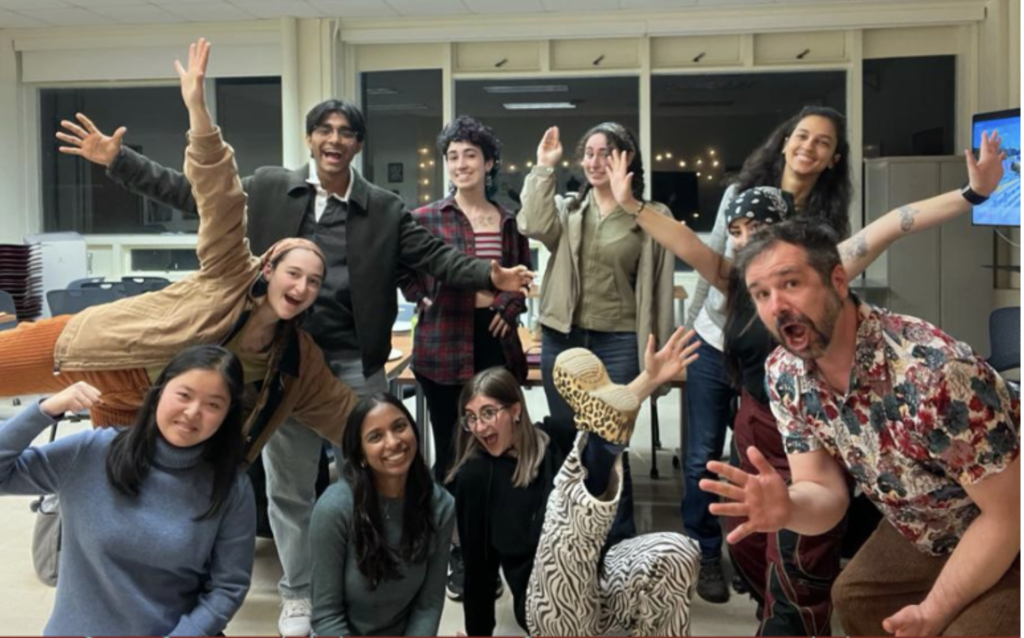
UMass Mutual Aid Project Collaborators. Photo: umass.edu
A Better World is Possible
Source: UMass College of Social and Behavioral Sciences
Faced with the myriad crises impacting our world, Annie McGrew was called to act. “I needed to get up from my desk and do something about it,” reflects McGrew, an economics PhD student at UMass Amherst. “I needed to find other alternatives. I don’t think I would’ve used this language at the time, but I think what I was looking for was another world that I could invest in…something worth fighting for.”
This class is just one part of a larger project to build a different type of world that’s based on care and reciprocity.
McGrew had heard about the Building Solidarity Economies (BSE) program from a friend in the economics department and decided to sign up for its eponymous undergraduate course, ANTHRO 341: Building Solidarity Economies, amidst the pressures of her doctoral work. “This class is just one part of a larger project to build a different type of world that’s based on care and reciprocity,” says McGrew. For participants in ANTHRO 341, “We’re just a part of that process. And how we’re doing that process is through this container of ‘this class at UMass.”
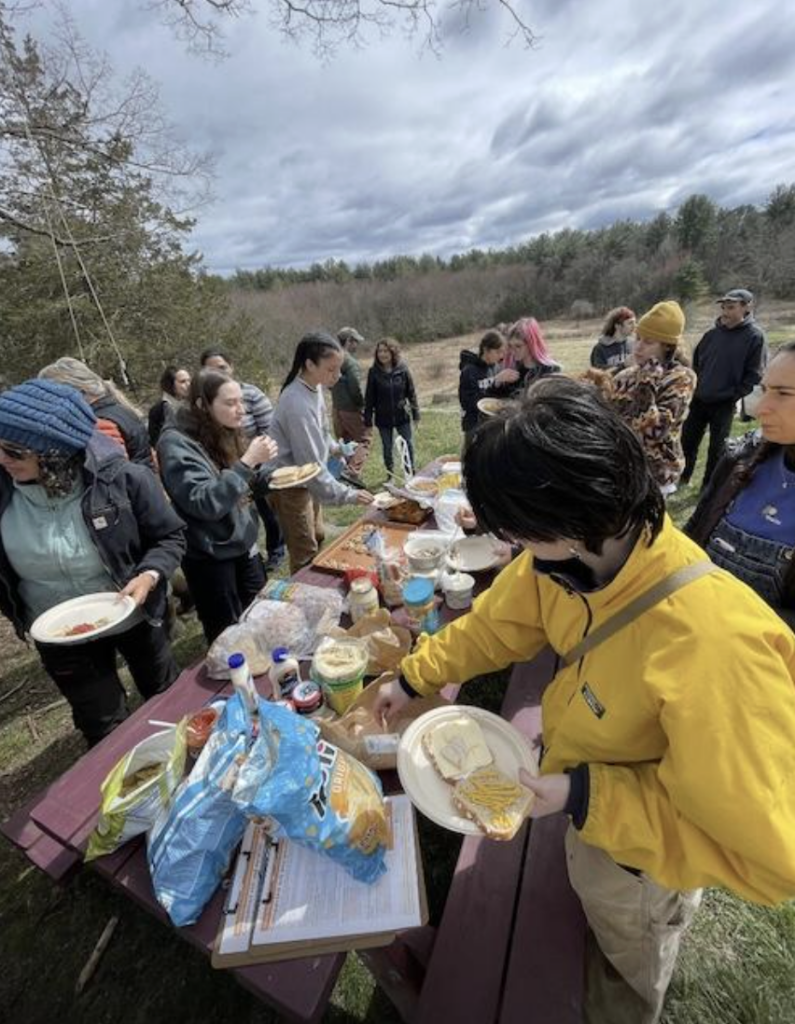
The larger project to which BSE is deeply connected is the solidarity economy movement, which seeks to address current and anticipated societal, economic, and environmental challenges through systems and strategies that prioritize cooperation and caring for one another, for participatory leadership rather than maximizing profits. The solidarity economy movement encompasses many grassroots, community-led, and local-to-regional efforts such as organizing mutual aid (for needs such as food, transportation, or emotional support), non-monetary forms of exchange like barter systems and skill-sharing, and land decommodification (e.g., community gardens, co-op farms, community land trusts).
BSE maintains relationships with local and regional mutual aid organizations and coalitions with whom students collaborate on research projects. For the spring ’26 semester, “we’re working very closely with four different organizations that are part of the solidarity economy movement,” says Boone Shear, Senior Lecturer of Anthropology and facilitator of BSE. These include Cooperation Vermont, a community organization building a local solidarity economy through worker-owned cooperatives, a community land trust, and mutual aid; Riquezas Del Campo, an immigrant-led, worker-owned cooperative farm; the Massachusetts Solidarity Economy Network (MASEN); and Land in Common, based in Greene, ME, that moves land towards indigenous control and seeks to restore reciprocal relationships with the land and with each other.
“It provides a sort of hopeful realism, that ‘Oh, this is something that more and more people are trying to do in different ways.’”
“A big part of this is not just about meeting people and hearing presentations about the transformative, world building work that they’re doing, but forming deep, ongoing relationships with people in those organizations, by participating in work that they’re doing,” Shear explains. “It provides a sort of hopeful realism, that ‘Oh, this is something that more and more people are trying to do in different ways.’ It becomes more solid and sobering and concrete.”
At the start of her junior year at UMass, sociology major Juliana Green ’24 sought to enrich her classroom learning with practical, engaged research. “There was an opportunity to work with the Mutual Aid Project, which is one part of Building Solidarity Economies, a collective of students and faculty that are working together to practice different mutual aid and noncapitalist practices on campus, to feel a greater sense of belonging and to create networks of care.” Green continued to work with Shear on projects throughout her senior year, including her senior thesis: a proposal for the now-operational MAP Minutes time bank, “a non-monetary form of exchange where time becomes the currency.”
“Because I really enjoyed the work that I was doing in collaboration with Boone and the Mutual Aid Project, I decided to take the Other Economies Are Possible class in the anthropology department (ANTHRO 340) with Boone, and Building Solidarity Economies (ANTHRO 341) in the spring,” says Green.
Green learned about Stone Soup Café, a community organization that operates a pay-what-you-can café and grocery store in Greenfield, MA, through her coursework and is now the organization’s Community Store Manager. Since summer 2025, she has been instrumental in coordinating an ongoing collaboration with Shear and BSE students to bring mutual aid groups together at the café for workshops, sharing strategies and building community connections. The Solidarity Workshop Series, which will continue in fall 2026, is designed to deepen relationships among organizers, activists and community members across Western Massachusetts. The monthly workshops have been facilitated by groups including Redistro, the MAP Minutes time bank, Poor People’s Army, and People’s Budget.
Chloe Spurr ’24, a current UMass Amherst master’s student in sustainability, noted that amidst coursework that grappled with the world’s persistent problems, she learned about Building Solidarity Economies “as a pathway forward. So this was actually a solution and something that we could build, instead of just talking about all the problems that we faced.” Spurr is now working with MASEN, the Massachusetts Solidarity Economy Network, conducting interviews with cooperative care and mutual aid organizations statewide to create profiles for them on the MASEN website.
“It’s a really different kind of class in terms of how we relate to one another,” Spurr says about ANTHRO 341. “Everyone really cares about one another and wants to know about what’s happening in each other’s lives, so it’s a really comfortable space. So when we’re talking about these really difficult issues, these new concepts, it’s a really nice way to voice what you’re thinking, even if you don’t think it’s right or if you don’t know if people will understand you.”
“It’s also the first class I’ve taken where the professor has tried to convince us that it’s ‘not a class,’” McGrew jokes. “What we’ve been calling it is a Building Solidarity Economies Assemblage,” reflecting the complexity of intersecting processes and relationships.
Shear explains, “We are doing readings and writing and theorizing, but we’re also engaged in research and teaching projects that are very focused externally on how to build different ways of being and ways of interacting beyond capitalism. So much of the ‘class’ is learning from (and also doing some) popular education as we go, and forming deep collaborative pedagogical relationships with people, organizations, and communities who are trying to create their own conditions of life.”
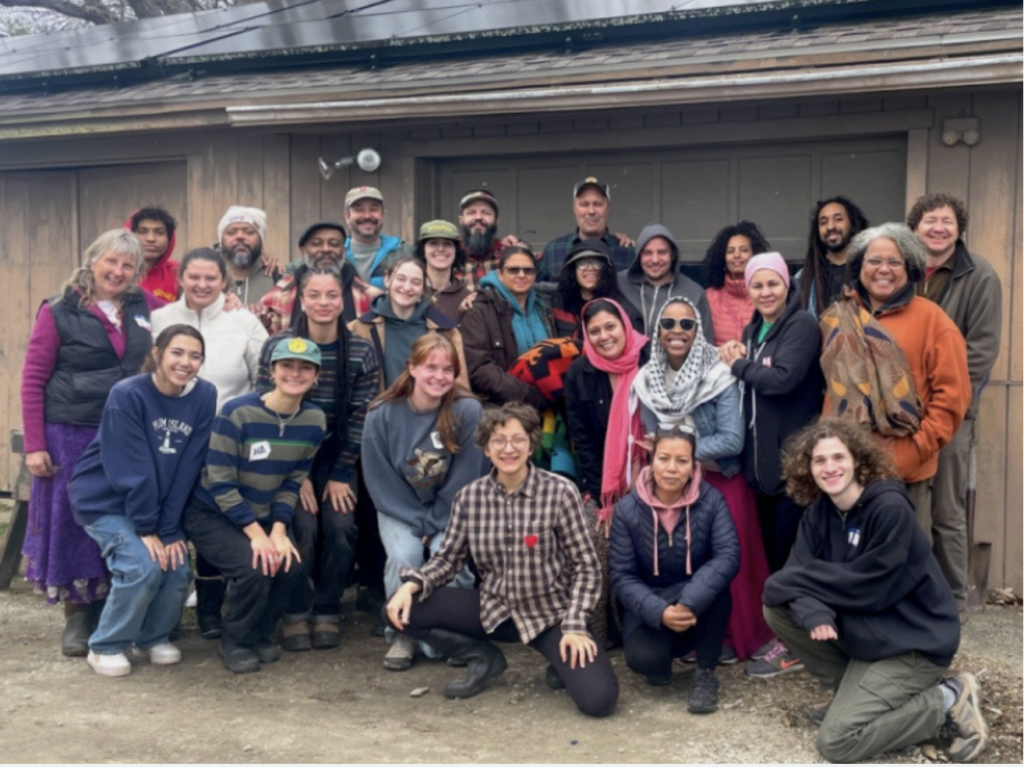
Green adds that BSE is more than a typical class because many of the projects and relationships built within it are sustained by future students to carry the work forward. “It’s made very clear at the beginning of the semester that we don’t want the work to end when the semester ends and we hope it will be inspiring for folks to continue on,” says Shear.
“The project that I was a part of my senior year was cataloging all of the decommodified land-based projects in the country,” says Green. “That was something that we weren’t able to finish in a four-month semester, and continued to be worked on and updated by students who were part of BSE in the next couple years, and we hope to be continuously updated.”
This is a project and a community and an assemblage that we now see ourselves as part of.
“For me at least, and I think for a lot of people in the class, this isn’t a semester-long thing,” says McGrew. “This is a project and a community and an assemblage that we now see ourselves as part of.”
In recognition of his inspiring instruction in addition to his efforts as BSE’s coordinator and facilitator, Boone Shear has been selected to receive a 2026 University Distinguished Community Engagement Award for Teaching. Granted annually by the Office of Faculty Development, the Distinguished Community Engagement Awards recognize individuals within our campus community, as well as community partner organizations, for their outstanding contributions to community-engaged research, teaching, and service.
The liveliness and endurance of BSE “is a reflection of brilliant people, students, undergraduates, graduates, movement leaders, community folks that are coming together,” says Shear. “It really is a broader collaboration that is doing this amazing work. I feel really, really lucky to be a part of it. I learned so much from students this semester; I always do. It’s really a joy.”
Learn More:
- Support BSE
- Follow BSE on Instagram: @building_solidarity_economies
- Prospective or current graduate or undergraduate students who are interested in learning about or getting involved in BSE research and projects can contact Boone Shear at bshear@umass.edu.
A Better World Is Possible” is an Indy feature that offers snapshots of creative undertakings, community experiments, innovative municipal projects, and excursions of the imagination that suggest possible interventions for the sundry challenges we face in our communities and as a species. Have you seen creative approaches to community problems or examples of things that other communities do to make life better for their residents that you think we should be talking about? Send your observations/suggestions to amherstindy@gmail.com. See previous posts here.