
Opinion | “I Was a Hurricane”: Connecting Generations
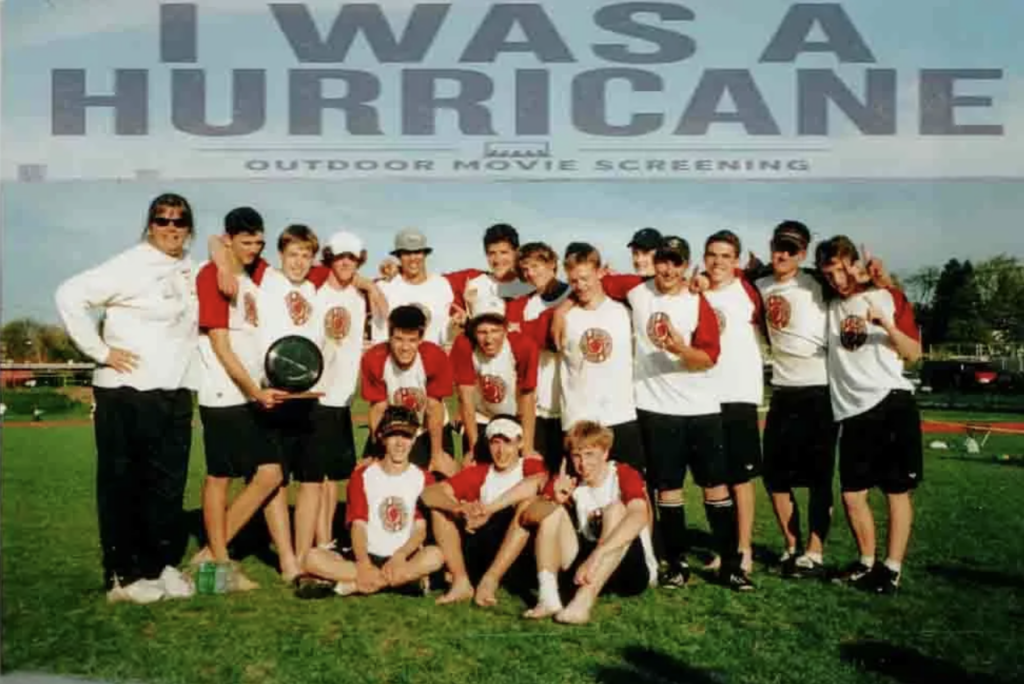
Promo for the screening of "I Was a Hurricane" on the Amherst Town Common on August 8, 2026. Photo: amherstma.gov
Social Injustice Goes Global
By Rizwana Khan
The Long Throw
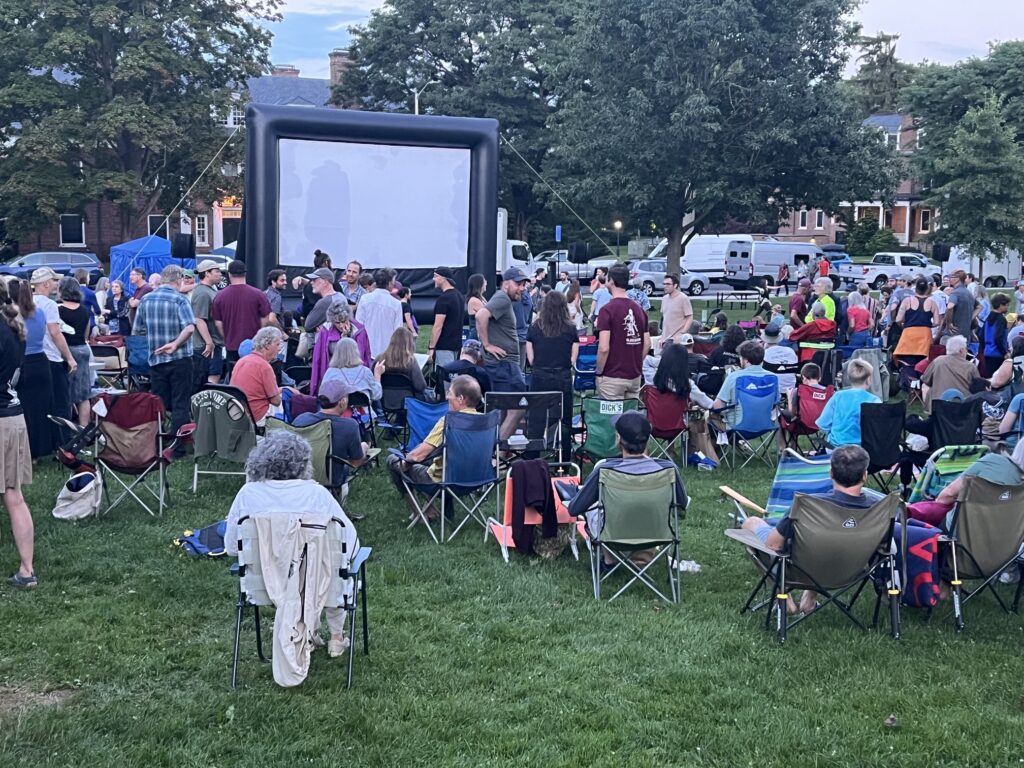
On Aug. 8, 2026, Amherst gathered on the Town Common to relive the 2003 Amherst Regional High School boys’ Ultimate team’s run to the national championship, brought to life in a documentary film 20 years in the making. The rain stopped early Saturday evening, the sun came out, and folding chairs filled the Common.
Old teammates, friends, families, and people who had never heard the story before gathered to watch “I Was a Hurricane” — a story about a group of teenagers who picked up a disc and, in the process, created something that lasted far beyond that championship game.
More than two decades later, filmmaker Lexi Jamieson Marsh, director and producer of “I Was a Hurricane,” returned to the story through interviews with the players themselves. The film was produced by On Your Feet Entertainment.
Marsh had more than 200 hours of archival Hi8 footage captured by filmmakers and Amherst community members Bob Pollak and Nate McGarigal, who was a 16-year-old high school student in 2003. Pollak and McGarigal documented the teenagers as they practiced, traveled, competed, argued, celebrated, and grew up.
Years later, cinematographer and former team member Draper White digitized the tapes, preserving a remarkable record of the team — and a part of Amherst’s history.
Their hair changed. Their lives and addresses changed. Some had become parents, teachers, lawyers, professors, and coaches. But the teenagers were still there on the Hi8 tapes.
Running across a field, laughing on a bus, arguing over a call – they could not have known what “forever” meant. Then, 23 years later, the town of Amherst gave them a giant screen on the Town Common, and adults watched themselves become teenagers again.
Before Everything Became Content
The teenagers in “I Was a Hurricane” had no idea they were creating content — no strategy, no Instagram Reel, no TikTok clip. No one is saying, “Guys, we need a vertical version of this.”
Someone just pointed a camera at them. Nobody was trying to become an influencer; the footage captures something increasingly rare: people behaving like themselves. The strangest part of watching footage from 2003 is that nobody is performing, because there wasn’t an algorithm waiting to judge them. There are no carefully chosen angles, no ring lights, no curated morning routines. No one is looking into a phone and announcing, “Come with me to nationals.”
There are just sweaty, loud, serious athletes who appear to have discovered mindfulness before most of us and demonstrated that adolescence existed before it became content.
Then there are the details: a Barbie in a box, a campaign placard referencing the Iraq War next to those for local candidates for select board, and clothes that immediately announce, please don’t let this fashion come back. Objects we once considered completely ordinary are now historical evidence to younger viewers.
“What’s that?” “That’s a CD.” “What did it do?”
Revisiting the Past
They reunited decades later. In 2003, they were thinking about nationals; in 2026 they’re thinking about their children and their aging parents. But watching the film makes their shoulders straighten, the jokes return, and the competitive glint reappears. Everybody is 17 again.
There were rituals, beliefs, discipline, elders, and initiation — the practice of taking something slightly eccentric, becoming extraordinarily serious about it, and then acting surprised when everyone else notices. It’s a realization that we have finally become the people our childhood cameras were filming.
“I Was a Hurricane” preserves the past by making it visible. The teenager on the screen is someone we remember. And for one night, Amherst sat in folding chairs and watched 23 years come back around.
The audience reacts to people on screen whom most of us would never recognize. A player appears. Silence. A coach appears. Applause. A teacher appears. More applause.
Someone from Amherst walks into the frame and suddenly the entire audience behaves as though Beyoncé had arrived. That is how you know you are watching a local movie.
In small towns, that reaction is basically the whole review: “Wait — isn’t that Mr. So-and-So?” And somehow it’s more powerful.
The Woman Who Turned a Frisbee Team into an Institution
The central adult figure in the Hurricanes’ story is Tiina Booth, who arrived in Amherst in 1989 as an English teacher, started coaching a sport, and then built an institution.
In 1992, Booth founded the Amherst Invitational, which was the first and is now the oldest high school Ultimate tournament in the United States. By the late 1990s, the Amherst program had achieved national acclaim. The Hurricanes went on to win national championships in 1998, 2003, and 2004.
This was no longer the extracurricular activity you did because your parents wanted you to “try something.”
Booth also created the National Ultimate Training Camp in 2001. The first camp had only 28 campers and helped turn Amherst into a destination within the world of youth Ultimate.
And the Hurricanes’ most famous controversy would eventually revolve around precisely that question: How do you decide what happened when there is no referee to tell you?
The players are responsible for themselves. There’s a rulebook, but there’s also trust, competition, integrity, and a scoreboard — plus the harder question of how you got there.
For teenagers, this is a surprisingly serious education, and perhaps that explains why so many of the former Hurricanes remember the experience as more than athletics. The field was a classroom, and the disc was occasionally a pop quiz in character.
The Other Adults on the Sideline
The 2004 national championship tournament program lists the Amherst Hurricanes’ coaches as Tiina Booth and Woody Clift. Booth has since identified Jeff Yu and Clift as assistant coaches who preceded Brent Anderson, who served as her assistant for several years. The film highlights the important developmental work of Bill Stewart, who has long run the youth ultimate program at Leverett Elementary School, and Jim Pistrang, the longtime head coach of the Amherst Regional Middle School Ultimate Program.
The mythology of the Hurricanes, then, shouldn’t be reduced to one charismatic coach and a group of talented boys. It was a community project, with an impressive number of people who had opinions about the correct way to throw a disc.
It Takes a District
The Amherst Regional High School Hurricanes were never simply an Amherst-only team. The regional school district brings together Amherst, Pelham, Leverett, and Shutesbury, and that matters in “I Was a Hurricane.” In fact, seven of the 18 team members, including the captains, came from Leverett.
Shutesbury and Leverett keep appearing like background scenery — a road, a town name, another place on the way to somewhere else.
The Hurricanes belonged to a network of towns, schools, coaches, tournaments, families, and friendships that extended well beyond Amherst itself.
The Ultimate Origin Story
In 1968, Amherst College students developed an early version of the game that would become Ultimate. A small commemorative stone on the campus now marks that history.
The game that emerged around Amherst eventually traveled to New Jersey, where Joel Silver, a student at Columbia High School, encountered it at a summer camp at Northfield Mount Hermon School run by Amherst College students. He brought it back to his school and helped establish what became the organized sport of Ultimate.

The first Columbia game was reportedly played between the student council and the student newspaper — which sounds less like the beginning of an international sport than the setup for a very specific 1960s student joke. And yet 60 years later, people are still playing.
The Rules Were the Point
The film isn’t simply a nostalgic reunion. When the early founders formalized Ultimate’s rules in a booklet in 1970, they built the honor system into the rules. Players were responsible for calling their own fouls, because there were no referees or officials standing between two players and the question of what actually happened. The game depended on one thing: trust.
Ultimate demanded speed, athleticism, strategy, and extraordinary precision. But its philosophy insisted that competition couldn’t come at the expense of mutual respect or the basic joy of playing. In other words: Go ahead and destroy your opponent’s defensive strategy. Just don’t be a jerk about it.
Not Quite a Hippie Sport
Ultimate has sometimes been described as a hippie anti-sport — noncontact, referee-less, informal, suspicious of commercialism.
The people who became obsessed with Ultimate were often competitive, intellectual, analytical, and intensely serious about getting better. One Ultimate historian described the culture as a mix of engineers, intellectuals, and athletes: alternative, liberal, freethinking, and, importantly, smart-alecky.That last part feels essential, because you can see it in the “I Was a Hurricane” teenagers, who teased one another and ran themselves into the ground.
The 2003 Problem
The 2003 Hurricanes reached the national championship against Paideia, the Atlanta powerhouse that was the two-time reigning national champion. Then came the call. A self-officiated foul, called against Amherst on what turned out to be the final point of the game, a disputed moment, and a decision that could not simply be handed to a referee, because doing so would violate the very structure of the game.
What does honesty require when honesty might cost you the championship? It is precisely the sort of question that becomes more interesting with age. At 17, you want to win, and at 30, you may remember what happened differently. You may realize that the argument was never really about the disc. That is the emotional engine of “I Was a Hurricane” — a teenager choosing honesty, even at the expense of a championship.
The Honor System Comes Home
There is another reason the Hurricanes’ story feels bigger than a championship. Ultimate asks teenagers to think while they are running. The disc doesn’t arrive with instructions. Players have to read its trajectory, anticipate movement, improvise, make decisions quickly, and understand what everyone else on the field is doing.
And then they must regulate themselves: call their own fouls, resolve their own disagreements. They are expected to compete intensely without allowing competition to destroy the relationship between them and the person they’re competing against.
The game rewards spatial awareness, quick decision-making, improvisation, and an ability to absorb a lot of information at once. It can be played by people who weren’t necessarily destined to become traditional high school sports stars.
You don’t have to arrive as the kid who was already 6 feet tall and being recruited by three colleges. There is something beautifully democratic about that.

The Kid Who Didn’t Quite Fit
Then there were the teenagers navigating an already unstable stretch of life — figuring out friendship, masculinity, competition, sexuality, family, failure, ambition, and grief, often simultaneously.
The filmmakers themselves have described “I Was a Hurricane” in terms of belonging, mentorship, character, healthy masculinity, and the influence of youth sports on young people. Chief among the lessons: how to disagree with someone without making them your enemy.
That last lesson may be worth more than a national championship. And there is something distinctly Amherst about an athletic culture where academics and eccentricity have always been allowed to coexist.
Twenty-Three Years Later: Back to the Foul
This is why the 2003 controversy has such staying power. What do you do when winning and doing what is right appear to conflict?
By the time the Hurricanes gathered again, they were no longer the boys on the field but had become adults, and the audience had changed too.
The children sitting on the Town Common were watching their parents’ adolescence on Hi8 tape. A camera that once meant nothing more than recording a birthday party now preserves a vanished Amherst. At that moment, our own childhood technology became archival.
So perhaps the greatest achievement of the Hurricanes wasn’t winning in 1998, 2003, or 2004, but creating a culture in which a teenager could arrive without being the best athlete and still find a place. And a coach could teach English and Ultimate, treating both as forms of education.
And between the first laugh and the burst of applause, it became clear that Tiina Booth had given Amherst a story. And Amherst relished reliving it.
Rizwana Khan is a writer, educator, and human rights advocate in Amherst.
Thank you very much for the thoughtful review on the project Rizwana, in reading it, I feel like we succeeded in the intentions behind the documentary. It was such an incredible experience being able to share this multi decade long project with so many people who were a part of it.
Tangentially, I notice Ultimate will be dropped from consideration for the 2028 Olympics. I believe the only disc competition will be discus throw. I discovered that according to IOC standards, a sport or athletic endeavor must be practiced in 75 countries to participate and must be governed by an internationally recognized body, and Ultimate does not meet either requirement. Despite it being referred to as a sport 10 times in the opinion article, I ask: is Ultimate a game or a sport or both?
Wow! I’m so impressed with your incredibly accurate and thoughtful review so soon after the premiere. Thank you for coming! I really enjoyed reading your piece.
This is some seriously good writing and I’m not just saying that because my son, Dylan was one of the Hurricane players early on. Dylan’s mom was one of those parents who showed up on the sidelines to spirit the team on back in the day. I’m so glad her and Dylan got to relive those days during this past weekend’s festivities. What a hoot, rekindling all that extra special team spirit and shared joy in these troubled times. Thanks very much capturing the event with so much talent and thanks to all the players and their loved ones for sharing such happiness.
Not that it is hugely consequential to the spirit or content of this article, nor do I consider Olympic participation relevant to whether something is a “Sport” or not, but just for accuracy……Ultimate is governed globally by the World Flying Disc Federation (WFDF), which is recognized by major international sports authorities including the International Olympic Committee (IOC). And the World Flying Disc Federation reports that the sport is active in anywhere from 80 to over 100 countries worldwide, with millions of participants.
Thanks Dan. It is hugely consequentialwhen someone gets called out. Thanks for the corrections, sorry if I violated the spirit of the article for you. I do believe participation in the Olympics is significant as to whether an athletic endeavor is a sport or not. Thanks again. I ask: if 80 to 100 countries play Ultimate, (required to become an Olympic athletic endeavor), why was Ultimate removed from consideration for the 2028 Summer Olympics in LA?
Chess is governed by a World Federation, but it’s not a sport (unless you ask Kasparov).
I’m swayed and agree with my critics above as well as the editors, but then we ought to call the chess program what it is: not a club but a team. GM Gary Kasparov, who remained GM for 255 months, insists it is a sport. Chess is recognized internationally as a sport because it is physically and mentally grueling, leaving some tournament players to bow out from anxiety or exhaustion. Yet… we have a chess “club” and an Ultimate “team”. Indy, thanks for the forum to speak and be criticized.