
Reflections on Two Terms on the Amherst Historical Commission #3
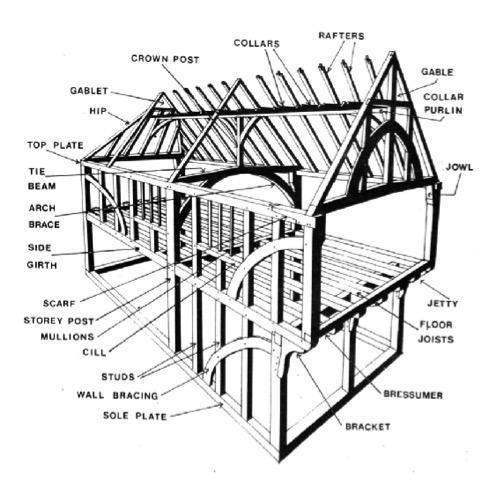
Timber framing, historically prevalent in places in New England like Ipswich, MA. Photo: henhamhistory.org
by Hetty Startup
I recently stepped down from the Amherst Historical Commission. As I neared the end of my second term, I wrote a couple of articles for the Indy about my time as a commissioner (see here and here), reflecting on what happened over six years. This is the last article in that series and offers some thoughts about past demolition-delay public hearings and their outcomes.
Permit Outcomes
On Snell Street, homeowners who requested a demolition permit for an outbuilding on their property—a small barn in very rough shape—have now completed a similarly modest but perfectly functional barn close to where the old one stood.
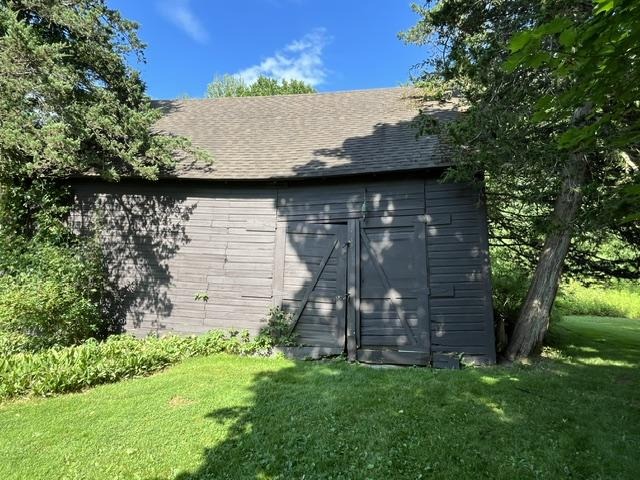
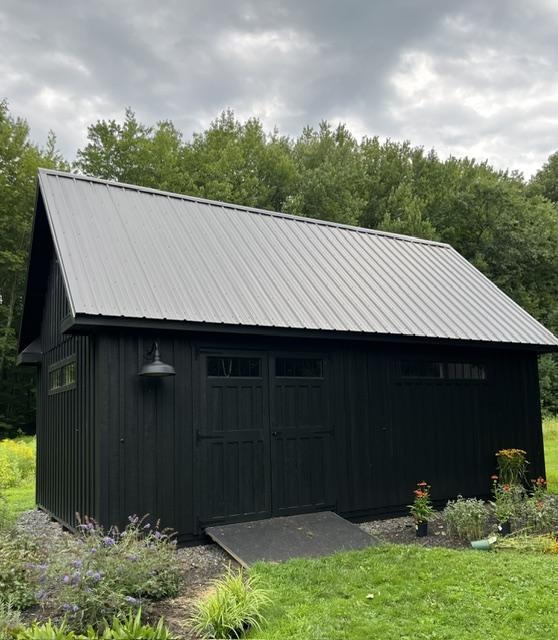
Above: Old barn on Strong Street (left) replaced by new construction. Photos: Hetty Startup
Another permitting outcome is a new ADU going up where an old carriage barn used to sit, on North Pleasant Street close to North Amherst’s historic center. The barn had torqued badly over the decades and needed numerous repairs to be even semi-functional as a garage. The owners requested a demolition permit, and it was granted.
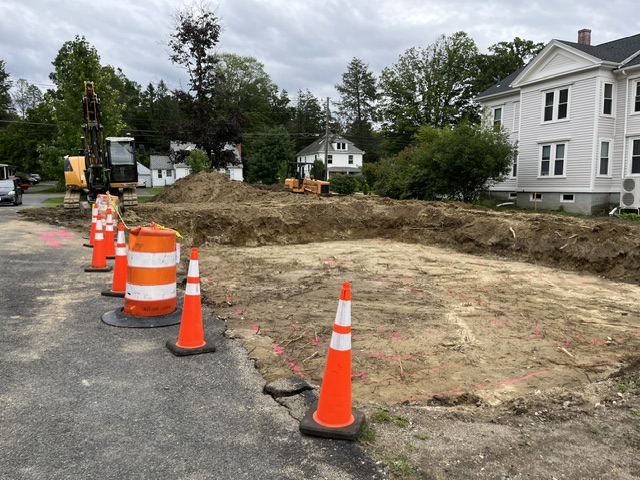
Out on Amherst Road, driving towards Leverett, a really nice small Greek Revival home has been saved from demolition; the owner has found a way to extend their living space in back, accommodating new needs for his family and property while maintaining the appearance of the historic house facing the street. This feels like a win all around for historic preservation and for the possibility of upgrading living spaces for contemporary situations, such as elders wanting to age in place.
ADUs and Larger Second Stories in Home-Building
I’ve been following the debate over ADU’s in Amherst, as it has been the case – as above in the North Pleasant Street property – that historic structures are sometimes impacted. The town appears to struggle with different rules for two different sizes of ADUs and is also trying to square a circle in the current debate, suggesting that attic space can be living space to evade the 900 sq. ft. cap. The law permits 900-square-foot ADU’s by right (identified as protected ADUs) and 1200-square-foot ADUs (identified as local ADUs) under more restrictive conditions. But the town has permitted several ADUs as protected (more than a dozen at last count), even though they have finished second stories with bedrooms and bathrooms. They also substantially exceed the 900 sq. ft. cap. I am still not sure how this happened, but it has resulted in confusion and lawsuits.
A Story of Second Stories
It may muddy the waters even further for me to delve into the deep history of the upper stories of New England homes of the past, but conversations with others have given me pause. I am not so much thinking about attics (heated or unheated, inhabited or used as storage space) here, but instead, something called jettying, the historic practice in First Period architecture of making more room upstairs in a home without extending the size of the footprint or ground plan. This takes me in a different direction in terms of the balance of this piece, which is not so much a reflection on my service with the Historical Commission or administering one of the town’s bylaws, but instead, pondering the state of historic preservation thinking more generally. Jettying is a wonderful term of art, and this building trend in the Middle Ages was likely related to foot or cowpath traffic. Roads could be quite narrow. It was even possible for people to shake hands across the street from open windows on the floor above.
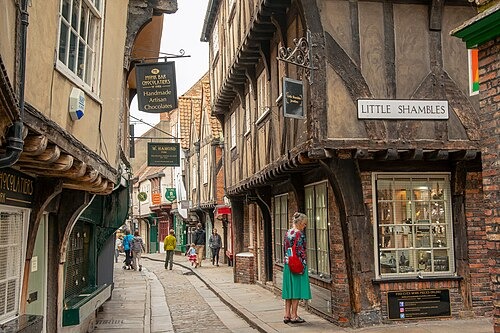
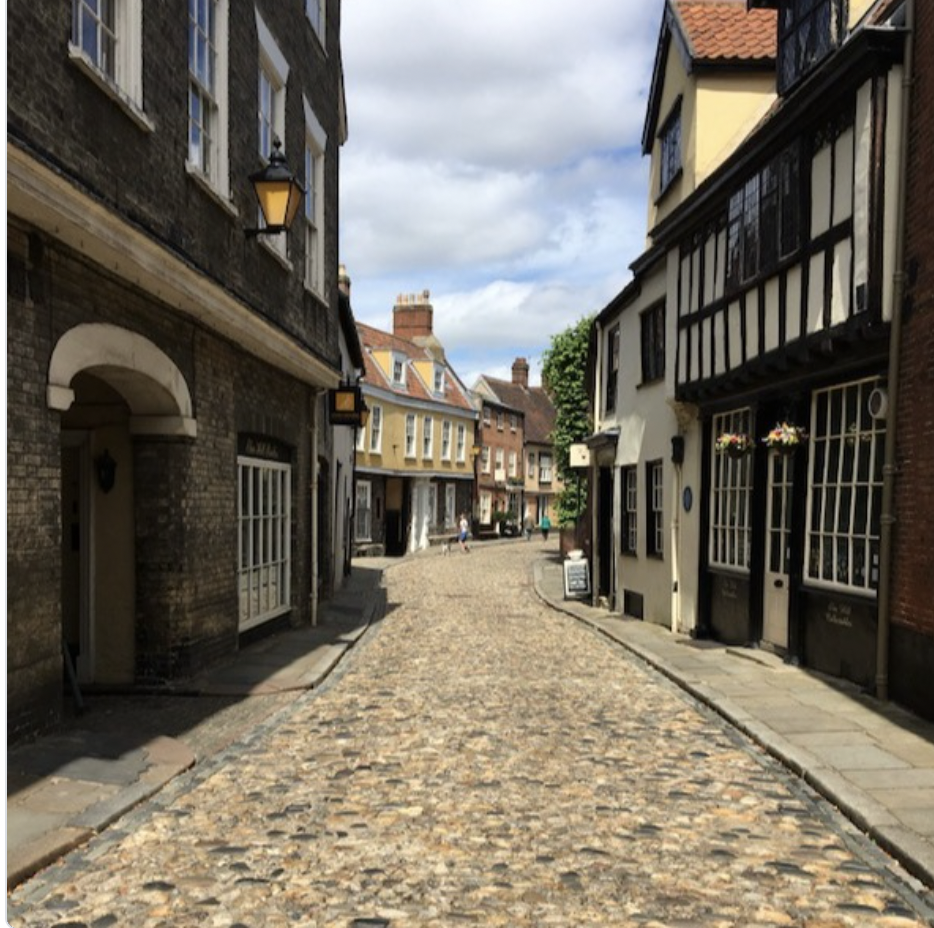
The timber-framing in these examples was what we might consider involved for any housewright at the time; skilled joinery and sometimes wall bracing were needed to create a lasting and sturdy overhang. It was a trend that became especially prevalent in New England in places like Ipswich, MA, and reflected the inheritance _indeed the resilience—of skills learned by colonial settlers leaving the world they knew to cross the ocean for different lives in North America.
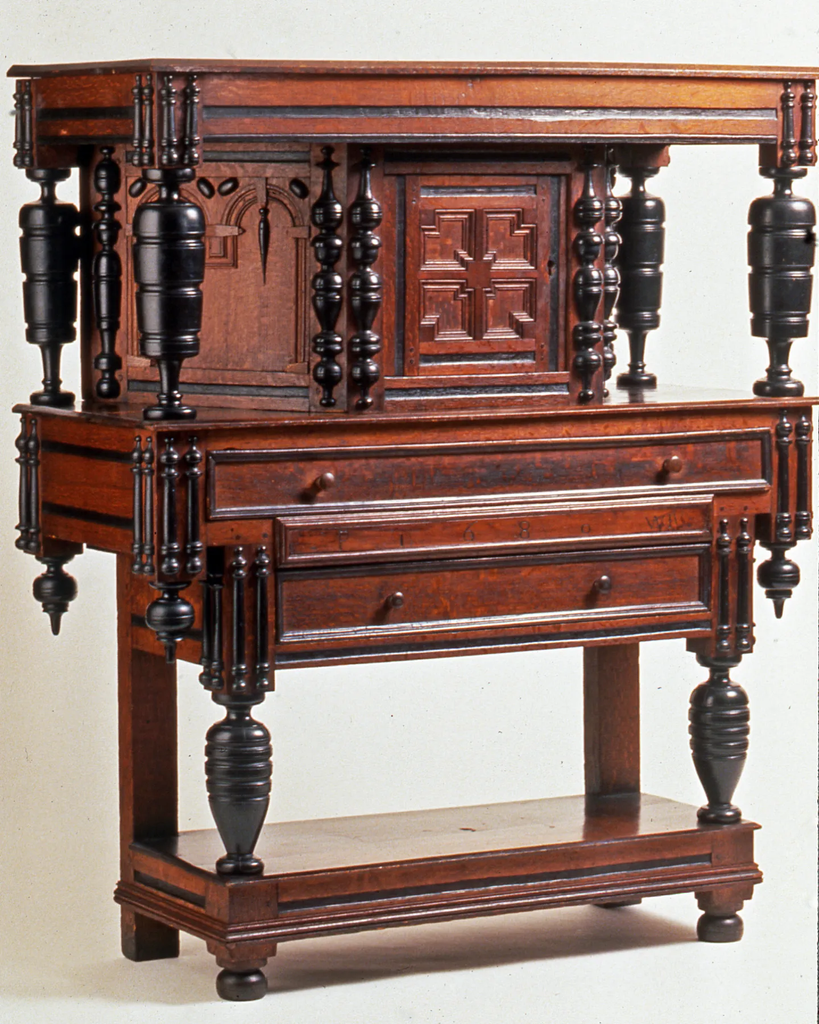
An overhanging second story on a New England home before the Revolution represented “a flowering of post-medieval architectural forms.” Some examples even showed overhangs with finials (fancy posts) with decorative pendant drops. One such First Period house with drop finials is the 1683 Parson Capen House in Topsfield, MA. When I was learning my trade as an architectural historian, a favorite architectural term was “drop finial.” For some reason, it seemed special and even a little bit comical or strange to me! They look upside down. As a stylistic motif, this feature also appeared in high-style New England furniture, such as armchairs and large and ornate cupboards (see below).
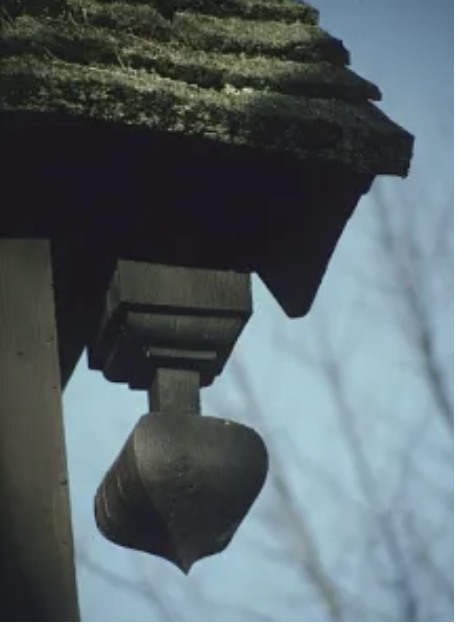
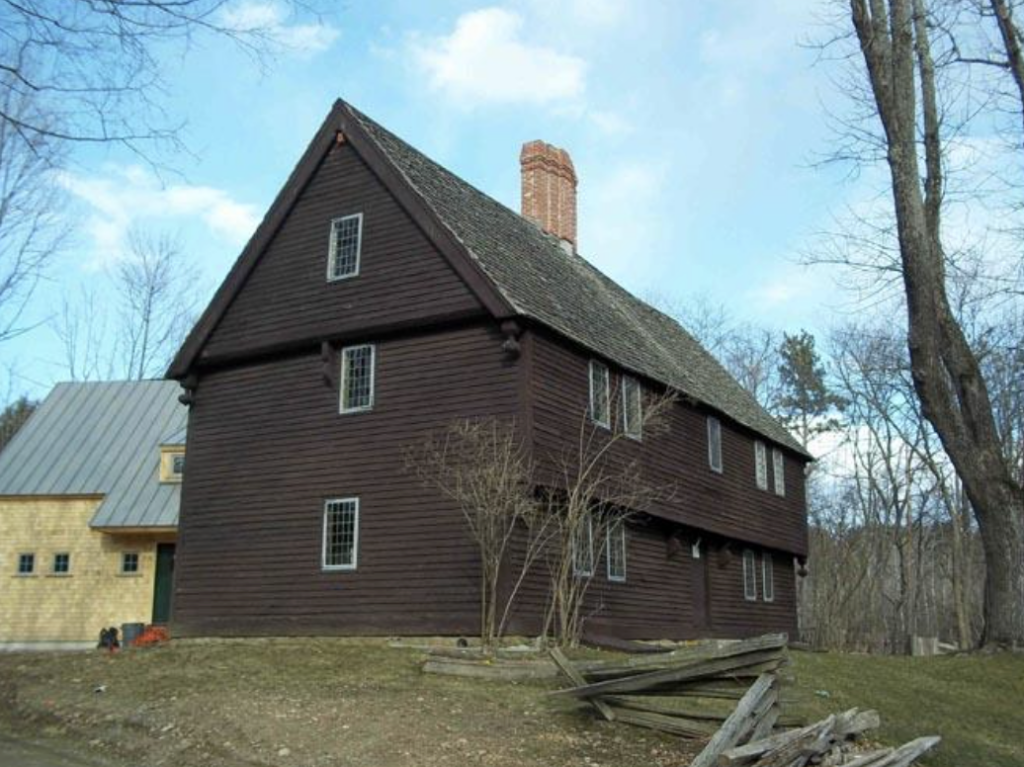
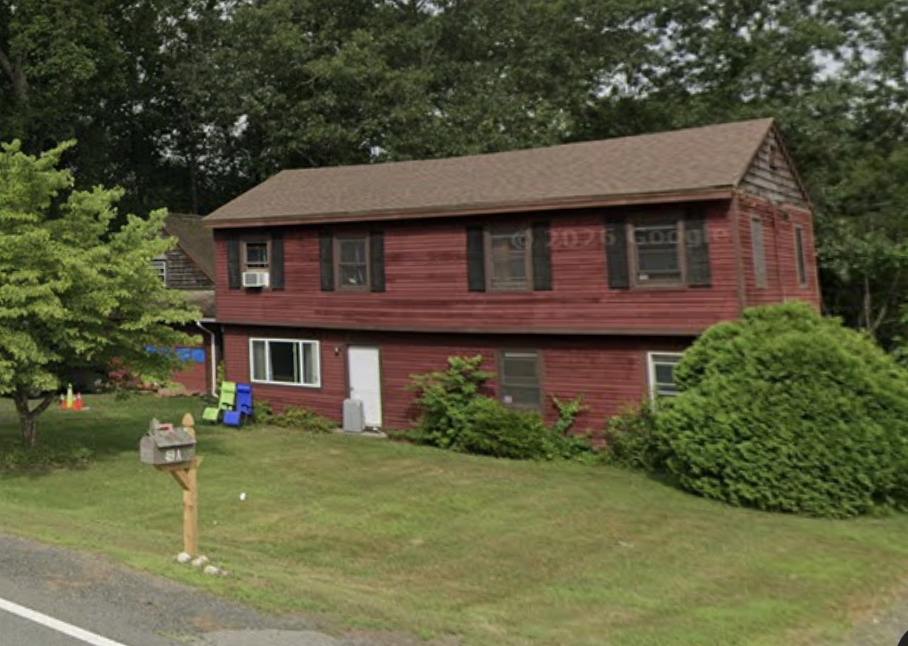
Regarding more recent revivals of the overhang in architecture, it can be seen repeated in contemporary construction across the country as a nod to the colonial rather than the indigenous beginnings of the country. Sometimes the overhangs in more contemporary homes are just a joist-width wide, as in the example below.
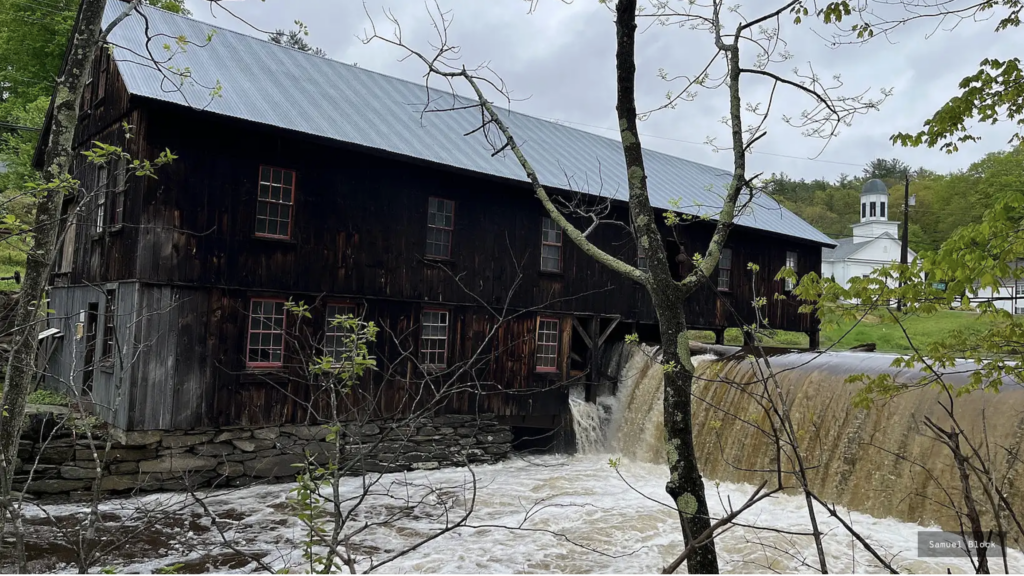
Historic overhangs, or jetties, differ from another trend seen in commercial and industrial structures in these parts, where a subtle overhang at a place like Slarrow Mill in Leverett is a weather-related accommodation that helps shed water and ice from the walls, especially in cold weather. It is possible to see the second-story overhang in the picture, especially on the left-hand side.
Why Does This All Matter?
Our demo delay by law could be stronger. This past spring, we were not able to save from the wrecking ball either the Dakin estate on South Pleasant Street or the Baird House at #70 Northampton Road (a Revival-style home with some inherent charm and an adjoining intact agricultural barn very close to the center of town). Specific characteristics in house building over time – demonstrated in the house on Northampton Road, for example – at such an important road junction in Amherst Center can help to make a town, neighborhood, or community distinctive. According to Scott Merzbach, the college has no current plans for the site and will backfill the foundation and turn it over to grass. So historic houses in Amherst can have character-defining qualities, be deemed worth saving by the Historical Commission, and not avoid demolition due to neglect.
Character-defining quality is a term often used when making the case for local historic districts, as with the proposed East Amherst Local Historic District. This definition might include the use of historic red brick as a building material, jettying (overhangs), or other specific wall treatments or techniques brought from the old country, or significance to local history more generally. These considerations of traits, and the stories within them, show how our forebears shaped buildings to be both meaningful and functional at the time. When skilled laborers made these buildings, the past was living in them – in terms of building traditions, materials, and the use of certain tools and methods. William Morris, the writer, designer, socialist, and art critic, wrote about this issue in his preface to a book he published called Medieval Lore in 1893, when he said: “The past is not dead; it is living in us and will be alive in the future which we are now helping to make.”
What kind of future are we making in Amherst when we seem to have people who are not too concerned about historic preservation? When we decide whether to tear down or to retain buildings in relation to our histories and our architecture, we need to ensure that significant historic buildings remain protected by rules and existing legislation. This is as true for the proposed East Amherst Local Historic District as it is for the White House, the People’s House. Under the rule of law, we need to follow procedures that protect significant structures in our history, both near and far. In his poem entitled “A Poem on Hope,” Wendell Berry, who has just passed at 92, said, “Hope then to belong to your place by your own knowledge of what it is that no other place is, and by your caring for it…Find our hope then on the ground under your feet. …The world is no better than its places. ~
Thanks Hetty for the thoughtful and informative story of “overhangs” and so much more. And also thank you for your two years of service to our community.
I was moved by the lines in the Wendell Berry poem….
Because we have not made our lives to fit
our places, the forests are ruined, the fields, eroded,
the streams polluted, the mountains, overturned.
Indeed, we have managed and mangled our places – to make our lives convenient in the short term. Wendell Berry often wrote about the importance of “sense of place.” Robin Wall Kimmerer wrote about “belonging to a place.” Your love for “this place” has been apparent in all of your many stories about the place we call home.
In community…..
John Gerber
aah thanks John. It was two terms of three years each. I am so grateful that this article hit the spot. I am still grieving Wendell Berry.
Also, I am thrilled to read in the Indy that two new members are to be appointed to the Historical Commission. No one who volunteers to help the town do its business should come to expect that they are chairing or sitting on a commission or committee that doesn’t have a quorum, due either to members being absent (more than less) or – again, when this happens – because the town has not filled vacant positions.
Hetty, thank you for your service to our town and all these amazing articles. You put the time in, shared your expertise and we all benefited from it. What’s your next board?