
UMass Amherst Launches $120 Million Future of Food Initiative
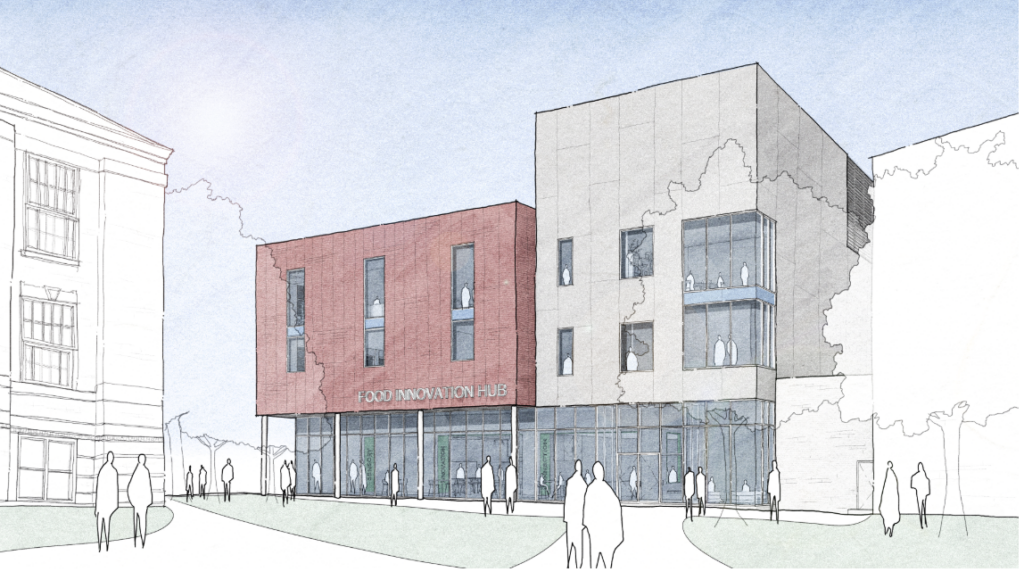
Supported by private and public investment, the initiative will establish new research facilities, champion world-class faculty, and accelerate interdisciplinary solutions to challenges facing the global food system
Source: UMass News & Media
UMass Amherst is launching a $120 million effort to address real-world concerns as the global food system faces critical challenges related to climate change and sustainability, food safety, and a growing population expected to reach 10 billion people by 2050. The initiative will include a new 36,000-square-foot research facility, a multidisciplinary collaborative research center, an endowed chair in food science, and three endowed faculty positions who will examine crucial questions about the future of our global food system.
The Future of Food Initiative will be funded through four $30 million tranches: generous donors Paul and Diane Manning through their family foundation; the Commonwealth of Massachusetts; UMass Amherst; and an additional $30 million to be raised by the UMass Amherst Foundation.
UMass Amherst, with the nation’s number-one programs in food sciences and agricultural sciences and distinguished programs in engineering, public health, computer science, design, business and other areas, along with its innovative campus dining program—is uniquely positioned to solve the biggest, most critical challenges facing the world’s food system and promote innovative and transformative solutions to capitalize on opportunities that benefit the common good,” said UMass Amherst Chancellor Javier A. Reyes. “UMass is committed to supporting cutting-edge research, providing hands-on student training and fostering external partnerships to drive transformative solutions that strengthen climate-resilient agriculture, expand food equity and production, and create a healthier, more sustainable future of food for all.
“Massachusetts’ world-class universities are one of our greatest strengths, driving the innovation and breakthroughs that improve people’s lives and grow our economy,” said Governor Maura Healey. “UMass Amherst’s Future of Food Initiative is a powerful example of that leadership. By bringing together researchers and partners across disciplines, this initiative will tackle some of the biggest challenges facing our food system, create new opportunities here in Massachusetts and help build a safer, healthier and more sustainable future.”
“UMass Amherst’s Food of the Future Initiative is taking an important step toward addressing some of the most pressing challenges facing our food system, from a growing global population to climate change, sustainability and food safety,” said Lieutenant Governor Kim Driscoll. “This initiative not only advances critical research, but also gives UMass Amherst students the opportunity to learn, contribute, and help shape the solutions we need to build a stronger, more sustainable food system for the future.”
The $30 million gift from Paul Manning (’77, ’24 HON), the chair and chief executive officer of PBM Capital, and his wife Diane, through their family foundation, is supporting the university’s research on some of the most important issues of our day by helping bring interdisciplinary solutions to more people, faster, and in a way that will transform the entire food industry.
“Diane and I have always believed in investing in people and ideas that have the potential to make a real difference,” said Paul Manning. “Food touches everyone, and there are enormous opportunities to improve how we produce it, make it safer and healthier, and better understand the connection between food and human health. UMass has the talent and expertise to tackle these challenges and, more importantly, turn great ideas into solutions that can have real impact. We’re excited to help give them the resources to think big, move faster, and make a difference.”
The funds will expand the impact of teaching and research centered on food through strategic investment in:
- A new, state-of-the-art 36,000 square foot “Paul and Diane Manning Food Innovation Hub” that is slated to break ground on campus in late 2027 and will augment capabilities for research, innovation and product development; sustainable process development; food safety and sensory analysis; consumer feedback; food entrepreneur training; and workshops. Attached to Chenoweth Laboratory, the building will feature sensory testing labs, innovation kitchens, a food-grade pilot plant, clinical testing lab, a food demonstration kitchen and research “collaboratories”; and
- Establish five permanent endowments, including a chair in Food Science, interdisciplinary professorships and a catalyst fund that will drive groundbreaking research and innovation for generations to come.
“This is an investment in Massachusetts as much as it is an investment in UMass Amherst,” said Stephen Karam, chair of the UMass Board of Trustees. “Food and agriculture are one of the Commonwealth’s greatest opportunities, and this initiative will enable UMass to lead on its behalf with talented graduates, groundbreaking research, and significant commercialization. I want to express my deep gratitude to Paul and Diane Manning for their generous philanthropy, and to President Meehan and Chancellor Reyes for their exceptional leadership. I also want to praise the world-class faculty at UMass Amherst, as their work is what brought this initiative to fruition.”
“Food is a $2.5 trillion dollar industry and a research frontier. It is one of the few areas that brings together multiple disciplines – biology, engineering, education, data science, public health – and there is no university better positioned to lead this initiative than UMass Amherst, which is ranked number 1 in the nation for agricultural and food science and top 10 in the world,” said UMass President Marty Meehan. “We are extremely appreciative of Paul and Diane Manning’s transformational gift, which reflects a deep confidence in the university’s mission and research capabilities. This historic donation – the second largest gift in UMass Amherst’s history – will enable UMass Amherst to continue to lead the nation to find solutions to address the enormous challenges ahead such as the impacts of climate change on agriculture, feeding a growing world population, and better addressing connections between nutrition and public health.” Over the next decade, the global food ecosystem will undergo profound transformation driven by factors including AI robotics, novel protein sources, precision nutrition, advanced chemistry, packaging and safety technologies, food pathogens, biofilms, advanced manufacturing and sustainable food production, food safety, and water management.
“With a changing environment and a growing global population, the future of food and agriculture is one of the most critical grand challenges facing our planet,” said Mike Fox, dean of the College of Natural Sciences. “UMass Amherst is preparing to lead the nation in providing innovative solutions to real-world problems associated with food production, food safety, food sustainability, and foods for health and wellness.”
As part of this initiative, the university will create the Center for the Future of Food (CFF), led by interim director Peter Reinhart, as an organizational structure that brings together the university’s faculty in top ranked, award-winning food science, agricultural sciences, nutrition, dining services programs and external partners with the translational research infrastructure of the Institute of Applied Life Sciences to explore broadly all aspects of the future of food: health and wellness, food safety and security, food chemistry, new types of foods, food processing and everything involving food cultivation including soil cultivation, seed effectiveness, clean water and food production.
The CFF will respond to major shifts in the food ecosystem with significant societal and economic relevance, including climate pressures, AI- and robotics-enabled production, precision/personalized nutrition, and increased demand for food‑as‑medicine solutions.
As a land-grant institution, food and agriculture are deeply rooted in the university’s history. Amherst was selected as the university’s site over 160 years ago so that the university would be anchored near farms and farmers and (at least in part) to bring novel technology and education to the food system. The campus now also includes the Cranberry Station in East Wareham— a vital research and outreach facility dedicated exclusively to supporting and protecting the state’s cranberry industry, which contributes $1.4 billion in economic activity annually—and the Gloucester Marine Station that connects the university’s science with ocean conservation, sustainable seafood, and coastal community resilience.
Massachusetts represents approximately 45% of New England’s food system jobs and sales, thereby positioning the university to play a pivotal role in regional food security, workforce development and industry innovation. The food and agriculture sector has been one of the only clusters in our region with sustained growth over the past decade.
A recent report by the Western Massachusetts Economic Development Council identified “food science, non-pharmaceutical biomanufacturing and the food ecosystem” as a top economic development opportunity for the Pioneer Valley region and the Commonwealth of Massachusetts. This investment will lift the regional economy by attracting and growing new business; buttress the local food industry and local farmers; expand the pipeline of trained talent for the food industry; and support adjacent industries such as renewable energy, animal feed, and biomanufacturing.