
Wally and Juanita’s Bean Patch and Other Counterculture Sites in the Valley
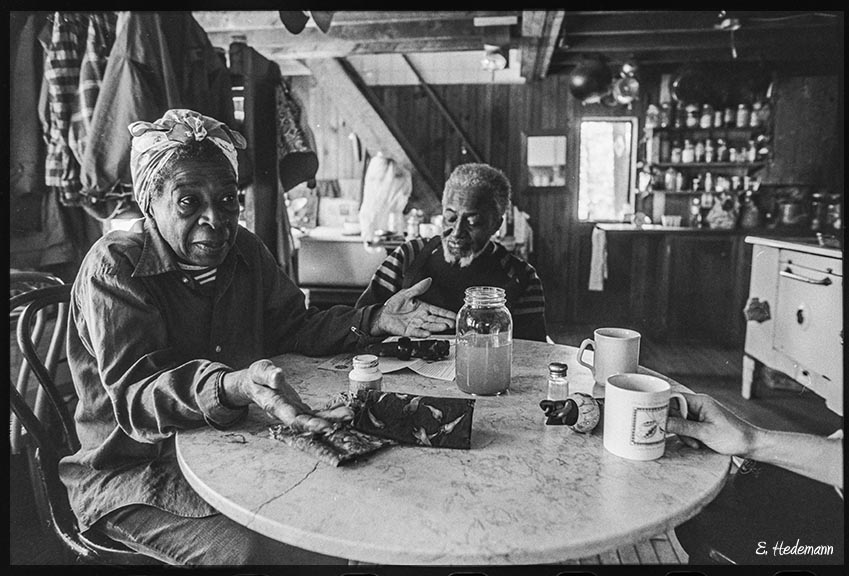
War tax resisters Wally and Juanita Nelson at home in 1998. Photo by Ed Hedemann, c/o The National War Tax Resisters Committee
This is the fifth and final article in my series on the history of the creative economy in western Massachusetts. Follow the links to read the previous installments: Part 1, Part 2, Part 3, and Part 4.
Running through the last four articles is the idea that human society can always be better, and that our lives don’t have to be dictated by existing models. Society can be better, and so can we.
I wanted to end this series with examples closer to the present, looking especially at cultural and social well-being. This time, my examples follow progressive principles grounded in what Michael Harrington once called “the left wing of the possible.”
Brave Experiments in Living
Because we’re closer to the present now, I should note that most of the people involved in these intentional communities are about 10 to 15 years older than I am. They chose to live cooperatively with others and, where possible, make decisions by consensus. They sought a way of living that minimized environmental damage. These brave experimenters also tried to share resources such as time, tools, and skills as a way of stepping away from the cash nexus and the almighty dollar. Some counterculture sites were designed to encourage contemplation and well-being through a meditative practice or a particular spiritual path. Some devotees believed their way of life would promote peace by “eliminating reliance on petroleum products, corporations, and agribusiness.”
A Long Tradition of Life on the Fringe
Living on the fringe is an ancient idea. It makes me think of the desert mothers and fathers of early Christianity in the third and fourth centuries CE. Living at the edge of so-called civilization can also be a matter of survival. Think of the Huguenots who fled religious persecution in France and found shelter in London’s east end in Spitalfields. Or of Mother Ann Lee and the Shakers, who left persecution in England and arrived in America in 1774 to found their first villages. Think of Robert Owen’s New Harmony (1825) in Indiana, George Ripley’s utopian Brook Farm (1841) in West Roxbury, Massachusetts, and Adin Ballou’s Christian utopian Hopedale Community, also in Massachusetts.
We are probably more familiar with the story of the Irish forced from their homeland by the famine of the 1840s, or of Jews escaping pogroms in the Pale of Settlement in the late 19th and early 20th centuries. When I was growing up, the news was of Bangladeshi families beginning new lives in East London after a genocide and war of independence in South Asia. There are more recent examples, for sure.
Back to the Land in the Valley
I think it’s no accident that I’ve landed in retirement in a region of New England steeped in experiments in radical change. Relieving hunger and poverty, right livelihood, and loving-kindness toward all beings and the earth are embodied in this valley’s history. Any book about the American counterculture would have to include a chapter on western Massachusetts, especially in our age of late-stage capitalism.
The architecture of these experiments is obviously visible in many other places, such as California, but we have a microcosm of these trends here. For a moment, in the late 1960s and early 1970s, huge numbers of mostly young people tried to shed the trappings of “civilization” by fleeing America’s eastern seaboard cities and heading back to the land. Armed with copies of the Whole Earth Catalog and books on house-building and homesteading, not to mention illicit drugs, my elders and betters came together to build a better world. We stand on their shoulders.
Any account of the local back-to-the-land movement should include the many students and other young people from across the country who came to UMass, Smith, Amherst College, Mount Holyoke, or Hampshire College and stayed to become key stakeholders and change-makers in the region. That moment was a vibrant turning point, with progressives of all kinds wanting to re-envision society through workers’ co-ops, organic farming, radical spirituality, and grassroots political organizing. Our western Massachusetts towns and cities have benefited from this influx of people “from away.”
The Nelsons of Woolman Hill
One example of reimagining the creative economy in the 1970s is the life and the home of Wally and Juanita Nelson, a Black couple who, going back to the 1940s, were war tax resisters. They came to live in voluntary poverty on Keets Road at Woolman Hill, on the Deerfield-Greenfield line. I like to think of their house as a “living autobiography” and a culmination of earlier phases of their lives. This is how they came to western Massachusetts.
Two local peace activists, Betsy Corner and Randy Kehler, encouraged the Nelsons to move here from New Mexico in 1974. I was lucky to meet Juanita, or “Nita” to close friends, before she died in 2015. She and Wally, who died in 2002, have remained an inspiration to many progressives here. Their house at Woolman Hill was a reconstructed cabin they expanded over time. It is still an unadorned wood-frame building with no electricity or plumbing, on “[a] half-acre or so of land that the Woolman Hill [Quaker] community allowed them to use, as specified in a Memorandum of Understanding.” With neighbors’ help, the Nelsons dug a well and filled the yard with vegetable gardens and an onion field. Onions are an excellent crop, but they need rigorous, labor-intensive weeding. This micro-farm also had its own town-approved outhouse. In time, Juanita Nelson started a soap-making business.
The Nelsons helped found the Greenfield Farmers Market in 1975, and they inspired the annual community Harvest Supper, now hosted by Stone Soup Café. Like the market, the supper continues to this day. Like Randy and Betsy, Juanita and Wally were peace activists and war tax resisters. During a countywide interfaith retreat at Woolman Hill after Juanita’s death, some of us toured their home. It was moving to spend time there and see what their daily lives looked like. I learned then that their back-to-the-land experiment had roots in their earlier life together.
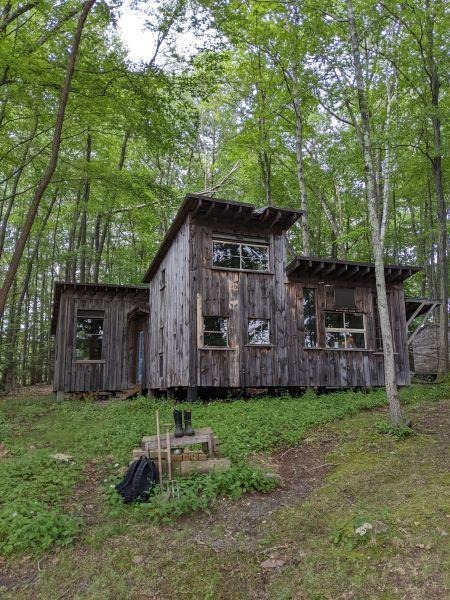
Before Woolman Hill, the Nelsons had lived in Ojo Caliente, New Mexico, around 1970, at the height of the Vietnam War. There they learned to homestead, growing and preserving their own food and living simply with little electricity. The program for Juanita’s 2015 memorial spelled out their intentions clearly: “…Juanita was intent on dissociating herself from an economic system that spawned injustice and war. She saw very clearly the connection between our modern lifestyles and war-making. … Wally, who vowed he would never again have a hoe in his hand after the sharecropper days of his youth, needed some convincing. He could see, however, that Juanita’s vision of self-sufficiency was something totally different, and he acquiesced.”
In one of the most succinct and moving definitions of nonviolence I know, Wally Nelson would say it is based on “the willingness to undergo suffering rather than inflict it.”
America’s Search for a Better Way
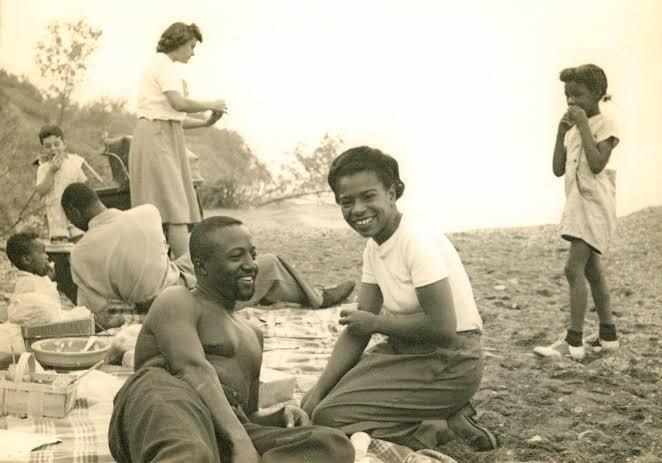
I’ve always felt that the search for a more perfect union, a more ideal society, or a better way of life is one of America’s defining characteristics. It seems a significant part of the story, or rather the stories, of America that the country has been a setting for so many kinds of experimentation. Long before the 1970s, groups such as the Moravians, the Mennonites, the Quakers (who later hosted the Nelsons), and the Shakers settled here. Francis Daniel Pastorius, who in 1683 led a group of German Mennonite and Quaker families in founding Germantown, Pennsylvania, had a particularly interesting take on his times. In 1683, he wrote that after sharing a meal with a group of Native Americans, he felt they had a better grasp of contentment, temperance, and the teachings of Jesus than his fellow Christians. In 1688, Pastorius and three other Germantown residents signed a petition urging fellow Quakers to stop holding Africans in slavery. It is often described as the first formal protest against slavery by Europeans in the American colonies.
Closer to our own time, the Catholic Worker Movement, founded in 1933 by Peter Maurin and Dorothy Day, was devoted to living out the Gospel through voluntary poverty, pacifism, and “houses of hospitality” for the poor and marginalized. Near the end of her autobiography, The Long Loneliness, Day recalls: “We were just sitting there talking, and someone said, ‘Let’s all go live on a farm.’ It was as casual as all that, I often think. It just came about. It just happened.”
So the Nelsons’ example of radical living close by at Woolman Hill is worth telling. It corrects the assumption that America’s story is only the famed “city upon a hill” of the Puritans’ Massachusetts Bay Colony.
Pastorius’ appreciation of Native American virtues in Pennsylvania is also telling. It suggests that the narrative of the virtuous life did not belong only to settler colonists. Well into the 19th century, this spirit of idealism persisted – if unevenly – influencing groups such as the Transcendentalists and the Mormons. By the end of the 19th century, the pursuit of brotherhood, sisterhood, and secular fellowship, along with a certain nobility of purpose, had become the watchwords of intentional communities. Sometimes these movements’ architectural settings were quite distinguished (think of Shaker villages), while other groups blended into the existing New England landscape.
Settlement houses, part of the subject of the first article in this series, were also examples of experimental and idealistic living. Some, like Denison House in Boston, offered women homosocial spaces that quietly supported “Boston marriages,” such as that of Katharine Lee Bates, one of Denison House’s founders, and her partner, Katharine Coman. In a sense, these idealists were all homesick for a better world, an “earthly paradise,” to borrow the words of William Morris, a founder of the Arts and Crafts movement.
The idea of being “homesick” for a new world isn’t my own. It comes from Vita Sackville-West, the 20th-century writer, whose long poem “The Garden” includes the line: “Homesick we are, and always, for another and different world.” Sackville-West was married to Harold Nicolson, and together they created a celebrated garden at Sissinghurst Castle in Kent. She was also famous for her affair with Virginia Woolf. Sentiments like these are heartfelt, and they echo in our own time in “Over the Rainbow” from “The Wizard of Oz” and “Somewhere” from “West Side Story,” cherished gay anthems.
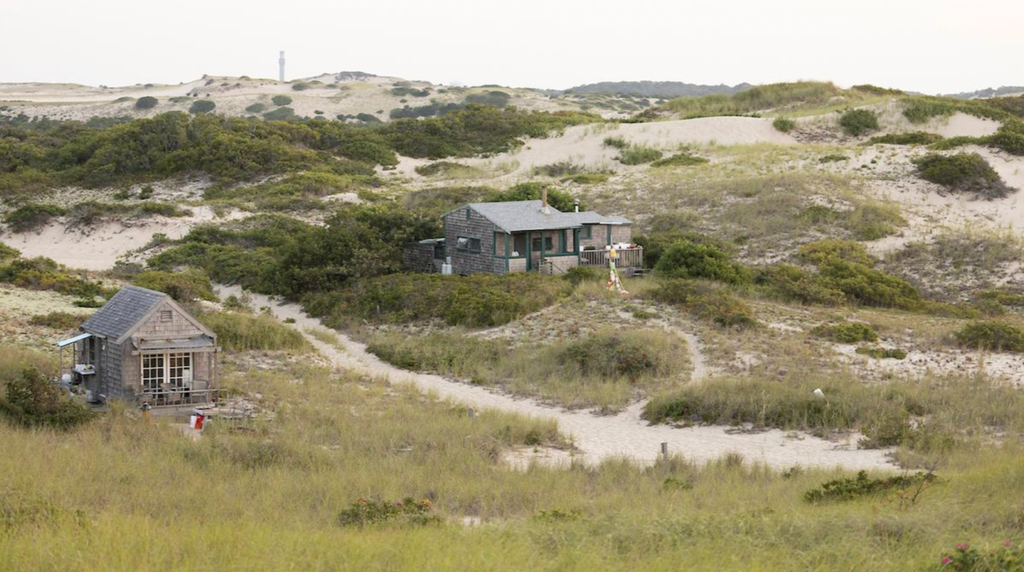
Coming closer to the present, Cape Cod drew two groups of change-makers in the mid-20th century. The first gathered in the Provincetown dune shacks, a string of tiny cottages inhabited by poets such as Harry Kemp. He had gotten expelled from Mount Hermon School near here and had also been associated with the single-taxer movement. Over time, shacks like his own attracted other writers, artists associated with the Provincetown art colony or with the painter Hans Hofmann, and other “dune dwellers.” The tradition continues today. People who came for one formative summer of art-making or writing with a “creative community of their peers” sometimes became permanent residents.
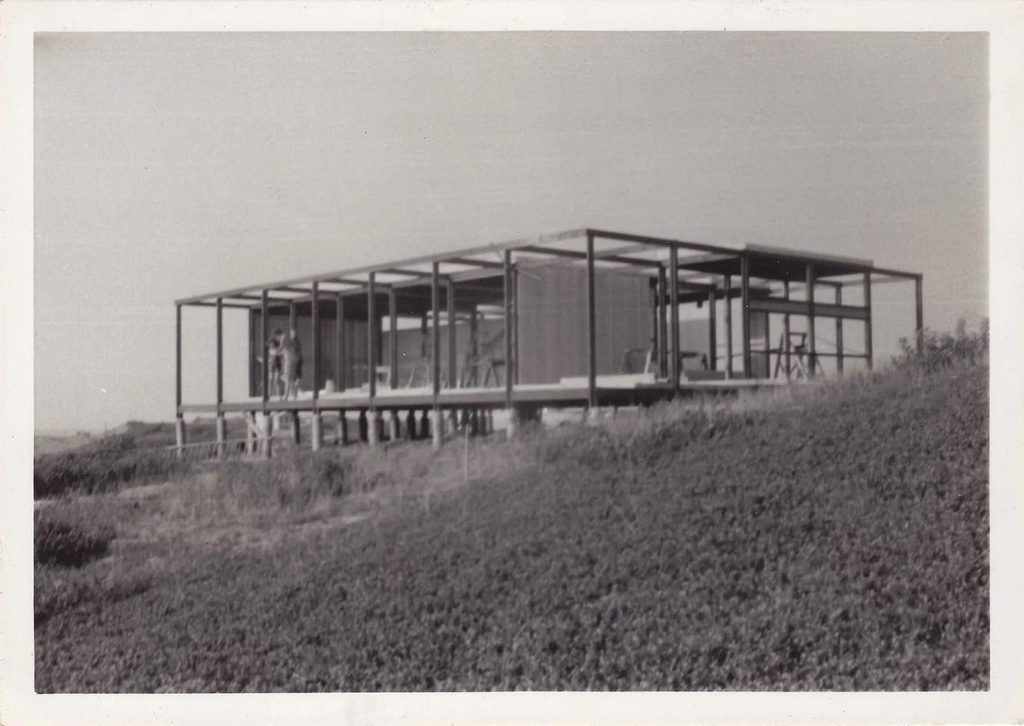
The second group of Cape experimenters was several waves of European émigrés who built summer homes in Wellfleet. These modernist houses were designed by some of the most interesting architects of the post-World War II era, including Marcel Breuer and Serge Chermayeff, as well as their younger contemporaries and former students, including Bill Gillen of Amherst.
Roots, Grass, and Weeds
In the late 1960s, as the Vietnam War dragged on, several counterculture groups pursued a different kind of collective liberation, much like the path the Nelsons later chose at Woolman Hill. They sought places in the countryside for a different kind of grassroots activism, one that literally involved roots, grass, and weeds. One such place was the Montague Farm commune (see also here), later known for its anti-nuclear activism. Members of the Liberation News Service, a New Left underground anti-war news agency based in New York, hatched it. Related communes sprang up across the border in Vermont, including Total Loss Farm at Packer Corners in Guilford, now the subject of a film released in 2025, and Johnson’s Pasture, begun in 1969.
Another commune, formed in 1968, began as a small group seeking a place for intense meditation. I will focus on its story next.
Members came from around New England and New York. The group first built a treehouse in Leyden and shared a couple of cars. Over time, it grew to about 400 people. Known first as the Brotherhood of the Spirit and later as the Renaissance Community, it is often identified with its charismatic leader, Michael Metelica.
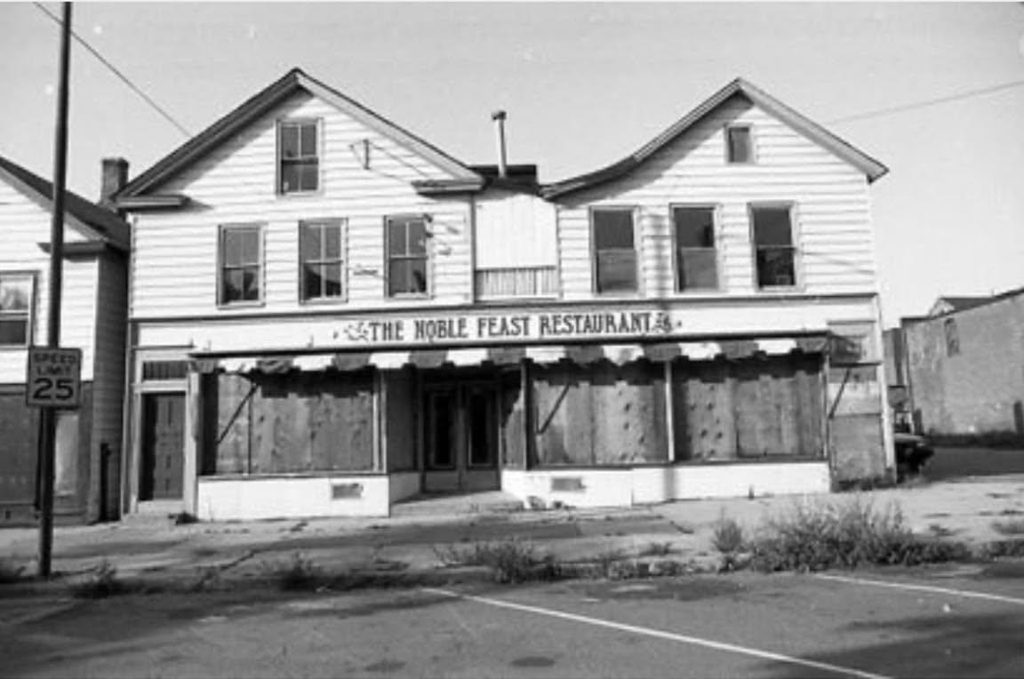
Energized by the “power of positive, conscious thought” that would “lead to right action,” the commune’s members settled in existing buildings. One early site was Mollie Scott’s farm in Charlemont, where she still lives with her horses in a deep-country forest sanctuary. The commune also had homes in Warwick (a house and later a dormitory) and in Gill, where Laughing Dog Farm is now. From 1975 to 1979, members Alan and Jane Harris ran the Noble Feast, a vegetarian restaurant in Turners Falls that was “a gathering space, concert hall, and community experiment all rolled into one.”
Food, Cafes, and Cooperatives
I’m not sure how Stone Soup Café, once known as Let’s All Eat Café, relates specifically to the Renaissance community, but its commitment to alternative food systems is clear. Let’s All Eat Café “grew out of a relationship between American Zen Buddhist master Bernie Glassman and award-winning actor Jeff Bridges, who wanted to provide a weekly community meal in Montague. As community interest grew, Glassman dreamed of moving to a larger, more centrally located space, and All Souls Church [in Greenfield] stepped in to fill the need.”
These whole-food and alternative cafes and restaurants were a boon to commune members and townspeople alike in Montague. When I’ve written about Amherst Center in earlier decades, I’ve seen commonalities in shared values, although Amherst had many more bookstores then.
Just recently, the Rendezvous restaurant in Turners Falls, known locally as the Voo, announced plans to become a cooperative. Cooperative restaurants are rare, especially in the multi-stakeholder model the owners and staff plan to adopt with community support. The group is optimistic that the time is now right. “Asking these workers to come up with the hundreds of thousands of dollars to buy the place themselves is an unreasonable approach,” said Chris Janke, one of the current owners. “We also see the community as one of the major beneficiaries here, so why not spread out the equity of that investment?”
The Renaissance Community’s spirit has been reborn at Laughing Dog Farm in Gill, a CSA on the former commune’s property. There, Danny Botkin and Divya Shinn hope to attract another family or two to move there and help develop its agricultural potential. They practice permaculture, grow in high tunnels, live off the land, and tend a large multigenerational family of goats named for Hindu gods and goddesses. In past years, walking with Danny and Divya at the end of the day and sharing food with them – sometimes sourced at nearby Upinngil Farm – has been a restorative practice for me. These days, they are happily settled in a new home on their goat hill.
Listening to people who lived in these communities, it is clear they were touched by the simplest things: making goat cheese, bathing in a brook, or helping older Yankee farmers with their livestock or crops in exchange for food. (See Bruce Geisler’s documentary Free Spirits: The Birth, Life and Loss of a New Age Dream.) That work mattered because many farmers’ children had left in the late 1960s and 1970s to find jobs elsewhere. It may be an oversimplification to say what united all the area’s communes, but Buddhism and Taoism, Wendell Berry’s books, the I Ching, reincarnation, and altered states were common enthusiasms among the young people in their 20s who lived there. They wanted to have their minds blown and to build better ecosystems.
Intentional Communities Today
A few communities closer to Amherst are worth mentioning. One is the Sirius Community in Shutesbury, an eco-village and meditation sanctuary founded in 1978 that is about 90% off-grid. It also hosts sleep-away retreats for urban youth.
The cohousing movement has been another dimension of intentional community in our region. Examples include Cherry Hill Cohousing on Pulpit Hill Road and Pine Street Cohousing, both in North Amherst, and Rocky Hill Cohousing in Florence. These groups emphasize shared resources, ecological principles, service, and wealth-sharing.
Healing Grace Sanctuary in Shelburne Falls, now a 70-acre protected land trust, is also creating a nature education center. Stowe Farm, in the Catamount Mountains in nearby Colrain, still has a couple of buildable lots.
A newer intentional community, Kibilio Community and Farm, “is rooted in Black and Queer land sovereignty … and is an intergenerational, intentional community, dedicated to embodied healing, reparative, ecological and reproductive justice.”
A Lasting Legacy
Such communities helped give rise to groups like CISA (Community Involved in Sustaining Agriculture), to the growth of CSAs in our region, and to activism around food insecurity and food sovereignty.

Concerns about peace, nuclear power, and social justice led to groups like the Clamshell Alliance, heavily inspired by the Montague Farm commune. Clamshell activists such as Sam Lovejoy and Anna Gyorgy came directly out of the 1970s back-to-the-land movement. In their communal households, they shared expenses, shared child care, rotated cooking and cleaning, practiced permaculture or ecology, and made decisions by consensus. As Bill McKibben recently said, the new peace symbol is the solar panel.