
Recreation Director Criticizes Draft Report from Cherry Hill Working Group
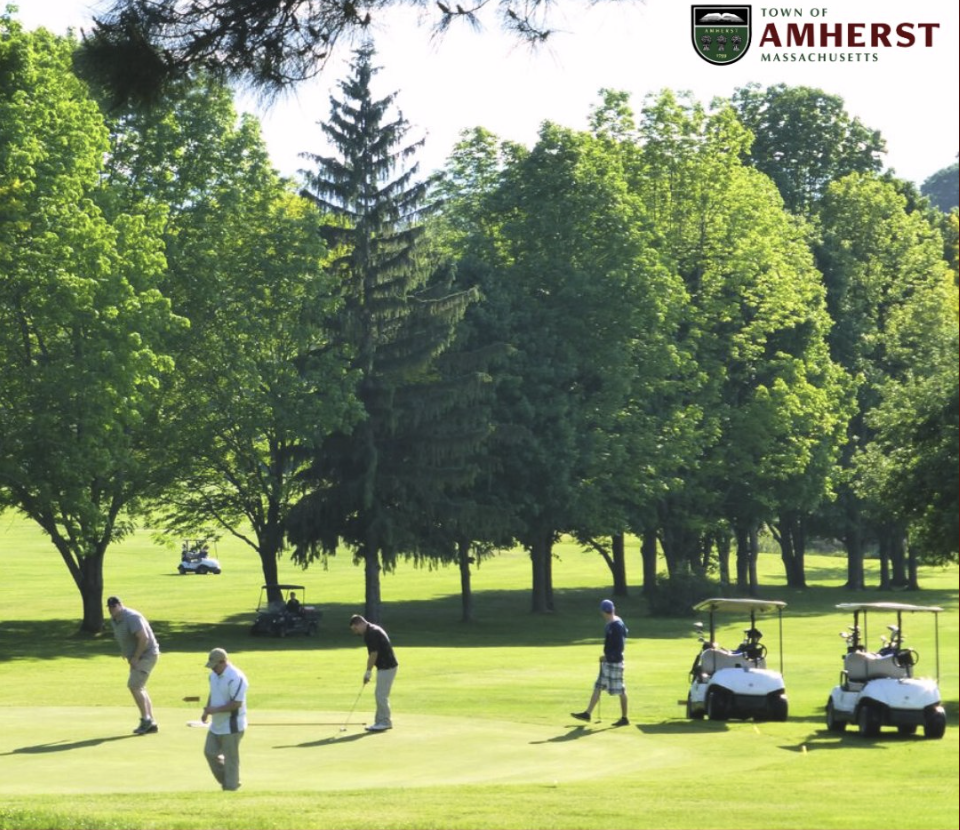
Cherry Hill Golf Course. Photo: amherstma.gov
Report on the Meeting of the Cherry Hill Working Group, September 14, 2026
This meeting was held over Zoom and was recorded.
Present
Michele Miller (Chair), Chris Pariseau, Hilary Matheson, Sanjay Arwade, Ryan Diplock, Sarah Goff, and Anurag Sharma
Staff: Rey Harp (Recreation Director) and Dave Ziomek (Assistant Town Manager)
The Cherry Hill Working Group (CHWG) planned to discuss the initial draft of its final report at its September 14 meeting, but felt that because different members wrote the sections, the draft was too disjointed and needed revision. Chair Michele Miller offered to take suggestions and write a unified draft that will be presented at the group’s next meeting on September 28.
Main Points to Be Conveyed: Cherry Hill Is a Cherished Resource
Each member summarized the message they wanted the group to convey. Sanjay Arwade said, “Cherry Hill is a treasured piece of land that is also a valued four-season recreational facility for the town of Amherst. It is successful, but also faces significant threats to its continued success and is deserving of investment from the town.”
Anurag Sharma stated, “I would like to see this report focused on the value that the piece of land provides the town, focus on the structural issues, being constructive without being critical.”
Sarah Goff added, “I would like this report to show the shared enthusiasm for the importance of this land and, just to echo what Sanjay said, the incredible value it has now and the great potential for value added across four seasons. There are two or three specific suggestions that the committee has to engage the community further through a Friends of Cherry Hill group, through interface with organizations that are already doing some activities outside of golf, and [through a] link to other parts of the town. What I would love to see come out of this is the importance of using this land and increasing its use.”
Hilary Matheson said, “For me, it’s how important this is as a resource and for 12 months of the year, and it needs to be embraced as an area that can be utilized by the community at large. But in order for that to happen, it has to be resourced appropriately in order that its use can be enhanced throughout the year.”
Ryan Diplock agreed, saying, “Over this process, it’s become abundantly clear that there are so many people in the community that value Cherry Hill over all 12 months of the year, across different use cases. I think it’s an incredible piece of land. I think that historically there has been clear underinvestment [by the town]. I don’t think that’s been intentional. I think that there’s a lot of other competing interests. Our goal was to draw attention to Cherry Hill and to the resources it deserves and demands, because I think that ultimately, in allocating those resources to the golf course, the town will reap more benefits than it’s currently getting from the course. We’ve made specific recommendations for how we think that can best be achieved, and I stand by those recommendations.”
Chris Pariseau highlighted the financial benefits of Cherry Hill. He said, “Looking at the finance side, how much potential there is. If the town will put some more money back into the golf course, how much potential that golf course has to make. I don’t think a lot of people in town know.”
Miller concluded, “The one thing I would love to get across is that this is a cherished asset and cherished land, and it deserves attention and investment by the town. The other piece that I hope we can get across in the report is the importance of continuing the tradition of Cherry Hill being an accessible community gathering space, whether that is for golf or skiing or sledding or any number of things. I do want to make sure that it maintains a welcoming environment and a sense that all people belong.”
Recreation Director Takes Issue with Management Suggestions
Diplock’s financial calculations and suggestions for golf course management were submitted separately from the rest of the draft report. As the CHWG agreed at previous meetings, the report called for the golf course to have its own revolving fund, separate from the town’s general fund, so revenue could be reinvested in the course. It also called for updated golf management software and more staffing. Finally, the report recommended separating the golf course from the Recreation Department and placing it directly under the town Finance Director.
Recreation Director Rey Harp disagreed with the tone and some of the assertions in this part of the report. He said the golf course tried to implement new software but ran into problems the staff couldn’t solve in time to use it this season. He also said the report did not account for the town’s hiring limits on hours and salary when it criticized understaffing and a lack of applicants for groundskeeping positions.
Harp also felt that the report did not include information on hiring an outside management company to run the golf course. Regarding the alleged “inefficient and broken management,” he said, “I have no problem with anyone objectively coming to that conclusion, [but] I am curious about what objective basis this stands upon as two members of the three-person management team were never interviewed about management structure.” He added, “While I appreciate the concern about the recreation director being spread too thin, it’s an extraordinary leap to think that the finance director for the town is more available.”
Working Group Defends Its Conclusions
Diplock disagreed that the CHWG had not evaluated the option of outside management of the course. He said they had robust conversations and concluded that an outside group would not solve the course’s problems and would be detrimental in the long run. He agreed that the report should include a discussion of outside management. He also maintained that his figures were accurate, showing that the golf course was profitable and could be more so with dedicated management and more investment from the town, but he said that not acknowledging the structural problems would not solve them.
Sharma said he did not see the problems as personnel issues, but as a structural issue with how the course was run. Arwade said he hoped the working group could deliver its report to the Town Manager ina unified voice, although it might be necessary to include minority reports if the group did not agree on certain points.
However, the group was clear that the town should continue to manage the golf course, but remove it from the Recreation Department and manage it separately. Members agreed it should have a revolving fund, as does the aquatics program. It also strongly recommended town investment, which could be reimbursed with future profits.
Matheson suggested placing the detailed financials in Diplock’s section in an appendix, with the major conclusions and recommendations in the main body of the report, so that the Town Manager and Town Council do not get bogged down in all the figures.
Assistant Town Manager Dave Ziomek reminded the group that the CHWG was never meant to address the real-time issues of Cherry Hill, but rather to “be looking forward to presenting a document to the Town Manager and say, ‘Here are some really good suggestions on how to improve Cherry Hill operations, staffing, the course itself, and financials moving forward.’”