
Almshouses, Poor Farms, Settlements and Homes for the Aged: Exploring Where Architecture and Social Welfare Histories Meet
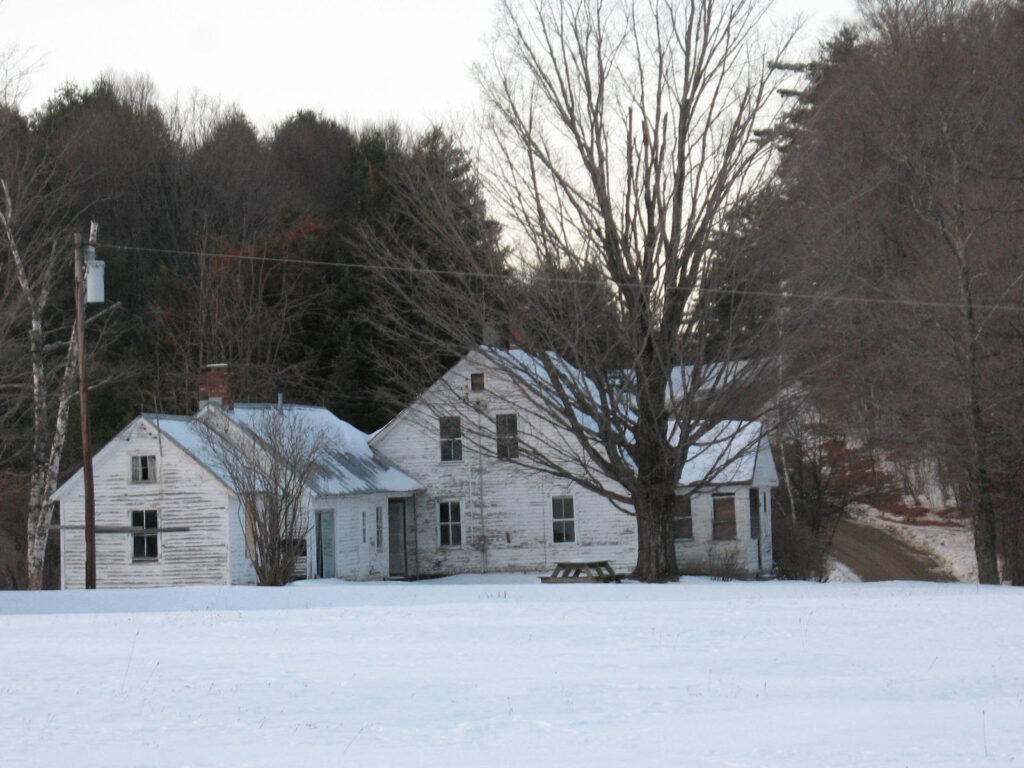
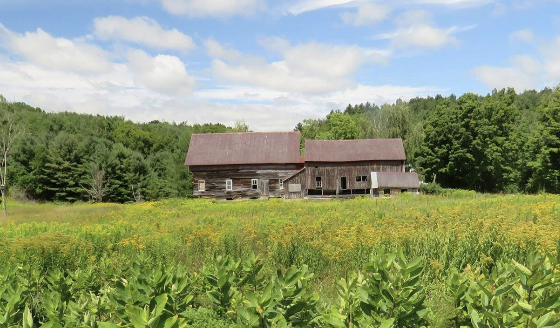
The poor farm at the Bullitt Reservation, The Trustees of Reservations. Photo: Mollie Babize
This is the first article in a new three-part series.
This series explores social welfare institutions in this region in past centuries. Leaving today behind, I also wanted to explore ideas about the creative economy and who drove change in health, welfare, and the arts in western Massachusetts. It may seem odd to combine histories of the arts, architecture, and social welfare this way, but for a long time I’ve been interested in how they might intersect. This is why I’m interested in late 19th-century American history topics like the settlement house movement, regional public health history, and the architecture of social housing.
This first article explores care of the elderly and other vulnerable populations in our region, noting the presence of some historic poor farms and related welfare institutions in the 18th and 19th centuries. The second article will focus on our creative economy in the early 1900s and during the Great Depression and World War II. Here, I am also threading a related interest in patronage of the arts and architecture. Patronage takes many forms in the growth of both charity and the arts. Another throughline – perhaps left over from a preoccupation with my “summer wanderings” and our current transition to the fall season- is the ways design has intersected with vacation time and vacationland. This season is a great time to take a vacation, if possible, especially in anticipation of leaf-peeping. My reach here is a little wider than just western Mass. The third piece offers some tentative conclusions about these themes and a lens on changemakers in our area who have suggested different paradigms for labor, welfare, health, and the arts.
Almshouses and Poor Farms
Current ideas about social welfare and wellness differ from those of the past. In our region, early colonial settlers brought the accepted European model for sheltering the poor or “infirm” in the 1600s to New England. More on this in a moment. White colonial practices, in turn, differed greatly from the nature of community care or welfare and medical assistance in Indigenous nations before and during colonization. Tribal kin networks, circles of care, and specialized knowledge about medicines and treatment for the sick, or aid for the dying, were well established, carried by knowledge bearers grounded in natural science and stewardship of the earth. Social support was especially necessary during times of famine, raids from colonists, and the broader violence, disruption, and displacement of colonization. By the mid to late 1700s, many bands of Pocumtuck and Nipmuc had been driven north, migrating into the lands of the Sokoki and the Pennacook, but their descendants are still here today.
Colonial town leaders made use of poor farms in the period both before and after the Revolution to accommodate ‘paupers,’ “vagabonds” (often a word used by well-to-do whites about indigenous peoples who traveled as part of their way of life) or ‘vagrants,’ as was the practice in England, that had put into statute the Elizabethan Poor Laws of 1598-1601. This included financing and sheltering the “…poor, lame, blind, sick and other inhabitants” who were not able to maintain themselves. By the late 1700s/early 1800s in western Massachusetts, the state legislature told towns that [they] “shall relieve, support and maintain their own poor,” meaning destitute and desperate folk who had no other means of support. Other states also enacted similar laws, as in Vermont, where places like Burlington had its own poorhouse by 1816 and a poor farm a little later.
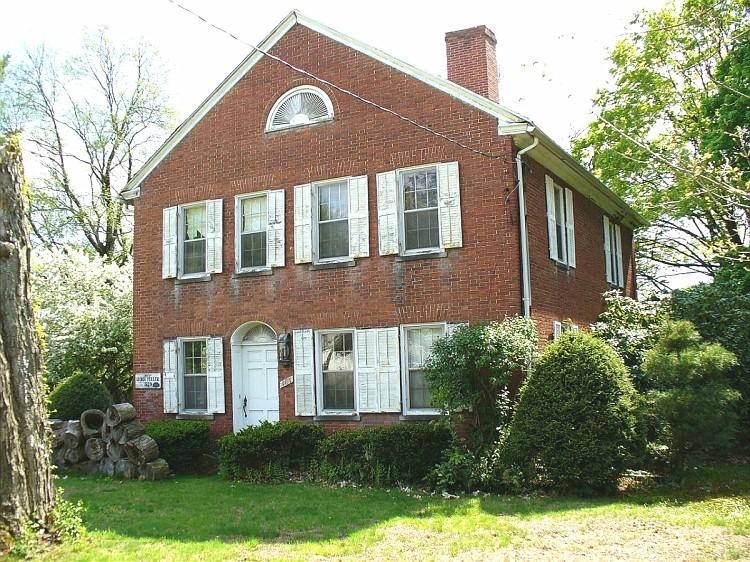
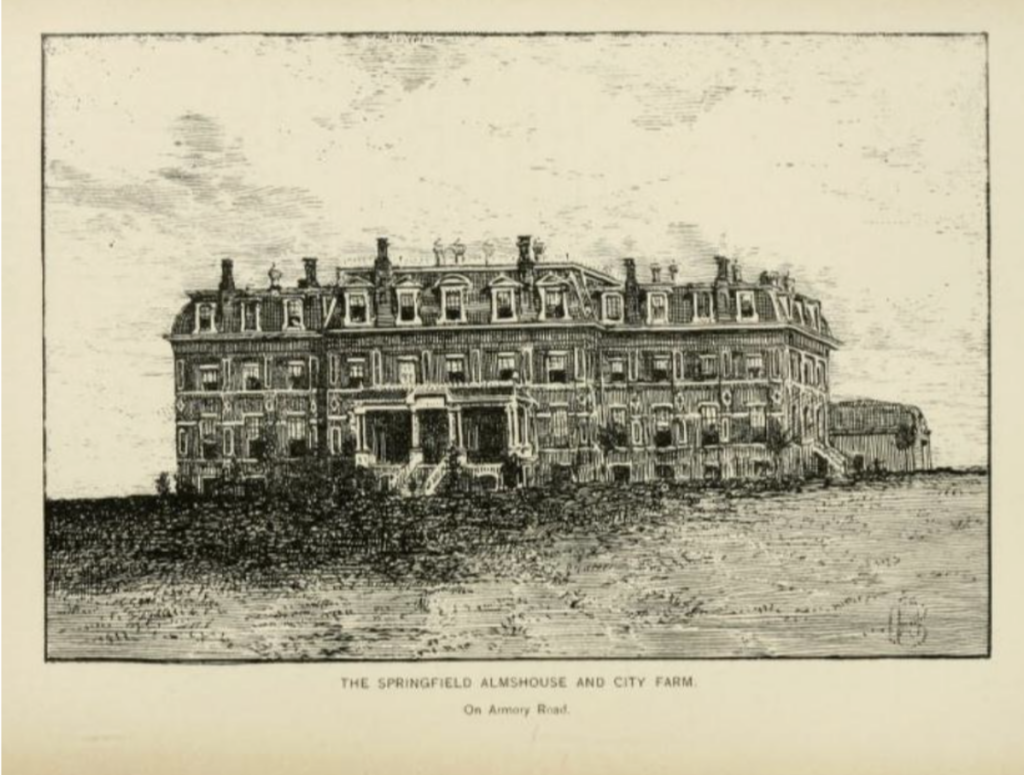
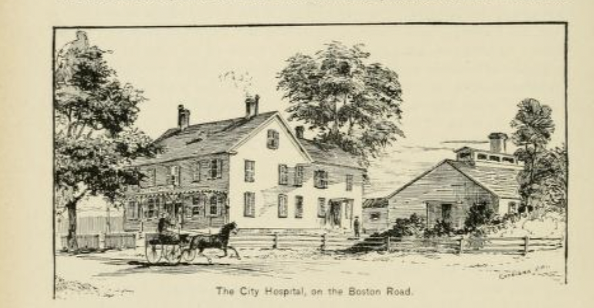
Life for able-bodied residents on a 19th-century poor farm (or almshouse) was all about mandatory, hard physical labor: planting crops, tending livestock, and harvesting vegetables in what were usually basic living conditions. Residents – who could usually be expected to live out their days on the farm – were expected to be self-sufficient, producing food – eggs, grains, potatoes, and pork – for an overseer and their family and for the residents themselves. There were often rules – and middle-class expectations – about sobriety and/or cleanliness. (Let me say that there is absolutely nothing wrong with cleanliness or sobriety, but in this instance, shelter or support was conditional on these habits.) In a crisis, a poor laborer might find shelter in a farmhouse as a place of last resort where “alms” were provided by the town, as you had to have been born in a particular town to get aid there, and you had to be considered one of the so-called “deserving” poor. Larger city farms existed in places like Springfield, but rural homes and farmhouses elsewhere around here were more likely where people could work in the home or on the adjoining farmland in return for shelter: this was true at the John Fuller House in Suffield, CT, just across the state line from Springfield, MA.
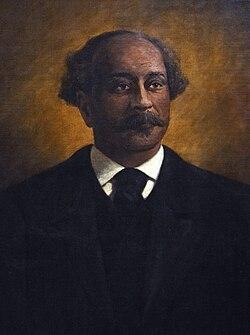
By the mid-1800s, Springfield also had a care home for elderly men, founded by Primus Mason (1817-1892), who began life as an indentured servant and farmhand for another landowner in Suffield, Jonathan Pomeroy. Mason ran north to Massachusetts and ultimately found work on a pig farm, where he began to earn a steadier income. Later, he made modest real-estate investments and is thought of today as an entrepreneur. He not only created a care facility that runs to this day, albeit under different guidelines; he also was involved in the Underground Railroad movement.
As the mid-1800s unfolded, certain terms were used for people who were housed in almshouses and poor farms. They might be deemed “worthy,” but they also could be labeled “indigent,” and if they found shelter, they might be described as “inmates.” If one was disabled or mentally ill, they could be “boarded out” (a term similar, historically, to the later concept of foster care). The history of social welfare is infused with stark reminders of the power words have, used here to enforce moral correctives usually based on class or race. Then, as now, words were especially consequential when someone else chose those words for you. But the types of social care settings available then were the only kind of security or aid available before the Social Security Act of 1935. Before Social Security, receiving aid or alms depended on appearing before a judge, who assessed whether one was deserving of poor relief or undeserving (meaning “unworthy” according to middle-class morality of the time).
By the mid-to-late 1800s, a town’s guardians of the poor, similar in status to its selectmen or its freeholders, almost always well-to-do white men, managed this rather antiquated system of caring for people whom today we might call our vulnerable populations. A poor farm or city farm offered custodial care under an on-site manager but Springfield’s almshouse had a matron in charge who had trained at Mass General Hospital.
I wonder if seeing his neighbors experiencing poverty, ill-health, or unemployment prompted Henry David Thoreau to say, at the conclusion of Walden; A Life in the Woods (1854), that “…The setting sun is reflected from the windows of the almshouse as brightly as from the rich man’s abode.” (Walden, chapter 18). It’s likely a liberal and quite idealistic viewpoint even though Thoreau remains persuasive in his suggestion that nature itself does share her gifts with all equally. The inference that poverty is inevitable is seen as problematic today. The full quotation is below.
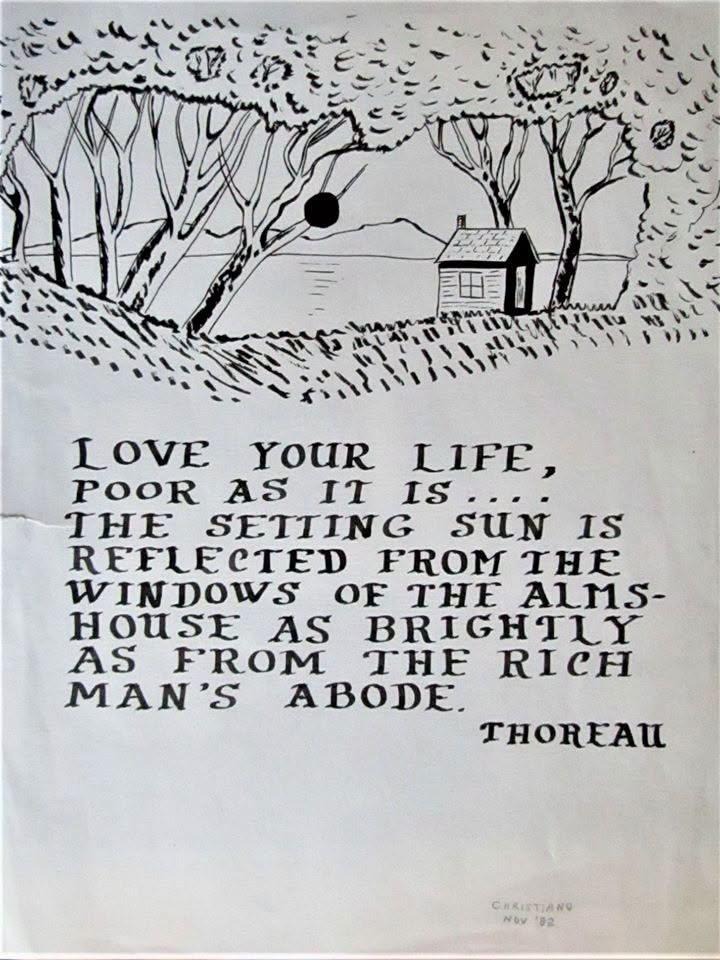
“However mean your life is, meet it and live it; do not shun it and call it hard names. It is not so bad as you are. It looks poorest when you are richest. The fault-finder will find faults even in paradise. Love your life, poor as it is. You may perhaps have some pleasant, thrilling, glorious hours, even in a poorhouse. The setting sun is reflected from the windows of the almshouse as brightly as from the rich man’s abode; the snow melts before its door as early in the spring. I do not see but a quiet mind may live as contentedly there, and have as cheering thoughts, as in a palace.” (Walden, Chapter 18)
England’s poorhouses and workhouses became infamous. Critiques of them were similar in tone to condemnations of parallel ills in English society like the child labor system operating in the then-new industrial mills and factories. Charles Dickens’s 1838 novel Oliver Twist described the harsh conditions of life in a county workhouse (Read more about conditions in workhouses here).
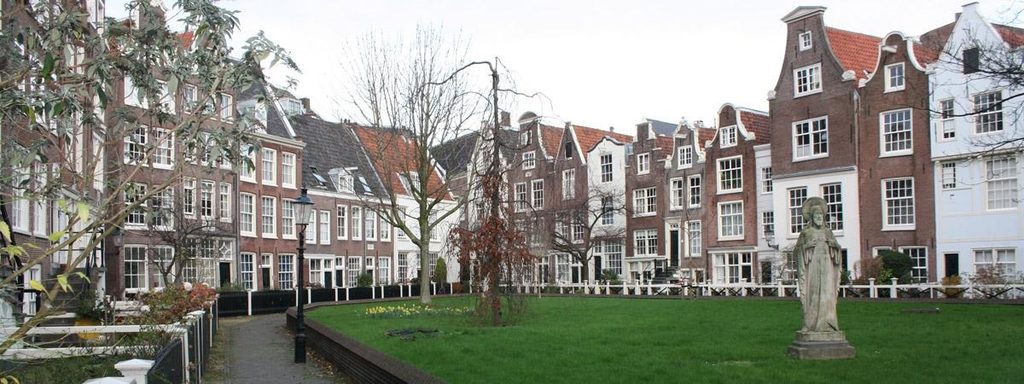
The architecture of these places differed markedly from those in Belgium and Holland built for similar populations; Amsterdam’s Begijnhof was an intentional community with two Christian churches on site that continues to offer community care for the elderly to this day. Begijnhof was founded in the 14th century to provide housing and care for elderly widows. The Begijnhof buildings, an integral part of city life, can be visited today.
The almshouses of Amsterdam usually provided apartments for those in need, along with food and clothing, and tended to create a more welcoming community than their counterparts in England, though as in England and later in America, only those meeting the criteria of “deserving poor” were eligible for assistance. Religious observances here were mandatory.
In contrast, English poorhouses and their New England counterparts were usually relegated to a place unseen on the very edges of towns. The siting was intentional; being on the ‘outskirts of civilization’ was the point. This mindset is a part of a much larger topic. Social welfare facilities in 19th-century New England were increasingly inadequate for the complex problems of poverty, homelessness, and hopelessness. By the 1880s, social reformers and cultural critics on both sides of the Atlantic were petitioning for new solutions – uncoupled from religious or charitable frameworks or physical settings. Sometimes philanthropists took up the charge; sometimes academics, writers, and radicals were also moved to find alternatives to charitable care. We are still struggling with these issues today.
Settlement Houses
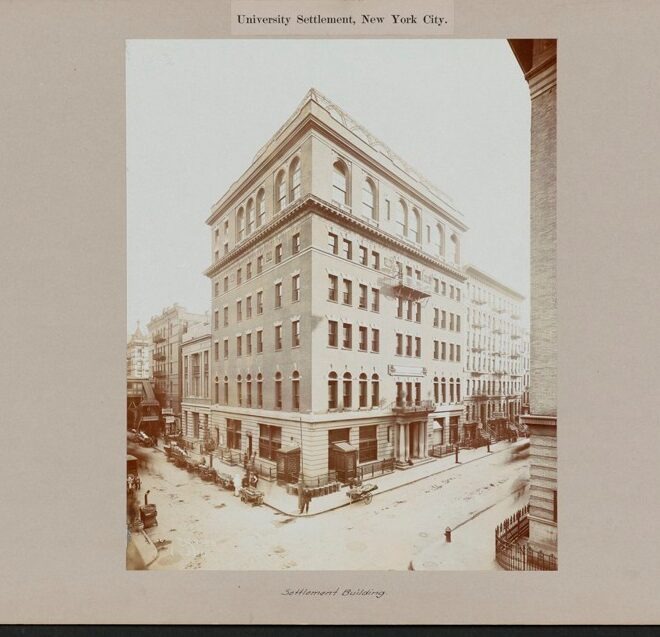
One new idea offered in 1889 in this country was the ‘social settlement house’ that has a link to Amherst. Stanton Coit, an Amherst College graduate, and Jane Addams, a social reformer, had both visited the world’s first settlement house in London in 1886 and 1887. Their experiences helped bring the concepts and architectural ideals of this settlement house back home. Addams founded Hull-House in Chicago, while Coit, who became a writer, was mentored by Felix Adler’s Society for Ethical Culture and, the next year, created a Neighborhood Guild in a working-class neighborhood of New York City, later known as the University Settlement..
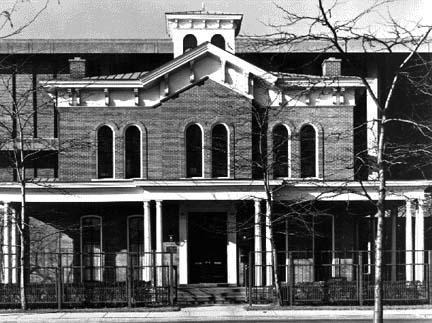
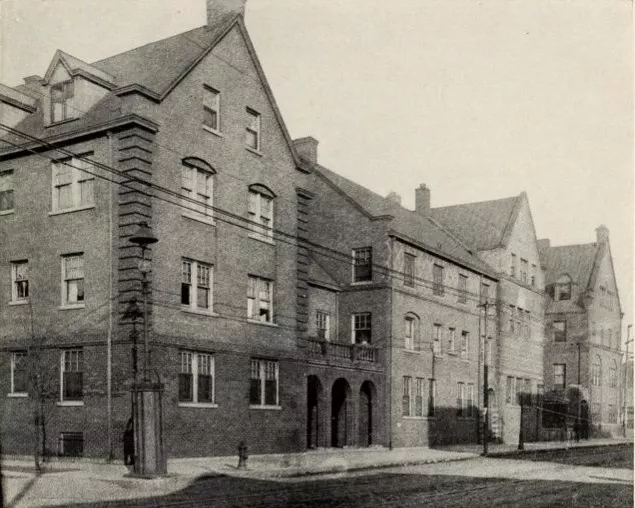
Settlements are a little hard to categorize, since each was independently run. They could have secular, religious, or philanthropic missions. By the early twentieth century, they were social service agencies for the urban poor, located in many cities in New England and the Midwest. Some people today have an idea of what a settlement was like from the very popular recipe book The Settlement Cook Book, written in 1901 by Lizzie Black Kander, as a fundraiser. Mrs. Simon Kander taught at a Jewish mission called The Settlement in Milwaukee, WI. The book is considered significant as “…it’s the first cookbook to see Jews as part of the fabric of America.” To state what may be obvious, settlement houses were the opposite of poor farms or almshouses. For example, at Hull-House, none of the clients lived at the settlement. Initially, most local residents were immigrants from European countries who came to the settlement for classes, often in the evenings, or for services such as eye care, child care, medical needs, and washing facilities.
By the mid-1890s, Hull-House was somewhat integrated in terms of volunteers and staff, when Addams hired Dr. Harriet Rice (1866-1958) to work with the Chicago Board of Charities. And over time, settlements catered to an ever-widening circle of people- black, brown, and white- from countries all around the world, all needing a variety of help with concerns like health, labor practices, welfare, public welfare issues, and recreation. For new immigrants, the settlement was often a place to learn English while continuing to speak another language at home.
Citizenship, and at times, ‘Americanization’ became the watchwords of settlement life. Settlement workers lived in these buildings that were either existing private homes or more purpose-built facilities. The sites were always located in more working-class areas of towns and cities, while the settlement workers who initially moved in as graduates from nearby colleges and universities were, for the most part, upper middle-class. This sharing of space across classes was, conceptually, the big idea behind the settlement, replacing poor law relief and notions of the inevitability of categories of the undeserving and deserving poor. This new kind of philanthropy drew on the ideals of the founders of Toynbee Hall, the first English settlement in London’s East End, which Addams and Stanton Coit had visited.
In the early 20th century, Addams and her co-workers hosted NAACP meetings at Hull-House and worked with a diverse group of volunteers and staff to run multiple programs. Fame for the settlement spread. Addams became a defender of women’s suffrage and a firm critic of lynching. In 1931, she received the Nobel Peace Prize. Today, Hull House is a museum and a Chicago landmark.
Changing Legal Protections for Poor People
I found one preserved poor farm in Ashfield, at what is known today as the Bullitt Reservation, and several other poor farms of considerable architectural interest in the eastern and central parts of our state. The Ashfield poor farm was quite homey. It “…w[as] small…, and held ten or twelve people with a superintendent and a matron, usually his unpaid wife.” Set outside the center of town, away from other people in the community and also far from temptations like a porterhouse (a tavern selling porter, a kind of dark beer), poorhouses like these might also have been segregated by sex, but as far as I can tell, the Ashfield poor farm was not. Larger poorhouses in cities often separated mothers from their children, but the social settlements, a new concept in care arrangements, were less punitive or harsh in this respect. I am reminded of Charlie Chaplin’s memories from his 1964 autobiography, where he recalls entering a workhouse with his brother, Sydney, and their mother, Hannah, in Lambeth, South London, in 1896. “On that doleful day I didn’t realize what was happening until we entered the workhouse gate. Then…we were made to separate, Mother going in one direction to the women’s ward and we in another to the children’s ward.”
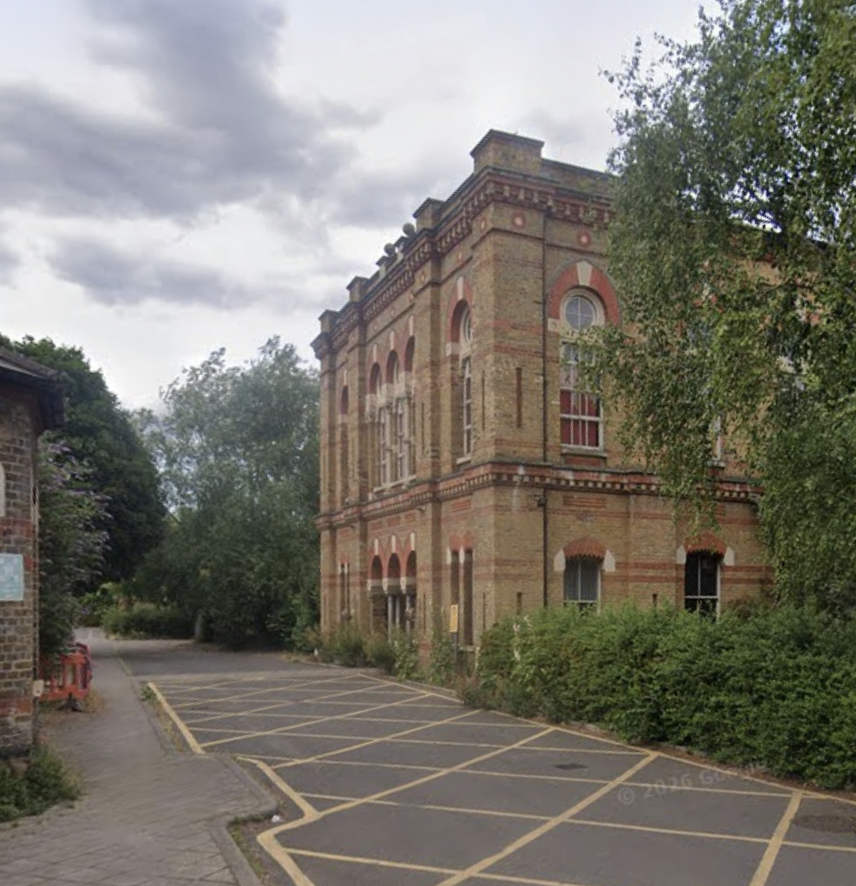
As part of the 14th Amendment to the U.S. Constitution (1866), poor farms and almshouses became voluntary, functioning somewhat like homeless shelters might today. Some people stayed only over the winter, exchanging labor for food and shelter. Such residents were, like “Winter Shakers,” people who needed assistance during a hard winter but preferred to move on and find employment elsewhere in the summertime.
By the end of the 19th century, these types of institutions began to morph into asylums for the mentally ill, homes for the aged, or small “cottage” hospitals like the House of Mercy in Pittsfield.
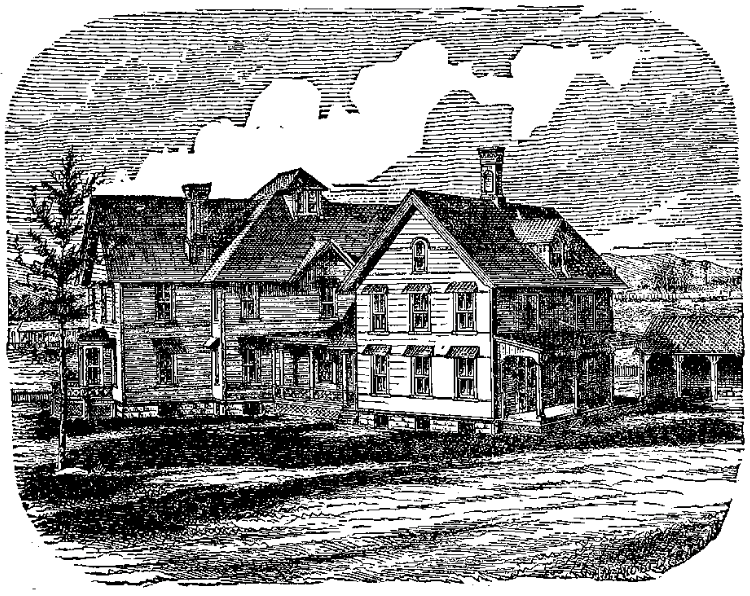
Public welfare buildings like those serving the mentally ill, were more likely to be purpose-built and were eventually incorporated into the state hospital system. The Northampton State Hospital began as a humanitarian lunatic asylum in 1858, following the precepts of social reformer and army nurse, Dorothea Dix. Northampton’s buildings adapted the design theories of Dr. Thomas Kirkbride, a psychiatrist and Quaker from Pennsylvania. He came to believe that the building itself could be a part of more humane treatment for patients. He advocated for wards with long, shallow wings so they had plenty of natural light. The grounds were laid out and landscaped to give patients – as well as visitors- fresh air and views of a pastoral nature; employment opportunities were available. Over time, this kind of hospital became very overcrowded. Wards meant to shelter thirty people began to hold more than 70. Northampton’s hospital ultimately closed in 1993 as part of a broader government mandate to discharge patients and offer them community-based programs instead.
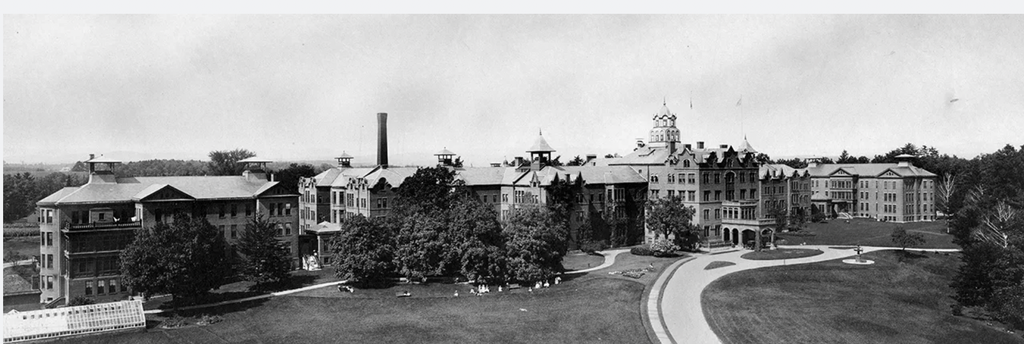
With the advent of state psychiatric hospitals, there was a medicalization of the care of mentally ill people. With “deinstitutionalization”, ” there was a rise in homelessness and the move to community-based care (or sometimes no care). While the trajectory of these institutions appears progressive,, we can see how both poverty and race have been criminalized, as our society has incarcerated more and more of its people, so that young people with nowhere to go, especially youth of color, have ended up in juvenile “homes” where abuses are rife.
Historic Preservation of Social Welfare Places
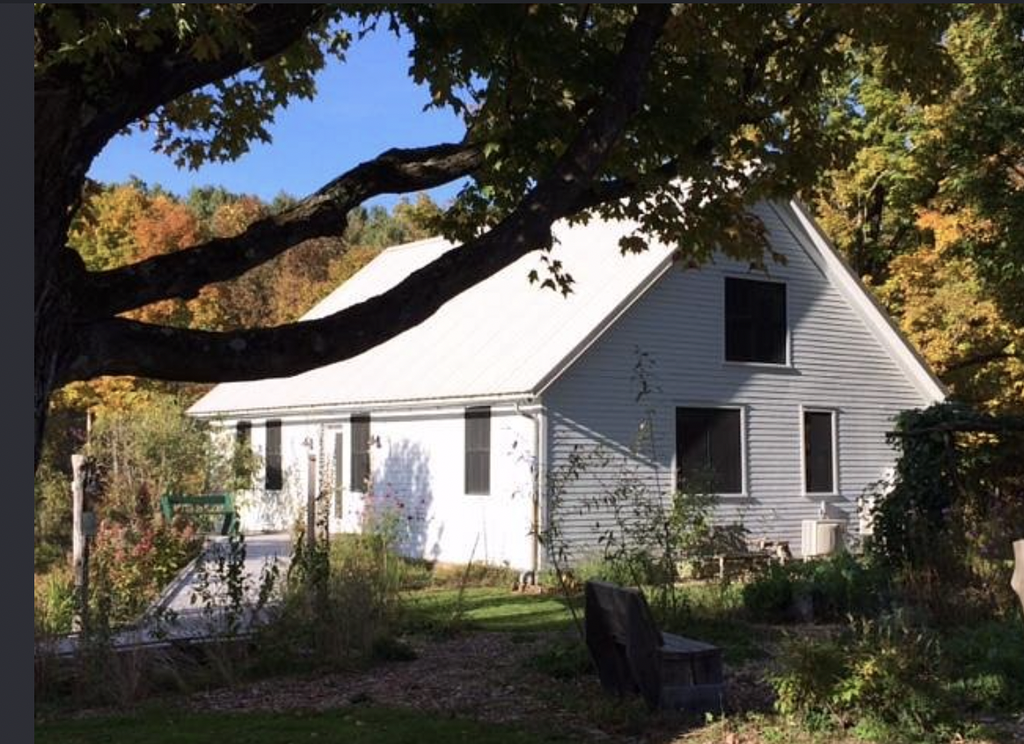
The Bullitt Reservation poor farm in Ashfield served as the town’s poorhouse for about 50 years, from about 1824 to 1874. It housed 13 “paupers” who helped raise livestock and work the land. But Ashfield’s poor farm is interesting for other reasons. Its later owners helped to preserve its history for posterity. Beginning in 1920, the whole property (including another farmhouse and outbuildings, and a barn) became part of a large country estate owned by William Christian Bullitt. As a young man, he had worked at the Paris Peace Conference in 1918-1919 and later served as the country’s first ambassador to the Soviet Union. Bullitt married Louise Bryant in 1924. She was a journalist who covered the Russian Revolution with her first husband, John Reed. (Readers may remember Diane Keaton playing Bryant in the 1981 movie “Reds,” and Warren Beatty playing John Reed.) More relevantly, it was a daughter, Ann Bullitt, who carefully thought through how to conserve some of the land and preserve many of the buildings for posterity, including the poor farm. She willed the property to The Trustees of Reservations in 2008-9. The farmhouse and woodland trails—open year-round—lead to Chapel Brook Falls and other rather wondrous destinations like the Pebble, a massive glacial erratic on one of the trails. Another home on the property was once the private home of poet Sarah Sousa, and her husband, musician Ray Lamontagne. The poor farm building got a deep energy retrofit from Zero Energy in 2010, thanks to local master builder Mary Quigley.
Social Welfare in Amherst
Amherst may also have had a kind of poorhouse. It certainly had charitable functions. It was begun in 1828 and was once called Rolling Hills Farm. For decades, it also functioned as a summer vacation destination for workers. The farm’s owners ran a printing and bleaching factory in New Jersey and invited their workers to vacation there in Amherst, which was not typical at the time. Indeed, most workers at the time did not have vacation time. Even today, most wealthy nations mandate annual leave, but no federal statute in the U.S. requires paid vacation. Rolling Hills Farm was then on the edge of town by the South Amherst Common, an attractive pastoral setting for informal social welfare programs.
Fresh air funds in places like New York City and several settlement houses also had summer vacation programs. Rolling Hills Farm, its barn and land were owned by the Poor family (of Standard and Poor, now S&P Global Ratings) rather than being a town-administered poor farm. Today, it is a 40-acre parcel of protected wetlands that is zoned within the Amherst Conservation Area, partly on the KC Trail and the Norwottuck Rail Trail. It is especially popular for birdwatching.
Another historic almshouse in Amherst is the Hospice of the Fisher Home in North Amherst, founded in 1909 initially as a home for aged women and funded through the philanthropic efforts of Ellen Kellogg Fisher in her will. The Fisher Home was located in a private two-story house, originally built on North Pleasant St, that was moved Hobart Lane in 1966-7 by the UMass Student Farm. This change was followed in 2006 when a new purpose-built hospice facility was built closer to North Amherst Center. It is a precious resource in our town and also has a thrift shop, welcoming donations on University Drive.
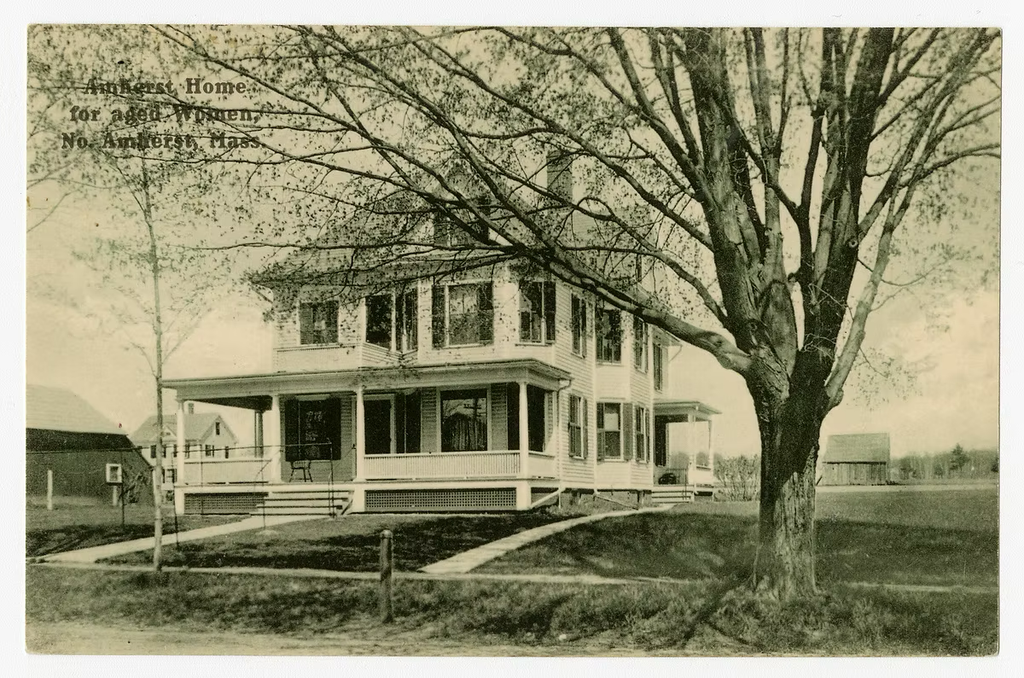
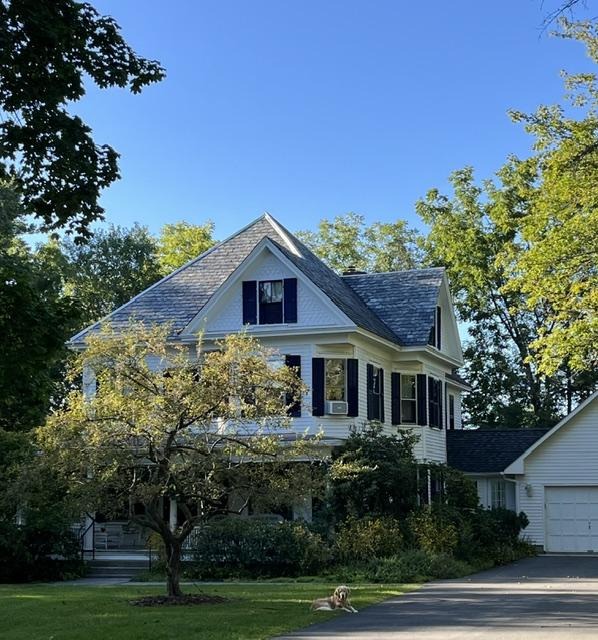
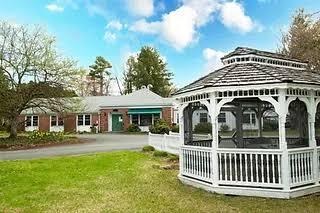
“The facility is designed to have a home-like atmosphere, with all rooms having windows to the outdoors and almost all having a bird feeder.” By the time the National Social Security Act was passed in 1935, poor farms had been discontinued. The Red Cross and the Salvation Army also helped shift where support was available.
During the Great Depression, the Roosevelt Administration did several things to encourage employment, especially in construction, hoping to lessen rural poverty in the interim while also preserving traditional skills and trades. I will keep investigating vacation time, as I want to learn more about how people of modest means could afford to take time off work in the past. I will write more about these issues in my next article in this series. ~