
Amherst Ranked High Risk for Tick-Borne Disease
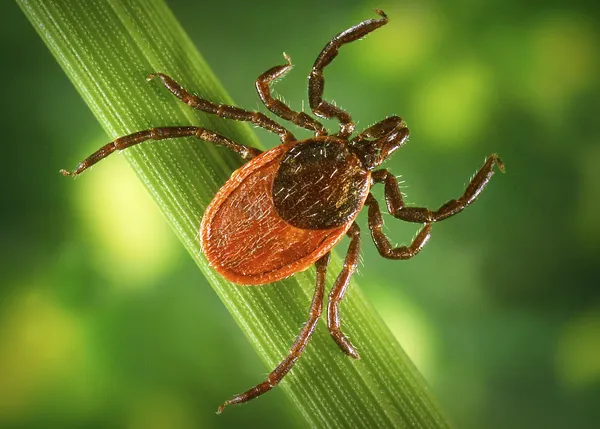
Deer Tick. Photo: CDC (CC BY-ND 2.0)
Amherst has been ranked as a high risk town for tick-borne disease by TickZone, an independent, free app that provides daily tick activity forecasts for more than 20,750 towns across 30 U.S. states. TickZone currently rates 16 of 20 towns in Hampshire County and 25 of 26 in Franklin County as high risk. High risk for tick hazard means an area has a high concentration of ticks that carry diseases such as Lyme disease, babesiosis or anaplasmosis.
Risk across Hampshire County ranges from Pelham at the high end, with a TickZone score of 78 out of 100, to Hadley at the low end, with a score of 56. In Franklin County, Shutesbury has the highest risk, with a score of 79, while Greenfield is the only town with a moderate risk score, at 65. The major factor affecting the score is habitat. Forest cover across the two western Massachusetts counties ranges from 51% to 98%, and more forest and woodland edge means more places where ticks can quest for a host.
TickZone notes that most towns in Massachusetts — 344 of 351 — are currently rated as high or moderate risk for tick activity, with two Dukes County towns, Tisbury and Edgartown, topping the list with scores of 97.
Hampshire County data cover 20 towns. The county carries the eighth-highest tick-borne-disease baseline of Massachusetts’s 14 counties, with a Lyme rate of 131 cases per 100,000 people per year (109th of 217 counties in the Northeast), many times the 10-per-100,000 mark the CDC uses to flag a high-incidence county. Franklin County carries the seventh-highest tick-borne-disease baseline in the commonwealth, with 153 cases per 100,000 people per year.
TickZone lists the deer tick and the American dog tick as established in Hampshire County. Tick-borne diseases reported in Hampshire and county are Lyme disease and anaplasmosis. Lyme disease and babesiosis have been reported in Franklin County.
TickZone concludes that current conditions in Hampshire and Franklin Counties strongly favor tick activity, with deer tick nymphs now at their peak. Recommendations are to cover up, use repellent and check carefully for ticks — including on kids and pets. If you find an attached tick or develop symptoms after a bite, contact a healthcare professional and see CDC tick-bite guidance.
How the score works
TickZone assigns a daily tick risk score of 0 to 100 based on five factors: local weather (Open-Meteo); the current tick life stage; county Lyme disease incidence (U.S. CDC); local land cover (ESA WorldCover); and species presence (CDC county tick surveillance). Read the full methodology here.
On the Elizabeth Islands at Cape Cod we have huge numbers of ticks and all the allergies and illnesses that go along with them. We also have no pavement or vehicles so we are into tick habitat as soon as we step out the door. To defend ourselves we have developed an oversock to stop ticks on the foot and lower leg where they often hop on. We chose a tight-weave parachute fabric so that even the tiniest ticks can’t get through, and found a fabric that is light and breathable but tough, and we used a turndown at the knee to stop ticks from climbing. We treat these at Insect Shield in NC so that they are double protection: repelling ticks with permethrin and blocking access to skin with an unbroken barrier over the foot to the knee. We had a lot of interest outside our island community so we sewed up a big batch in Fall River and have made them available. Search Ticktogs if you think they might help you like they have helped us. They have cut way back on our tick bites.