Amherst Arbor Spotlight: Black Walnut
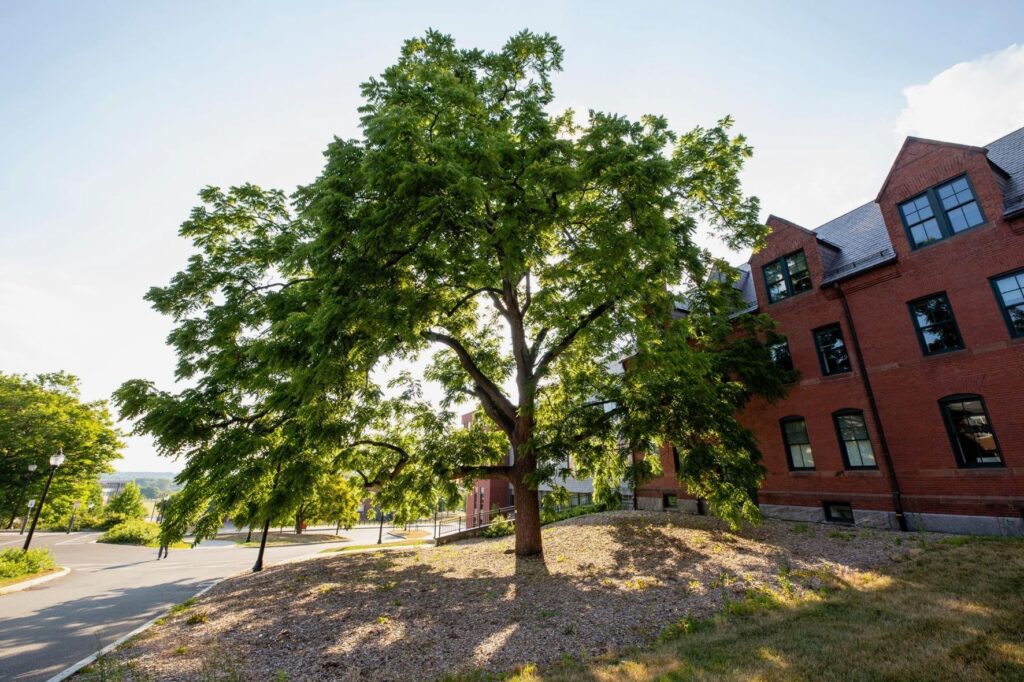
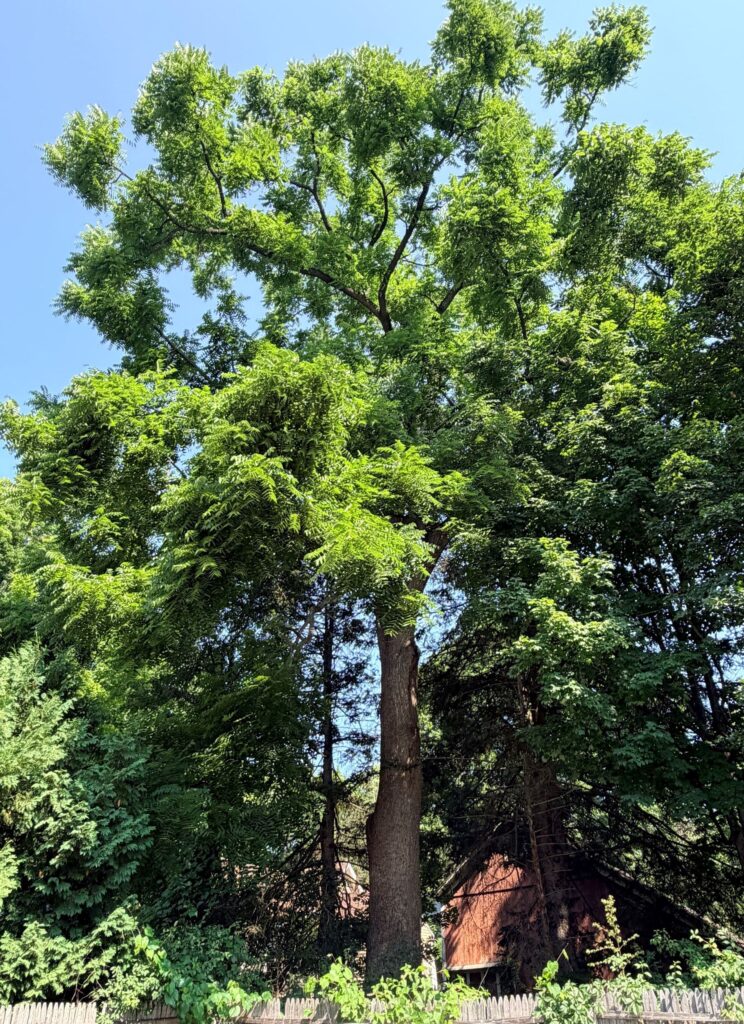
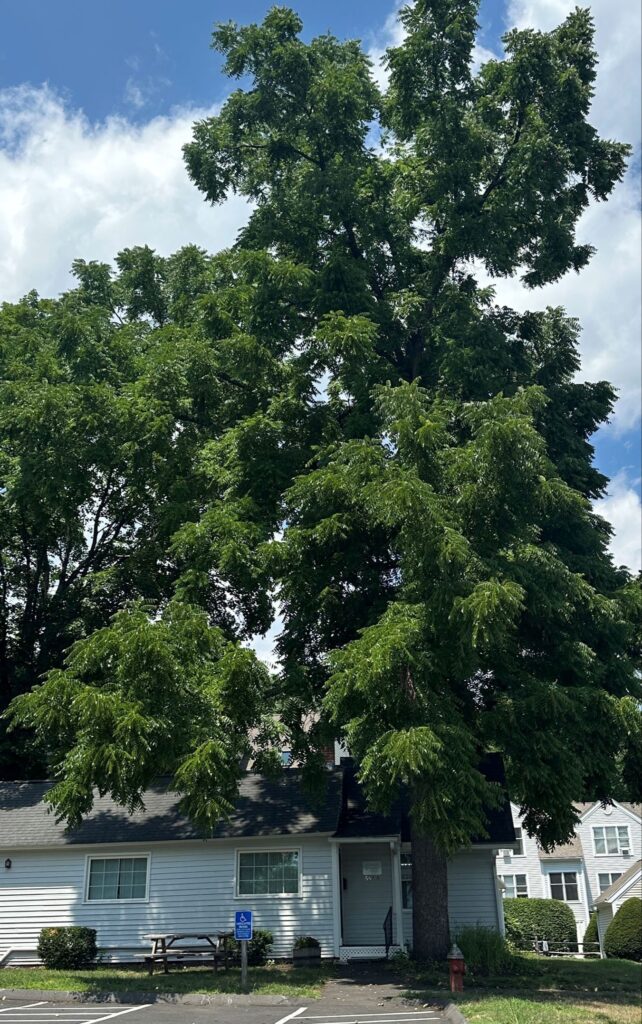
This magnificent black walnut is the Massachusetts Agricultural College Class Tree of 1894. It is an outstanding specimen with beautiful form and strong horizontal branches. You can learn more about this former state champion tree at the University of Massachusetts' Campus Tree Storymap. Photo: c/o the Frank A. Waugh Arboretum]
by The Amherst Public Shade Tree Committee
This is the eighth in a series of 12 articles produced by the Amherst Public Shade Tree Committee (APSTC) under the title “Amherst Arbor Spotlight.” The series focuses on the town’s 12 species of shade trees and features a different tree each month. New articles will be posted on the first day of the month on the APSTC website and in the Amherst Indy, with links on Facebook and Instagram. Read the previous columns here.
Black walnut is an abundant native species in Amherst. This large deciduous shade tree thrives in disturbed areas and is quick to populate barren roadsides and the edges of fields and forests. The trees produce delicious edible nuts, but they are nearly impossible to crack open. In fact, their thick shells are so strong that NASA uses them as an abrasive to clean the exteriors of spaceships! Black walnuts begin bearing their famous fruits 12 to 15 years after planting.
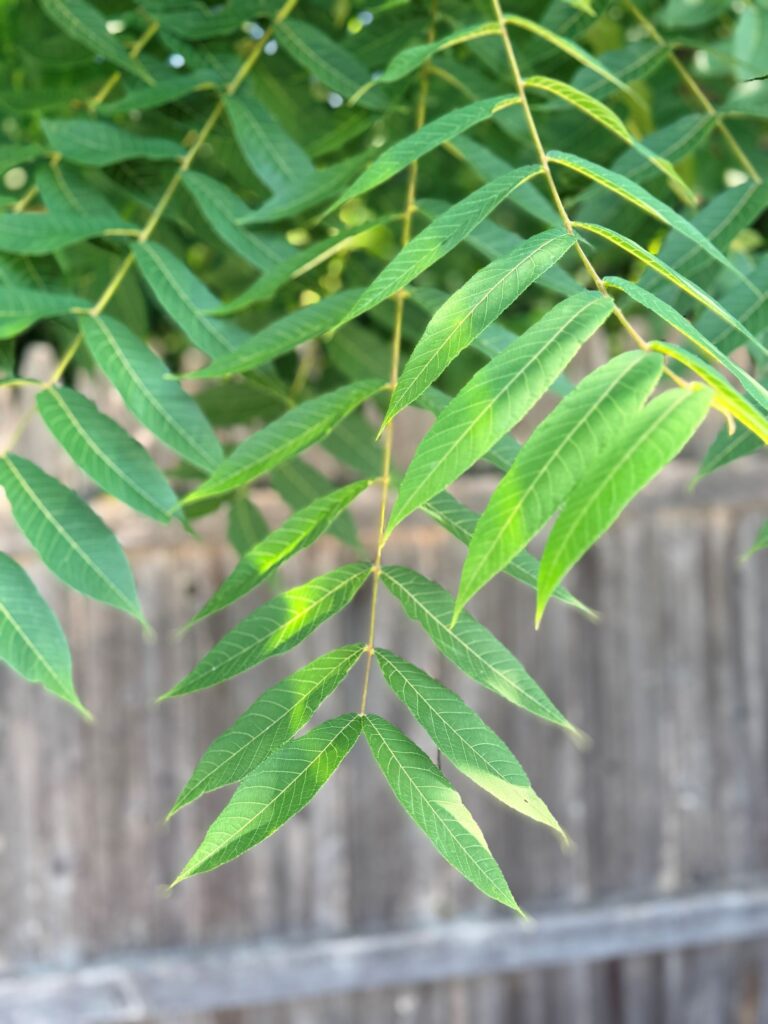
Large compound leaves give black walnuts their beautiful fernlike appearance. A single leaf can measure two feet in length and contain 12 to 23 finely toothed leaflets. Once you recognize the distinctive leaf structure, you’ll start noticing black walnuts everywhere in Amherst.
Black walnuts are excellent shade trees, but should be carefully sited since they produce a chemical called juglone that is toxic to some plants. Vegetables and fruits like tomatoes, peas, peppers, blueberries and blackberries, as well as ornamentals like hydrangeas, rhododendron, lilacs and azaleas, will languish if planted too closely to a black walnut. The toxicity can extend up to 50 feet from the tree trunk! For this reason, black walnuts should not be used as mulch.
Evolution has done a remarkable job protecting black walnut fruit. The flavorful nuts grow in an incredibly hard, spherical shell with a labyrinth of thick internal walls. If you’re lucky enough to crack open a shell, your next challenge is breaking through the strong-smelling, finger-staining husk (be sure to wear gloves or your hands will be discolored for weeks). Black walnuts are delicious and contain the highest protein content of any tree nut. However, the majority of walnuts purchased in stores are English walnuts, which have thinner shells that are easier to open.
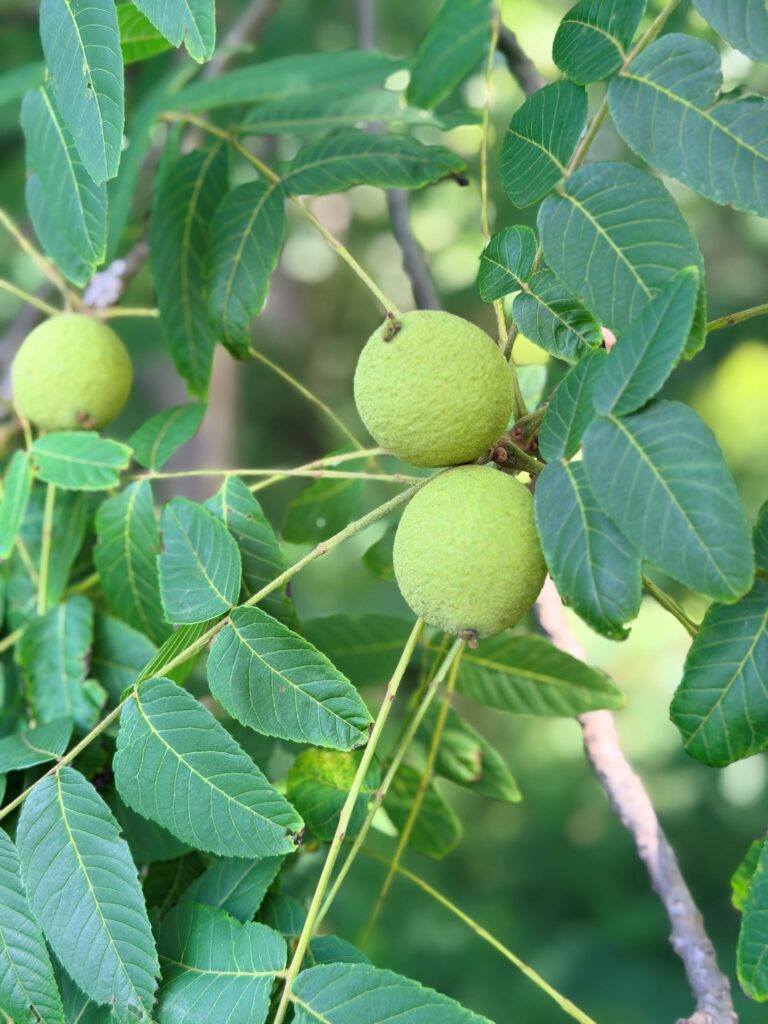
Black walnut trees create considerable ground litter and their nuts audibly fall on houses and automobiles (people too!). The trees’ chemical compounds can also stain sidewalks, porches, and patios, as well as the hands of anyone attempting to shell their nuts. Despite this, black walnuts provide beauty, shade, and valuable food for squirrels, woodpeckers, and foxes. Songbirds flock to the trees, which host over 20 species of moths to feast on.
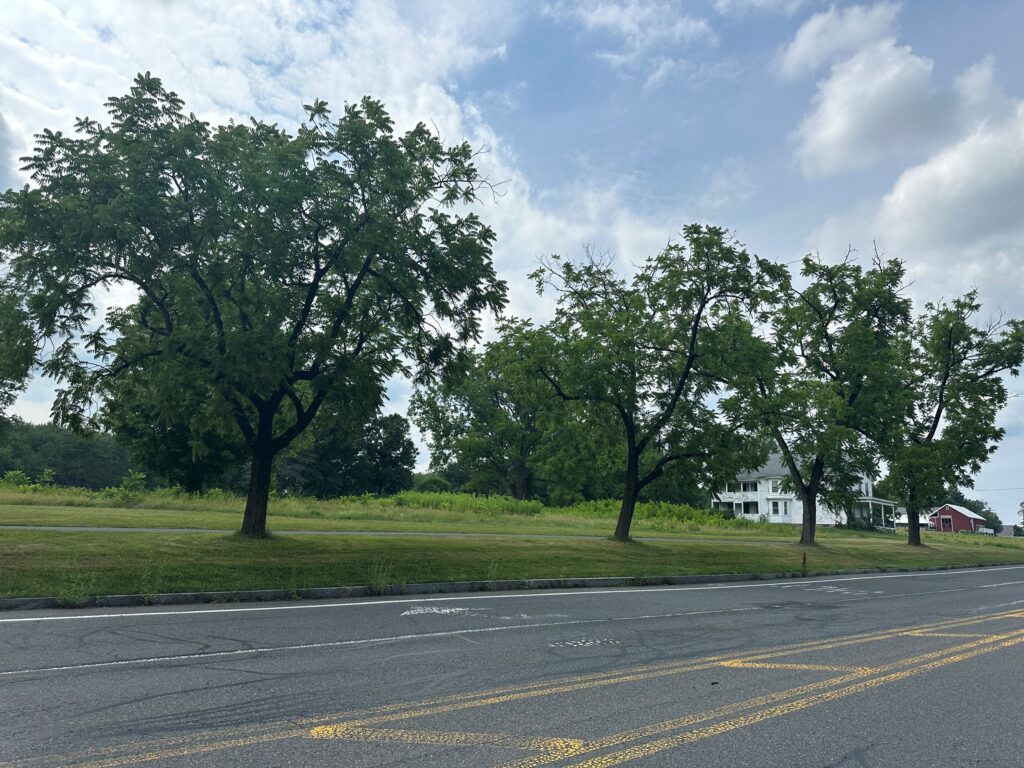
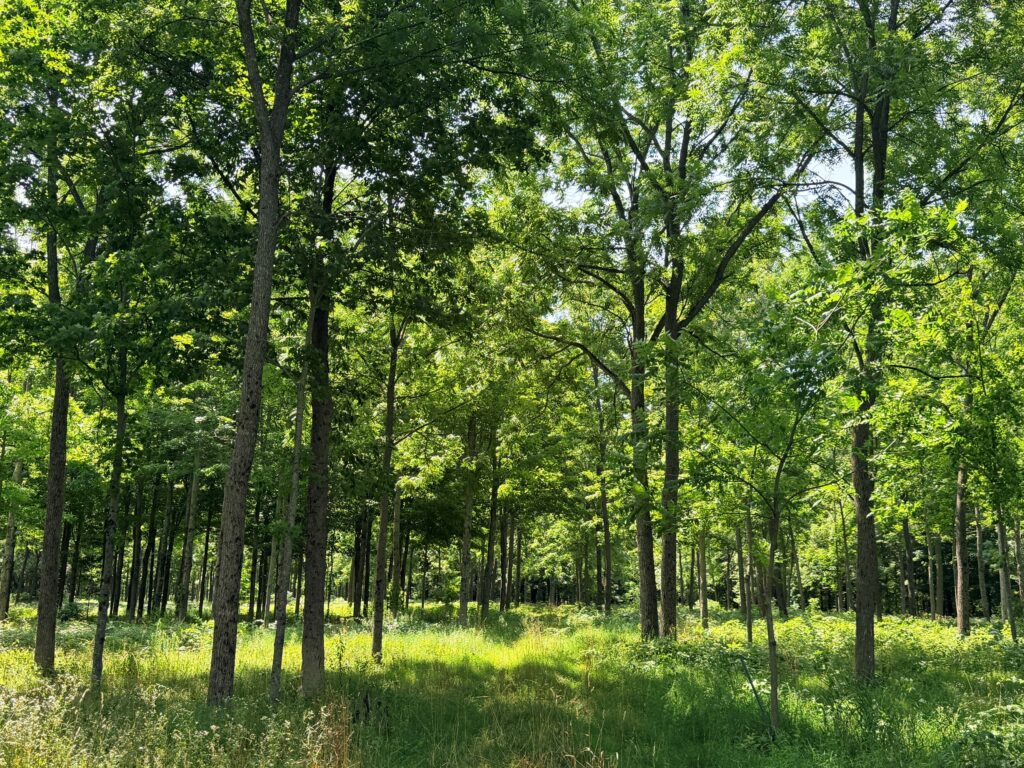
Longtime Amherst resident Bob Saul owns three(!) black walnut tree farms in town. Aulswell Farm has 20 acres on East Hadley Road and another 20 acres on Mill Lane. Drivers can also see a smaller two-acre parcel of black walnut trees on Hall Drive, at the corner of Belchertown Road. Bob harvests the trees for their sumptuous, chocolate-colored lumber, which makes for beautiful furniture and the highest quality wood veneer. Black walnuts are the only dark brown domestic wood species in the U.S.
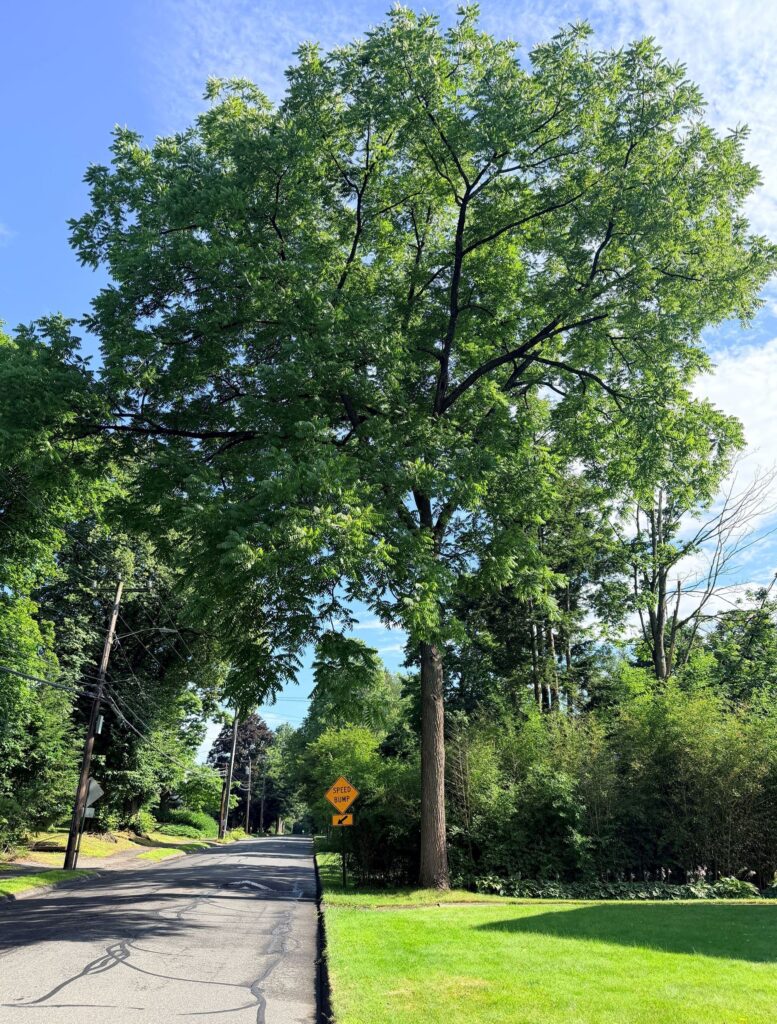
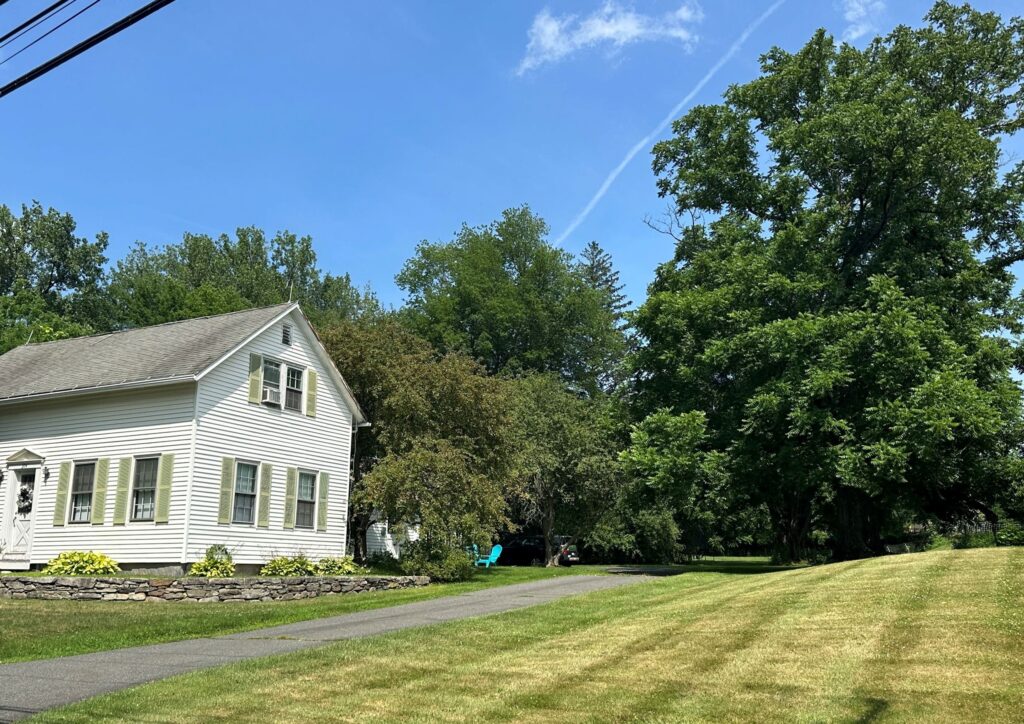
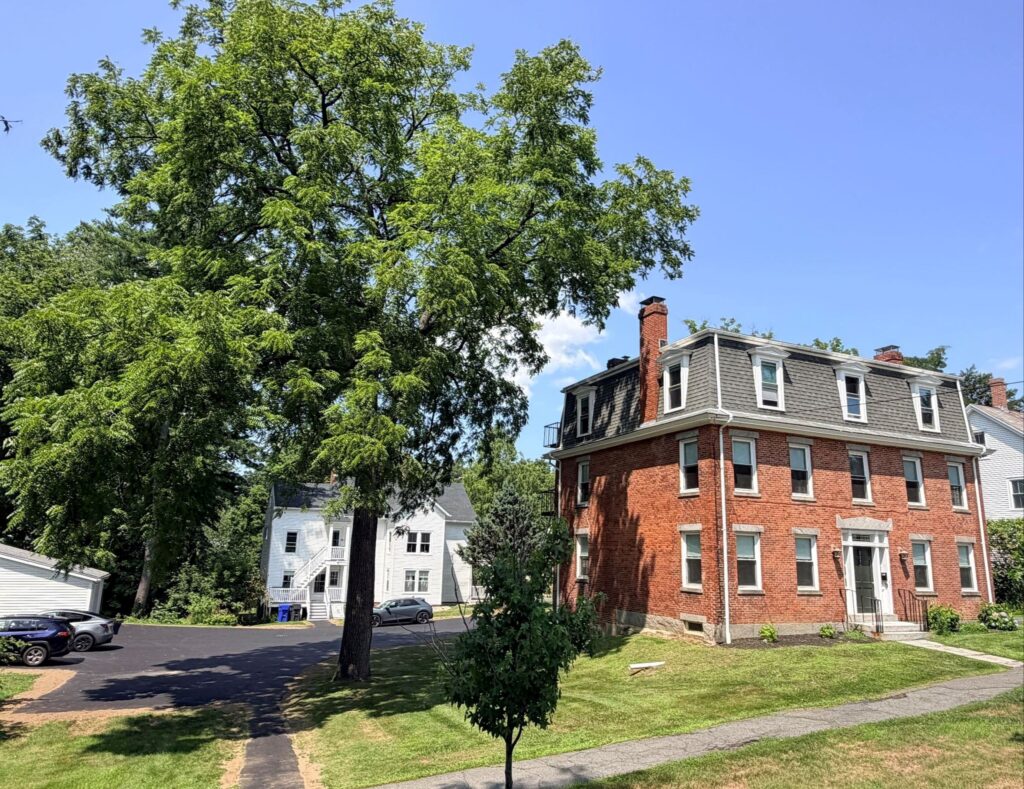
180 Lincoln Avenue. Photo: Amherst Public Shade Tree Committee