
Health Department Planning Education and Outreach on Tickborne Illnesses
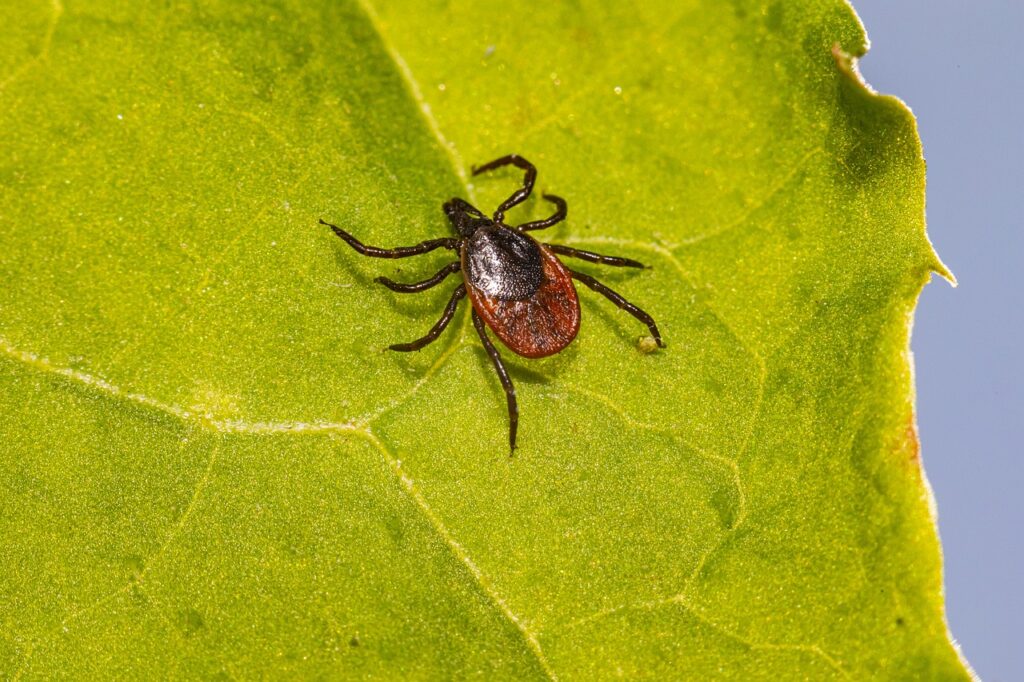
Photo: Pixabay.com. Public Domain
Report on the Meeting of the Amherst Board of Health, May 6, 2025
This meeting was held over Zoom and was recorded.
Present: Risha Hess (Chair), Betsy Brooks, Jack Jemsek, Ileana Carrion, and Premila Nair Staff: Kiko Malin (Public Health Director) and Maheen Ahmed
It’s a Bad Tick Year
May is Lyme Disease Awareness Month, and Health Director Kiko Malin said that Amherst has seen more than its share of cases. Data provided by the Massachusetts Virtual Epidemiologic Network (MAVEN) indicate that older residents are disproportionately affected. She recommended an educational program targeting people who walk in the woods and are likely to come into contact with ticks.
Board of Health (BOH) members agreed that it would be a good idea to publish an article covering tickborne illness, the prevalence of Lyme disease, early signs of the disease, and what it means to live with Lyme disease. “There are a lot of people in our community who have been affected by this,” Malin said. She added that her booth at the Sustainability Fair on the town common on April 25 was busy for the entire five hours, with people asking questions and picking up tick removal kits she was distributing.
BOH member Ileana Carrion suggested preparing an article with safety tips to prevent tick bites and informing readers that taking doxycycline within a few days of a bite could reduce the risk of contracting Lyme disease. She also suggested posting information at popular trailheads and the dog park. Betsy Brooks pointed out that flu-like symptoms following a tick bite can be a sign of early Lyme disease, which at that stage is still easily treated with a relatively short course of oral antibiotics.
BOH Chair Risha Hess suggested writing an informational piece for local media. She cited data from the “Your Local Epidemiologist” newsletter indicating that emergency department visits for tick-related problems are much higher this year. Contributing factors may include not knowing when a tick bite occurred, fear of removing an embedded tick or difficulty reaching one, lack of a primary care physician, or an inability to reach one promptly.
BOH member Jack Jemsek said he was swarmed by ticks while walking on the Kendrick-Carlisle (K-C) trail. “It’s a shame that we have all these great trails and then we can’t use them unless you have permethrin,” he said, adding that tucking clothing in to avoid exposed skin is also important.
Malin will work with Jemsek to produce an article on ticks and tickborne diseases for local media. In addition to the Daily Hampshire Gazette, the Amherst Bulletin, and the Amherst Indy, they will consider other outlets such as NEPM and community message boards. Carrion suggested publishing information in Spanish and other languages commonly spoken in town. Malin will also look into posting bilingual signs at trailheads with QR codes linking to additional information.
The town Health Department maintains a tickborne disease information page on its website.
Public Health in Massachusetts and the Role of Local Boards of Health
Cheryl Sbarra, executive director of the Massachusetts Association of Health Boards, and Sam Wong, director of the Office of Local and Regional Health with the Massachusetts Department of Public Health, attended the BOH meeting to discuss the organization of public health in the state.
SAPHE 2.0 (State Action for Public Health Excellence)
Wong explained that in 2016 a special commission was convened, drawing from public health, health care, business, taxpayer advocacy, and the legislature, to identify deficiencies in the local public health system. Massachusetts, he said, has one of the most decentralized local public health systems in the country. Most states operate public health at the county level, but Massachusetts operates at the municipal level, which creates efficiency, equity, and resource challenges because funding comes from municipal budgets. The commission produced a report, “Blueprint for Public Health Excellence,” in 2019, just before the pandemic.
The state enacted SAPHE 1.0 in 2020, in the midst of the pandemic, after it became clear how inadequate the local public health system was in responding to a crisis of that scale. The program helped distribute grant resources and established the first performance standards for local public health, along with a structured training program for local boards.
In 2024, the legislature updated the law to create SAPHE 2.0, adding new elements including accountability measures for local boards of health through mandated performance standards. SAPHE 2.0 also requires each Public Health Director to file a number of reports annually.
Sbarra said it is extremely challenging for local boards of health — even in large cities — to meet all obligations mandated by public health law, and that part of SAPHE 2.0 is designed to help municipalities fulfill required services, particularly through regional collaboration.
In towns such as Amherst, where there is both a Board of Health and a Public Health Department, the Board of Health holds the legal authority and legal obligation to protect public health, safety, and welfare, Sbarra said. Under SAPHE 2.0, requirements are directed to each local BOH, with the Health Department functioning as the board’s agent. She noted that many smaller towns have no Health Department — only a BOH and perhaps one staff member.
The home rule provision in the state constitution allows municipalities to pass local laws tailored to what residents want or what the local BOH believes would best serve residents’ interests.
Hess said that in Amherst, the board sets policy and the Health Department implements it, but that in a crisis the Health Department would need to act independently. She wondered whether the board should be more proactive in thinking through emergency decisions, such as closing facilities or imposing restrictions. Sbarra responded that the director derives her authority from the board, but that in an emergency the director will act and then report back to the board, which would convene within 48 hours to approve or deny the decision. The board can delegate authority, but the “buck stops with the board.”
SAPHE 2.0 established regional Public Health Excellence (PHE) collaboratives. Sbarra said the Health Director should keep BOH members informed about collaborative activities, because the collaborative brings information and public health work that falls outside the municipal budget. Wong noted that the PHE grant program is intended to help local public health departments meet SAPHE 2.0 performance standards on a regional basis. Malin pointed out that Amherst has two health inspectors who work closely with the Health Department, while in a small town such as Cummington, the PHE collaborative helps conduct inspections of hotels and food establishments and helps smaller towns track communicable diseases as reported on the MAVEN site.
BOH member Betsy Brooks said she had heard that the legislature was considering a law that would nullify Tobacco Free Generation bylaws passed by several towns — including Amherst and Belchertown — that prohibit the sale of tobacco products to anyone born after Jan. 1, 2005. Sbarra said the Massachusetts Association of Health Boards opposes this legislation, or any state law that would preempt local BOH rulings, and has sent a letter to the legislature to that effect. She expressed cautious optimism that the bill would not pass.
Brooks also raised a concern that conflict-of-interest training BOH members had completed suggested they were not permitted to lobby on matters that might come before the board. Sbarra said that did not sound correct and that lobbying on public health issues was, in fact, a civic duty. She said she would look into the matter.
Wong and Sbarra both suggested that Malin share with the BOH her responses to the 70-page Department of Public Health survey she completed on the activities of the Amherst Health Department. The survey identifies what the department does well and where gaps remain. Both expressed hope that over the next 10 years, increased intermunicipal collaboration will lead to more equitable services across the Commonwealth and a more sustainable, better-resourced public health system statewide.