
Great Barrington’s Library Gets a Crash Course in What Amherst Has Learned the Hard Way
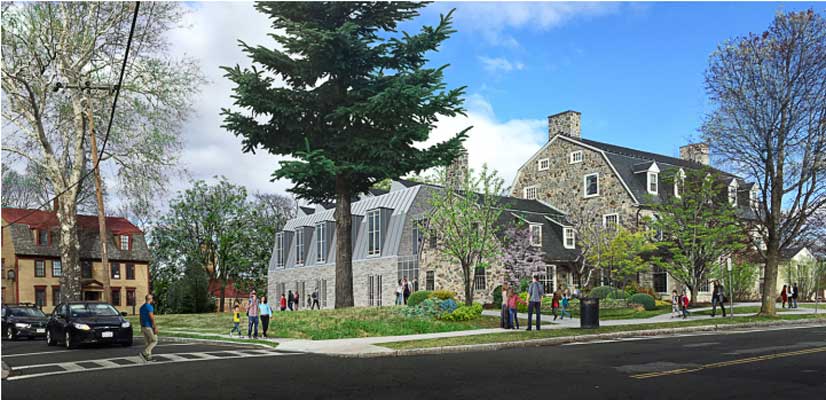
Great Barrington’s Ramsdell Library renovation is running into a familiar set of problems — ones Amherst residents will recognize from the long‑troubled Jones Library demolition‑renovation‑expansion project. Both towns are discovering that when a project depends on MBLC grants, involves a historic building, and adopts an ambitious design before fully resolving preservation and cost questions, the consequences can be painful, expensive, and contentious.
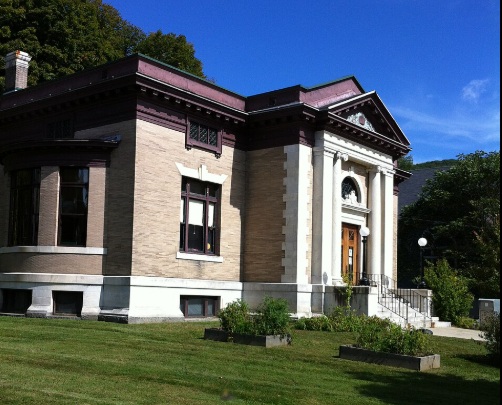
Great Barrington’s long-awaited Ramsdell Library renovation is running into familiar trouble. The 1908 Beaux-Arts building in the village of Housatonic—the town’s only municipally owned structure on the National Register of Historic Places—sits at the top of the Massachusetts Board of Library Commissioners’ Public Library Construction Program waitlist. State funding from the MBLC could cover roughly 55–60 percent of eligible costs. Yet the project is stalled by an adverse-effect finding from the Massachusetts Historical Commission, a heated dispute over town archives, a tabled local funding request, the dissolution of the nonprofit created to raise private money, and incomplete cost estimates. The parallels to Amherst’s Jones Library demolition-renovation-expansion are striking and instructive.
What’s Gone Wrong in Great Barrington
According to reporting in The Berkshire Edge, the Ramsdell Library project has hit multiple roadblocks, most of them tied to historic‑preservation compliance and design decisions that were locked in too early.
- Historic preservation conflicts. The Massachusetts Historical Commission (MHC) determined that the proposed demolition of Ramsdell’s 1930 addition would cause adverse effects on the historic property. The addition is part of the building’s State Register listing, and MHC found that the architects’ alternatives study “mischaracterized historical facts” and failed to provide required detail on mitigating harm.
- Late notification to MHC. Regulations require early consultation with MHC, but the town notified the commission only after selecting a preferred design and securing MBLC approval for demolition. This violated 950 CMR 71.02 and left the project out of compliance.
- Unresolved design scope and costs. Town officials still do not know the total project cost, what parts of the design qualify for MBLC funding, or how to pay for required preservation consultants. The town manager warned that Great Barrington lacks the funds to absorb these uncertainties.
- Breakdown in trustee–commission communication. The local commission points to trustees ignoring required consultation, withholding materials, and refusing to revisit the design despite MHC’s directive to explore alternatives. Trustees insist demolition is necessary to meet MBLC programming requirements.
The town’s own Historical Commission has piled on. Chair Malcolm Fick wrote in July that state regulations require MHC to be notified “as early as possible in the planning process,” yet the architects didn’t notify MHC until February 2026, three months after the demolition option had already been chosen and funding approvals obtained.
Then there’s the money, or rather, the absence of it. Several years into planning, and with $250,000 already allocated to design, the project has no total cost estimate. Town Manager Liz Hartsgrove told the boards flatly that the town “cannot afford a five-plus-million-dollar project. Period,” and doesn’t even have the roughly $10,000 needed to hire the preservation consultant the state now demands. A nonprofit created to raise private funds for the town’s share dissolved in July, citing a lack of a “unified civic vision” and financial commitment. When Selectboard Chair Steve Bannon asked the trustees how much money has been raised, Trustee Patrick Hollenbeck refused to say in public, calling the figure “confidential.”
Another self-inflicted wound relates to one of the library’s past services. The design includes no dedicated space for the town’s archives — about 180 boxes of historical material stored on the library’s second floor — so the local Historical Commission declined to recommend the project. This became a key reason the Community Preservation Committee tabled a vote on a requested $1.5 million in CPA funds.
Déjà Vu in Amherst
If this tale of municipal woe sounds familiar, it should. Amherst readers will recognize how the Jones Library’s $46.1 million project now in construction has hit nearly identical walls.
The Jones Library demolition-renovation-expansion of the 1928 building climbed from an estimated $36.3 million in 2021 to a $46.1 million borrowing authorization in late 2023, then drew a single general contractor bid in April 2024 that came in nearly $7 million over budget and had to be rejected. The design was run through $1.5 million of “value engineering,” notably calling for partial elimination of priceless Philippine mahogany millwork, and abandoning the cross-laminated timber construction that was supposed to be the project’s environmental signature.
Historic preservation was an afterthought in Amherst, too. The project lost nearly $2 million in historic tax credits because the design violated five of the ten Secretary of the Interior’s Standards for Rehabilitation. In November 2023, MHC identified seven adverse effects the Jones project would have on the historic building, a finding that arrived only after years of design work had already proceeded. The Massachusetts regulation protecting historic properties, 950 CMR 71.02, requires the state to be looped in “as early as possible in the planning process” precisely because retrofitting preservation concerns onto a nearly finished design is far more disruptive than building it in from the start. Both towns learned that lesson backward, at substantial cost.
Shared Root Causes
Across both towns, the pattern is unmistakable.
MBLC grant requirements drive design decisions. Both projects selected designs that maximize MBLC eligibility, often meaning larger additions, expanded programming space, and demolition of historic elements. When those choices collide with preservation law, towns must scramble to reconcile conflicting mandates.
Historic preservation issues were not integrated early enough. In both Great Barrington and Amherst, preservation concerns surfaced after key design decisions were made. This forced costly redesigns, delays, and strained relationships between trustees, architects, and historic preservation watchdogs.
Design ambition outpaced planning capacity. Both projects adopted complex designs that require intensive coordination among architects, engineers, preservation specialists, and state agencies. When any one of those steps falters the entire project timeline suffers.
Financial exposure grows as delays mount. MBLC grants do not shield towns from cost overruns, interest payments, or fundraising failures. Both Amherst and Great Barrington are now confronting the financial consequences of design-driven delays.
See related Library Project’s Failure to Repay Town Discussed at Finance Committee
Great Barrington is now confronting the same reality Amherst has faced for years. When a library renovation depends on MBLC funding, involves significant change to a historic building, and forgoes careful cost analysis, the town must be prepared for pressure to skirt rules, and a long, complicated, and expensive process, with repercussions that could echo for decades.